
MAO Inhibitors: What They Are, How They Work, and What You Need to Know
When you hear MAO inhibitors, a class of antidepressants that block the enzyme monoamine oxidase to increase brain chemicals like serotonin and norepinephrine. Also known as monoamine oxidase inhibitors, they were among the first drugs developed to treat depression—but they’re not used lightly today because of serious risks. Unlike newer antidepressants, MAO inhibitors don’t just tweak mood—they change how your body processes chemicals from food, other meds, and even supplements. That’s why they’re usually only prescribed when other treatments fail.
These drugs work by stopping monoamine oxidase, an enzyme that breaks down neurotransmitters in the brain and gut from doing its job. That sounds good—until you realize this enzyme also breaks down tyramine, a compound found in aged cheeses, cured meats, soy sauce, and tap beer. If tyramine builds up because MAO inhibitors block its breakdown, your blood pressure can spike dangerously high. This isn’t a theoretical risk—it’s caused real hospitalizations and even strokes. That’s why people on these drugs need a clear, simple diet plan, not just vague warnings.
Another big concern is drug interactions, how MAO inhibitors react dangerously with common medications like SSRIs, painkillers, cold remedies, and even some herbal supplements. Mixing an MAO inhibitor with an SSRI, for example, can trigger serotonin syndrome—a life-threatening condition with fever, confusion, and muscle rigidity. Even over-the-counter decongestants like pseudoephedrine can push blood pressure to dangerous levels. That’s why pharmacists now flag these combinations automatically, and why your doctor needs to know every pill, patch, or tea you’re taking.
There are different types of MAO inhibitors—some affect only one enzyme type (MAO-A), others hit both (MAO-A and MAO-B). The older ones, like phenelzine and tranylcypromine, require strict diet rules. Newer ones, like selegiline patches, are safer because they don’t affect the gut as much, so you can eat more freely. But even patches aren’t risk-free if you take the wrong meds or take too high a dose.
These drugs aren’t for everyone. They’re often reserved for treatment-resistant depression, panic disorder, or social anxiety when nothing else works. But for some people, they’re the only thing that brings relief. The key is knowing the rules: avoid certain foods, check every new medication with your doctor or pharmacist, and never stop them suddenly. Withdrawal can cause flu-like symptoms, anxiety, or even rebound depression.
Below, you’ll find real-world guides on how to stay safe with MAO inhibitors—what to watch for, what to avoid, and how to talk to your care team about alternatives. From dietary traps to dangerous drug combos, these posts give you the facts you need to use these powerful meds without putting your health at risk.
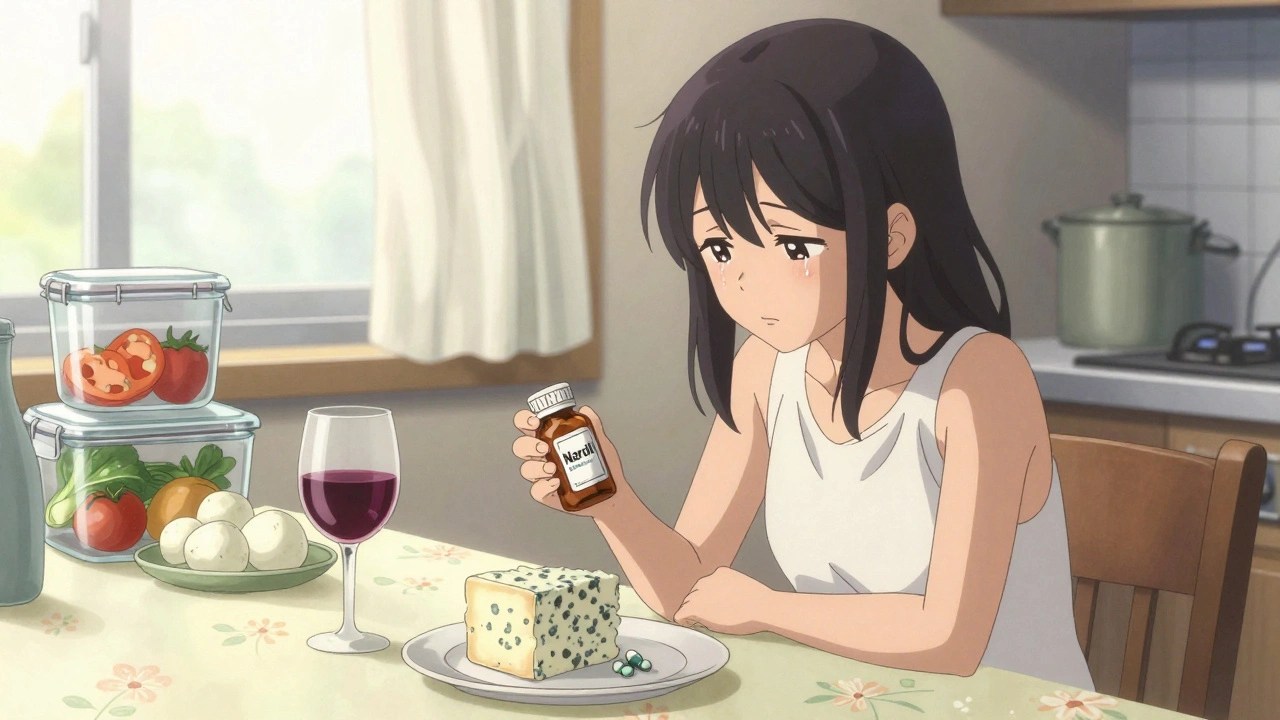
Tyramine-Rich Foods and MAO Inhibitors: What You Must Avoid to Prevent Hypertensive Crisis
MAO inhibitors can cause dangerous blood pressure spikes when combined with tyramine-rich foods. Learn which foods to avoid, how different MAOIs affect risk, and what to do if you accidentally eat something risky.