
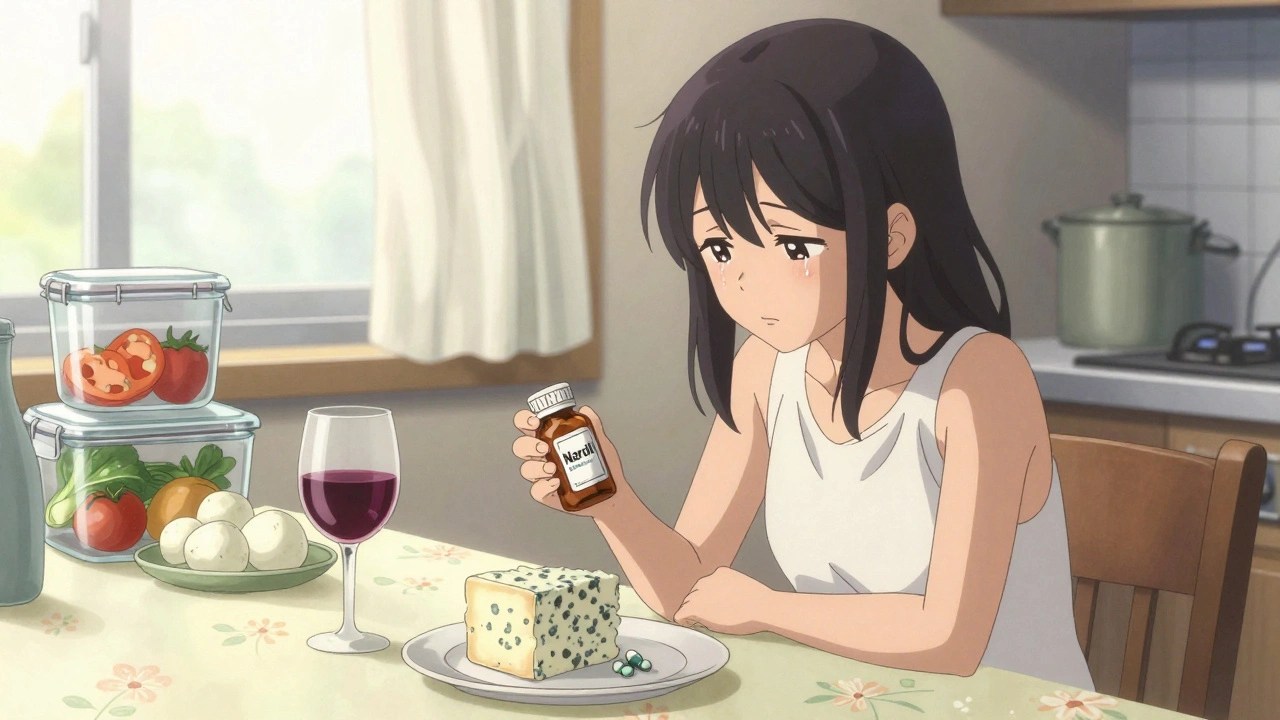
When you're taking an MAO inhibitor for depression, your diet isn't just about nutrition-it's a safety issue. A single bite of aged cheese, a glass of red wine, or even leftover stew could trigger a dangerous spike in blood pressure. This isn't a myth. It's a real, documented risk called a hypertensive crisis, and it can happen fast-within minutes of eating the wrong food.
Why Tyramine and MAOIs Don't Mix
MAO inhibitors, or MAOIs, work by blocking an enzyme called monoamine oxidase. This enzyme normally breaks down neurotransmitters like serotonin and norepinephrine, but it also handles tyramine, a compound found naturally in certain foods. When you take a traditional MAOI-like phenelzine (Nardil) or tranylcypromine (Parnate)-your body can't process tyramine properly. That means it builds up in your bloodstream.Tyramine then forces your nerve endings to release stored norepinephrine, a powerful chemical that tightens blood vessels. The result? A sudden, dangerous jump in blood pressure. Studies show that as little as 5-10 mg of tyramine can cause a spike of 30-50 mmHg in systolic pressure. For someone with normal blood pressure, that’s like going from 120 to 170 in under half an hour.
The threshold for a full hypertensive crisis is generally 10-25 mg of tyramine. But some foods pack way more than that. Blue cheese? Up to 41 mg per 100 grams. Pickled herring? Over 200 mg per 100 grams. Soy sauce? Around 50 mg per 100 ml. That’s not just a snack-it’s a medical emergency waiting to happen.
Which Foods Are Actually Dangerous?
Not all aged or fermented foods are equally risky. Some are safe in small amounts. Others? Avoid them completely.- Aged cheeses: Blue cheese, cheddar, Swiss, parmesan, brie, camembert-especially if they’ve been stored for weeks or months. Fresh mozzarella, cream cheese, and cottage cheese are fine.
- Cured or fermented meats: Pepperoni, salami, summer sausage, liverwurst. Even leftover meat that’s been sitting in the fridge for days can develop dangerous levels.
- Fermented soy products: Soy sauce, miso, tempeh, and fermented bean pastes. Tamari is slightly lower, but still risky. Look for "low-sodium" or "fresh" versions.
- Tap and draft beer: Especially unpasteurized or homebrewed. Bottled beer is usually safe in moderation (under 12 oz).
- Red wine and Chianti: 4-15 mg per 100 ml. White wine and most other alcoholic drinks are lower risk, but still check labels.
- Pickled or fermented fish: Pickled herring, caviar, smoked salmon left unrefrigerated.
- Overripe fruits: Bananas, avocados, and figs that are brown-spotted or mushy. Fresh ones are okay.
- Leftovers and spoiled food: Tyramine builds up as food ages. If it’s been sitting more than 24-48 hours, toss it.
Here’s the key: it’s not about the food itself-it’s about how long it’s been stored, aged, or fermented. Fresh chicken, fresh vegetables, plain yogurt, and store-bought bread? All safe. The danger comes from microbial activity over time. That’s why a slice of aged cheddar is risky, but fresh mozzarella isn’t.
Not All MAOIs Are the Same
You might think all MAOIs require the same strict diet. They don’t. The type of MAOI you’re on changes everything.- Traditional irreversible MAOIs (phenelzine, tranylcypromine): These require the strictest diet-under 15 mg of tyramine per day. No exceptions.
- Transdermal selegiline (Emsam patch): At the lowest dose (6 mg/24 hours), you don’t need to change your diet at all. The patch delivers the drug through your skin, bypassing the gut where tyramine is normally broken down. At higher doses (9 mg and 12 mg), restrictions apply again.
- Moclobemide (RIMA): Available outside the U.S., this reversible MAO-A inhibitor lets your body clear tyramine naturally. Studies show no crisis even at 100 mg of tyramine-equivalent to eating a whole block of blue cheese.
If you’re on Emsam at 6 mg, you can eat pizza with aged cheese. If you’re on Nardil, that same slice could send you to the ER. Always confirm which type you’re taking-and don’t assume your doctor automatically knows your patch dose is low-risk. Ask.
What Happens If You Accidentally Eat Something Risky?
Most people who take MAOIs will slip up at least once. A Reddit survey of over 400 users found 74% accidentally ate a high-tyramine food. Most didn’t have serious issues. But some did.Symptoms of a developing hypertensive crisis include:
- Sudden, severe headache-especially at the back of the head (occipital)
- Palpitations or racing heartbeat
- Blurred vision
- Profuse sweating
- Chest pain or tightness
- Nausea or vomiting
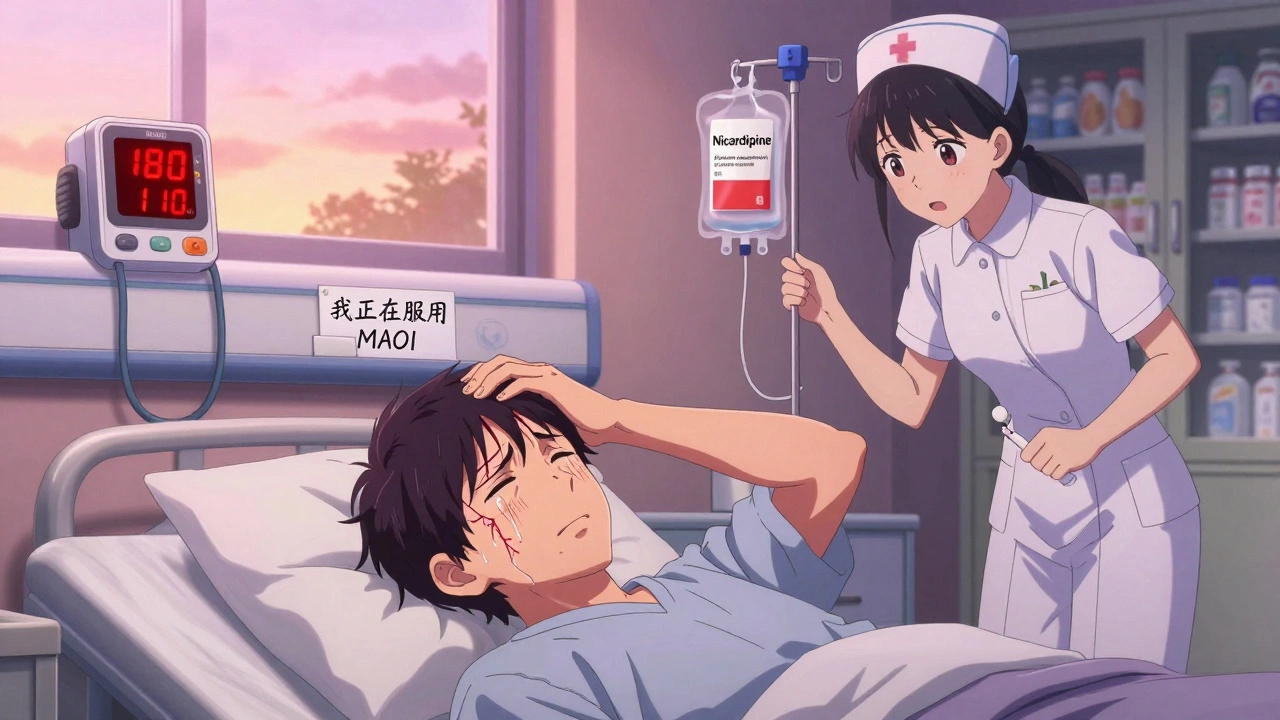
If your systolic blood pressure hits 180 mmHg or higher, you’re in danger. Don’t wait. Call emergency services. Don’t try to drive yourself. Emergency treatment now uses nicardipine to slowly lower pressure-older methods that drop it too fast can cause strokes.
Most people who experience a crisis recover fully if treated quickly. But about 4-6% of cases outside the hospital end in death. That’s why monitoring your blood pressure at home is now standard advice. Keep a digital monitor. Log readings daily. Set alerts if your pressure climbs above 160/100.
Why People Quit MAOIs-And Why Others Stay On
The biggest reason people stop taking MAOIs? The diet. It’s isolating. You can’t grab a beer with friends. You can’t eat at most restaurants without checking every ingredient. A 2022 analysis of online forums showed 68% of users quit because of dietary stress. Eighty-two percent of those who quit said they felt socially cut off.But for those who stick with it, the payoff can be life-changing. In a 2022 study, 61% of long-term users (2+ years) said MAOIs gave them relief where nothing else had. For people with treatment-resistant depression-those who’ve tried four or five other meds without success-MAOIs can be the only thing that works.
One woman in Adelaide told her psychiatrist: "I used to lie in bed for days. I couldn’t talk to my kids. I tried everything. Then I got on Nardil. I didn’t feel better right away-but after three months, I woke up wanting to make coffee. I hadn’t wanted coffee in five years. I’d give up cheese forever for that."
How to Stay Safe-Practical Steps
You don’t need to become a food scientist. But you do need a system.- Know your MAOI type. Ask your prescriber: "Am I on a traditional MAOI, Emsam, or another?" If you’re on Emsam at 6 mg, you’re in the clear.
- Keep a food log. Write down everything you eat for the first two weeks. Cross-reference with a trusted tyramine list. Apps like MyFitnessPal don’t track tyramine-so use a printed chart from your pharmacy or mental health clinic.
- Buy fresh, eat fresh. If it’s been in the fridge longer than 48 hours, don’t risk it. Freeze leftovers immediately.
- Ask before you eat. At restaurants, say: "I’m on a medication that interacts with aged or fermented foods. Can you confirm this dish has no blue cheese, soy sauce, or cured meats?" Most kitchens will accommodate you.
- Carry an emergency card. Print a small card that says: "I am on an MAOI. Avoid tyramine-rich foods. If I have a severe headache or high blood pressure, call 911."
- Get a home BP monitor. Buy one that logs readings and syncs to your phone. Set alerts for systolic pressure above 160.
The Massachusetts General Hospital program reduced dietary violations from 32% to 8% in six months by giving patients exact portion sizes: "One ounce of cheese is safe. Two is not." They didn’t just say "avoid aged cheese." They showed them what one ounce looks like-a small cube, about the size of a dice.
The Future: Better Options Coming
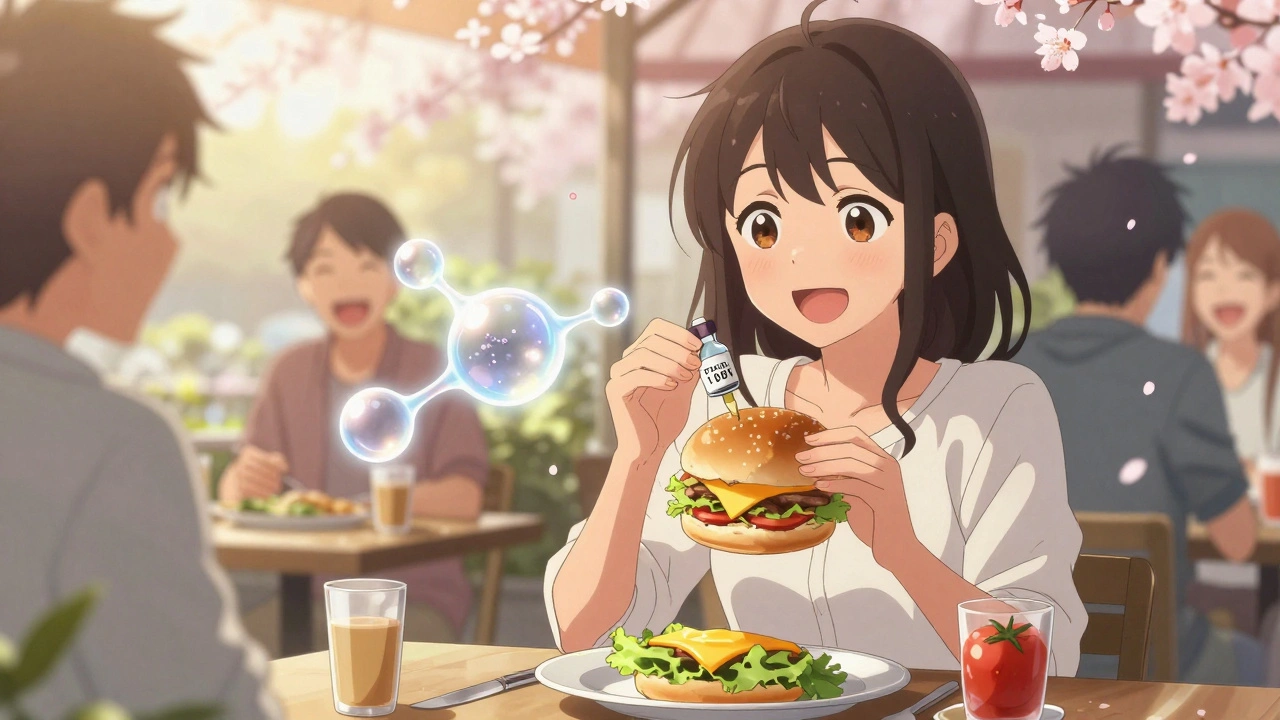
The FDA approved a new tyramine-metabolizing enzyme supplement in March 2024. Called TYR-001, it’s designed to break down tyramine in the gut before it enters the bloodstream. In trials, patients ate cheese, wine, and cured meats without any blood pressure spikes-while still getting the full antidepressant effect of their MAOI.If Phase III trials succeed, this could change everything. Imagine taking Nardil and eating a burger with cheddar. No fear. No labels. No isolation.
For now, the old rules still apply. But the future is coming. And it’s not about giving up food-it’s about giving people back their lives.
Can I drink alcohol while on MAOIs?
Some alcohol is safe in small amounts, but not all. Tap beer, draft beer, and red wine carry the highest risk due to tyramine content. Bottled beer, white wine, and clear spirits like vodka or gin are lower risk-but still limit yourself to one drink. Never mix alcohol with MAOIs if you’re unsure. The combination can also raise blood pressure and cause dizziness or fainting.
Is it safe to eat chocolate on MAOIs?
Dark chocolate contains small amounts of tyramine and also has stimulant properties that can interact with MAOIs. A small square (10-15 grams) is usually fine for most people. Avoid large amounts, especially if it’s aged or contains nuts or caramel. Milk chocolate is much lower risk. If you’re sensitive, skip it entirely.
Can I eat yogurt or sour cream on MAOIs?
Plain, fresh yogurt and sour cream are safe. The bacteria used in their production don’t generate significant tyramine. Avoid yogurt with added aged cheeses, fermented fruit, or probiotic blends labeled "aged" or "fermented." Stick to plain, unflavored, and refrigerated within a week.
What if I accidentally eat high-tyramine food and feel fine?
Feeling fine doesn’t mean you’re safe. Symptoms can appear 15-60 minutes after eating. Even if you feel okay now, monitor your blood pressure for the next two hours. If you develop a headache, rapid heartbeat, or sweating, seek help immediately. Don’t wait for symptoms to get worse.
Are there any safe alternatives to aged cheese?
Yes. Fresh cheeses like mozzarella, ricotta, cream cheese, cottage cheese, and goat cheese are all low in tyramine. You can also try plant-based cheeses labeled "fresh" or "unaged." Some brands now make "MAOI-safe" cheese alternatives with no fermentation-check labels for tyramine content or contact the manufacturer.
Do I need to avoid all fermented foods?
No. Fermentation alone doesn’t make food dangerous-it’s the aging process. Sauerkraut and kimchi made recently (within 2-3 days) are usually safe. But if they’ve been sitting for weeks, especially at room temperature, they can become high-risk. When in doubt, choose fresh, refrigerated, and unopened products.
Can I take over-the-counter cold medicine with MAOIs?
No. Many decongestants like pseudoephedrine and phenylephrine can cause dangerous interactions with MAOIs, leading to severe hypertension. Always check with your pharmacist before taking any OTC medication. Look for products labeled "MAOI-safe" or ask for alternatives like saline sprays or antihistamines.
Next Steps: What to Do Today
If you’re on an MAOI:- Check your medication label or ask your doctor: What type are you on?
- Get a home blood pressure monitor if you don’t have one.
- Print or save a tyramine food list from a trusted source-like the Mayo Clinic or FDA.
- Go through your fridge and pantry. Toss anything aged, fermented, or sitting too long.
- Plan your next meal. Choose fresh, simple ingredients. You don’t need fancy food to feel better.
MAOIs aren’t for everyone. But for the people who need them, they’re life-changing. The diet is hard-but it’s not impossible. With the right tools, knowledge, and support, you can take your medication safely and live fully.
ATUL BHARDWAJ
December 3, 2025 AT 01:28Arun kumar
December 3, 2025 AT 04:36also, i found out that some indian pickles are crazy high in tyramine. my mom's mango pickle? total trap. now i just ask her to make fresh ones.
Steve World Shopping
December 4, 2025 AT 15:04Rebecca M.
December 5, 2025 AT 23:07Also, who decided that a 100-year-old cheese is more dangerous than a 100-year-old person? Just asking.
Lynn Steiner
December 7, 2025 AT 03:14It was the only thing that made me feel normal before the meds. Now I just stare at it in the grocery store and whisper, 'I'm sorry.'
My husband says I'm being dramatic. But he doesn't get it. He doesn't feel the void.
Alicia Marks
December 8, 2025 AT 11:29Jack Dao
December 10, 2025 AT 03:16dave nevogt
December 11, 2025 AT 16:49It's not just about tyramine. It's about what we're willing to give up to feel human again. And maybe that's the real question: Is the cost worth the light?
For some, yes. For others, the silence of the fridge is louder than the depression.
Ella van Rij
December 12, 2025 AT 12:49also i spelled tyramine wrong. again. sorry.
Paul Keller
December 13, 2025 AT 23:11Here’s the thing: the fear is worse than the risk. The real danger isn’t the cheese-it’s the misinformation. I’ve seen people avoid fresh yogurt because they think it’s fermented. I’ve seen people refuse to fly because they think airplane meals are loaded with tyramine.
The truth? The 6mg patch bypasses the gut. You’re not breaking down tyramine in your liver-you’re avoiding it entirely. So if you’re on the patch, relax. You’re not breaking rules. You’re following science.
And if you’re on Nardil? Then yes, be careful. But don’t let fear make you a prisoner. Get the monitor. Learn the portions. Talk to your pharmacist. You’re not alone in this.