
Drug Interaction Checker
Every year, millions of people take medications to feel better - but many end up feeling worse. A headache pill gives you nausea. An antibiotic causes a rash. A blood pressure drug makes you dizzy. It’s not random. It’s not your fault. And it’s not always avoidable. The truth is, side effects are built into how drugs work in the human body. They’re not bugs - they’re features of biology.
What Exactly Are Side Effects?
Side effects, or adverse drug reactions (ADRs), are any unwanted effects that happen when you take a medicine. They can be mild - like dry mouth or drowsiness - or life-threatening, like liver failure or severe allergic reactions. The FDA defines them as effects "possibly related to a drug." That’s important: not all side effects are guaranteed, but they’re predictable enough that doctors and scientists know which ones to watch for.Here’s the surprising part: about 75-80% of side effects are predictable. They happen because the drug interacts with parts of your body it wasn’t designed to touch. The other 20-25% are unpredictable, often tied to your genes or immune system. Either way, they’re not accidents. They’re biological outcomes.
How Drugs Interact With Your Body - And Why That Causes Problems
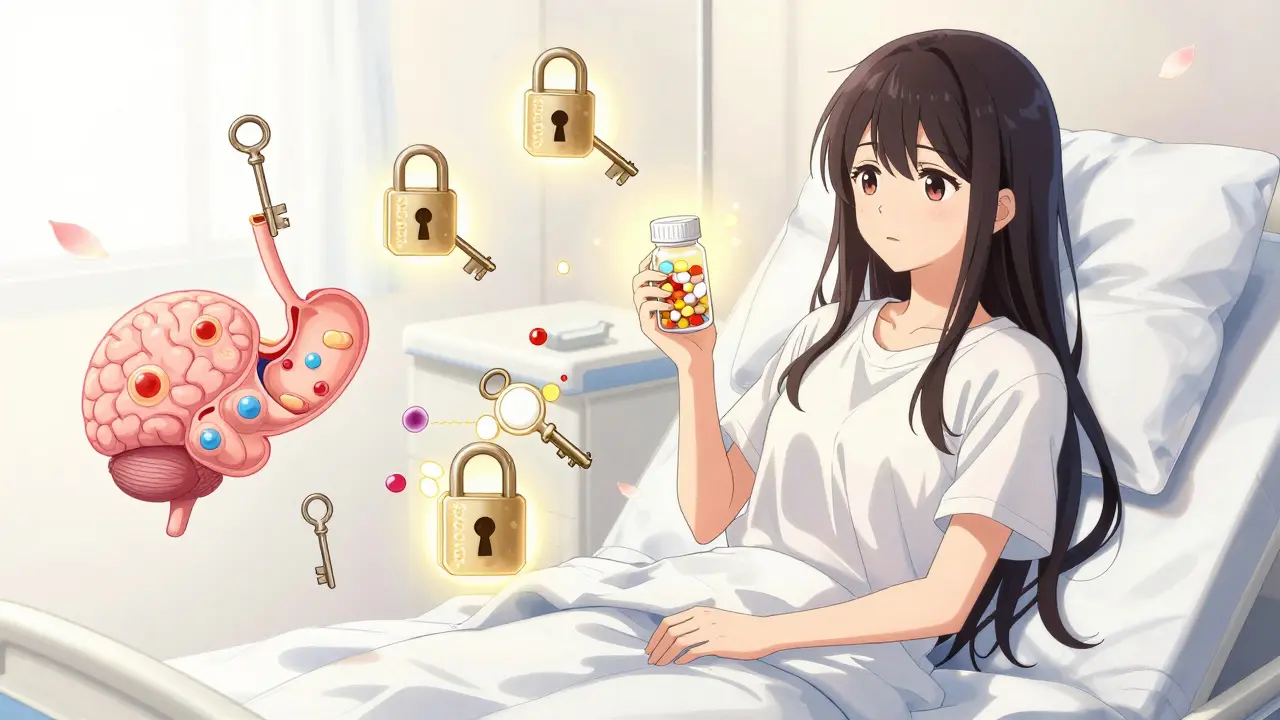
Drugs don’t just target one spot. They move through your body like a key trying to fit into a lock - but sometimes, the key fits more than one lock.Take NSAIDs, like ibuprofen or naproxen. They’re meant to block COX-2, an enzyme that causes pain and swelling. But they also block COX-1, which protects your stomach lining. That’s why 15-30% of regular users develop stomach ulcers. The drug didn’t fail. It just had two targets, and one of them was your gut.
Same with haloperidol, used for schizophrenia. It blocks dopamine receptors in the brain to reduce hallucinations. But dopamine is also important for movement. So 30-50% of people on this drug develop tremors, stiffness, or uncontrollable muscle movements within days. The drug didn’t go rogue - it just didn’t know how to stop at the brain.
Even more complex are drugs that interact with cell membranes. Research from Weill Cornell Medicine in 2021 showed that some drugs don’t just bind to proteins - they change the physical properties of the membrane itself. Think of it like pouring oil into a machine. It doesn’t break one gear; it makes the whole system slippery. That’s why some drugs cause side effects across multiple organs, even when they’re designed for just one.
Your Genes Are Playing a Role - Whether You Know It or Not
Not everyone reacts the same way to the same drug. Why? Because your genes decide how your body handles it.One key player is the CYP2D6 enzyme. It breaks down about 25% of all prescription drugs, including codeine. But 5-10% of people of European descent have a version of this gene that breaks down codeine too slowly. That means the drug builds up in their blood, turning a mild painkiller into a dangerous respiratory depressant. Others have a super-active version - they process codeine so fast they get no pain relief at all.
Then there’s HLA-B*57:01, a gene variant that makes people extremely sensitive to abacavir, an HIV drug. Before testing, about 5-8% of carriers had life-threatening allergic reactions. Now, doctors test for this gene before prescribing. The result? Reactions dropped to under 0.5%. That’s not luck. That’s precision medicine.
Another example: isoniazid, used to treat tuberculosis. About 1 in 10,000 people develop severe liver damage. Why? They’re slow acetylators - their NAT2 gene doesn’t process the drug quickly enough. The drug lingers, turning toxic. Genetic screening isn’t routine for all drugs yet, but it’s becoming standard for high-risk ones.

Drug Interactions: When One Medicine Makes Another Dangerous
Taking more than one drug doesn’t just add side effects - it multiplies them.Grapefruit juice is a classic example. It blocks an enzyme called CYP3A4, which normally breaks down drugs like felodipine (a blood pressure medication). Without that enzyme, felodipine levels can spike by 260%. That’s not a little dizziness - that’s a risk of passing out from dangerously low blood pressure.
Another example: rifampicin, an antibiotic, speeds up the body’s ability to clear digoxin, a heart drug. This can drop digoxin levels by 30-50%, making it useless. Meanwhile, NSAIDs like ibuprofen reduce kidney blood flow, which slows down how fast methotrexate (used for arthritis and cancer) leaves the body. That buildup can cause bone marrow failure.
Older adults are especially vulnerable. Taking five or more medications increases the risk of dangerous interactions by up to 70%. That’s why polypharmacy is one of the biggest causes of hospital admissions in people over 65.
Immune System Reactions: When Your Body Attacks the Medicine
Some side effects aren’t about chemistry - they’re about your immune system going rogue.Type I reactions are immediate and scary. Penicillin can trigger anaphylaxis in 1-5 out of every 10,000 courses. It’s rare, but deadly. Your body sees the drug as an invader and releases histamine, causing swelling, breathing trouble, and a drop in blood pressure.
Type IV reactions are slower. They’re caused by T-cells, not antibodies. Stevens-Johnson Syndrome, a rare but severe skin reaction, can happen weeks after starting a drug like allopurinol or sulfonamides. It affects 1-6 people per million each year. The skin blisters and peels. It’s not an allergy in the traditional sense - it’s an immune attack on your own tissue.
Then there are pseudoallergic reactions, like vancomycin flushing syndrome. It looks like an allergic reaction - red skin, itching, low blood pressure - but it’s not. The drug directly triggers mast cells to release histamine. No immune system involvement. Just chemistry gone wrong.
How Doctors Try to Prevent Side Effects - And What Works
Doctors aren’t guessing when they warn you about side effects. They’re using science to reduce risk.For people at high risk of stomach ulcers from NSAIDs, doctors now routinely prescribe proton pump inhibitors (PPIs) like omeprazole. Clinical trials show this cuts ulcer risk by 70-80%.
For antidepressants like SSRIs, starting with a low dose reduces nausea and dizziness in 20-30% of patients. Gradually increasing the dose lets your body adjust.
Therapeutic drug monitoring is used for drugs with narrow safety margins. Digoxin, for example, is effective at 0.5-0.9 ng/mL. Above 1.2, it becomes toxic. Blood tests keep it in range.
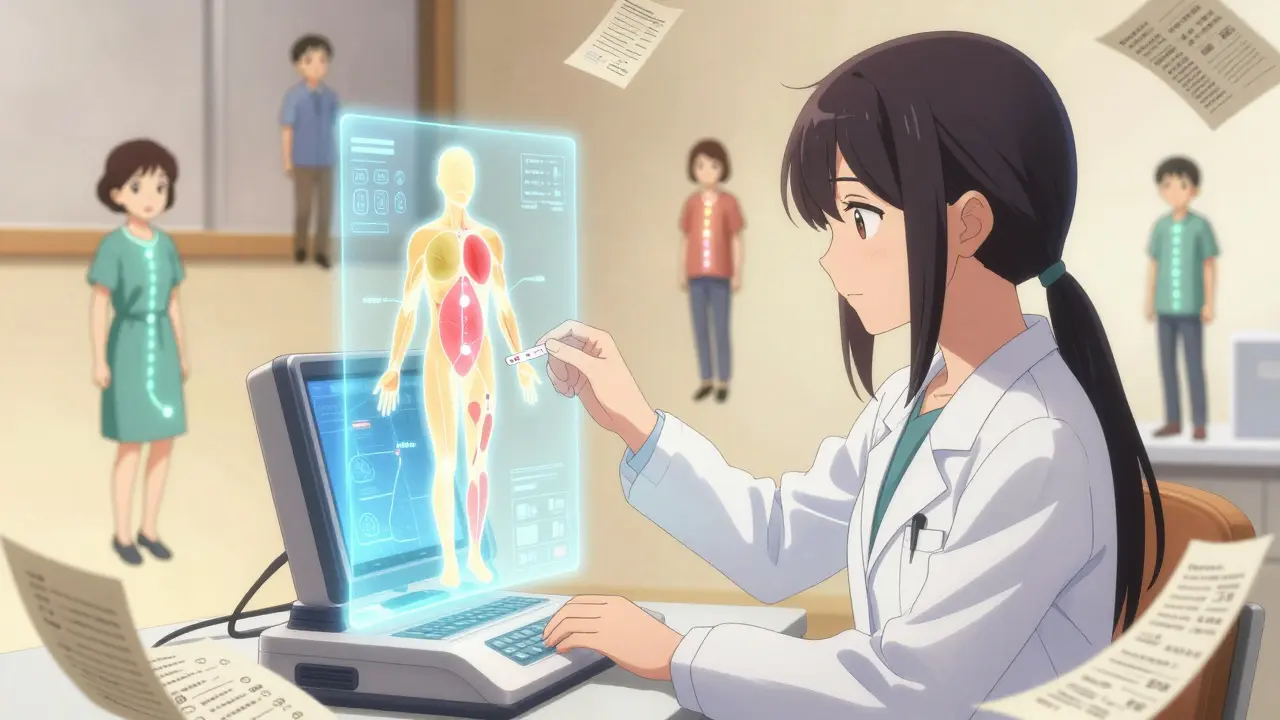
And pharmacogenomics is changing everything. Testing for HLA-B*57:01 before abacavir, or CYP2C19 before clopidogrel, prevents dangerous reactions before they happen. These tests are now part of standard care in many hospitals.
The Future: Smarter Drugs, Fewer Side Effects
The next wave of drug development isn’t just about making drugs work better - it’s about making them safer from the start.AI is now being used to predict which molecules are likely to hit the wrong targets. A 2023 study in Nature Reviews Drug Discovery found that using AI in early testing could cut late-stage trial failures due to toxicity by 25-30%. That’s billions saved and more drugs reaching patients safely.
The FDA’s Sentinel Initiative tracks drug safety across 300 million patient records in real time. It spotted that pioglitazone, a diabetes drug, increased heart failure risk by 1.5-2 times - something clinical trials missed because the trials were too small and too short.
Researchers are now mapping exactly which parts of a cell membrane make proteins vulnerable to drug interference. The goal? Design drugs that don’t mess with membranes at all. If they succeed, we could see a new generation of medications with far fewer side effects.
What You Can Do
You can’t control your genes. But you can control how you use your meds.- Always tell your doctor about every medication, supplement, and herb you take - even over-the-counter ones.
- Ask: "What are the most common side effects? What should I watch for?"
- Don’t stop or change doses without talking to your doctor - even if you think the side effect is "just a nuisance."
- If you notice something new - rash, confusion, unusual fatigue - write it down. Bring it to your next appointment.
Side effects aren’t a sign that something’s wrong with you. They’re a sign that your body is complex - and that medicine is still learning how to work with it. The science is getting better. And so are the tools to protect you.
Are side effects always dangerous?
No. Many side effects are mild and temporary - like nausea, drowsiness, or dry mouth. These often fade as your body adjusts. But some can be serious or life-threatening, especially if ignored. Always report new or worsening symptoms to your doctor.
Can I avoid side effects by taking less of a drug?
Not always. Some side effects are dose-dependent, like dizziness from blood pressure meds. Lowering the dose can help. But others happen at any dose - like allergic reactions or genetic-based toxicities. Never reduce your dose without talking to your doctor.
Why do some people have side effects and others don’t?
Genetics, age, liver and kidney function, other medications, and even diet can all play a role. For example, someone with a CYP2D6 poor metabolizer gene will process codeine differently than someone with a fast version. That’s why two people on the same drug can have completely different experiences.
Do natural supplements cause side effects too?
Yes. St. John’s wort can interfere with antidepressants, birth control, and blood thinners. Garlic and ginkgo can increase bleeding risk. Even vitamins like vitamin K can affect blood thinners like warfarin. Natural doesn’t mean safe - and it doesn’t mean free from interactions.
Can side effects show up years after starting a drug?
Yes. Some side effects are delayed. Weight gain from antipsychotics like olanzapine can happen over weeks or months. Bone loss from long-term steroid use can take years. Certain drugs can also trigger autoimmune reactions or increase cancer risk after prolonged use. Regular check-ups matter, even if you feel fine.
Chloe Hadland
January 23, 2026 AT 05:53Amelia Williams
January 24, 2026 AT 02:48venkatesh karumanchi
January 25, 2026 AT 03:51Elizabeth Cannon
January 26, 2026 AT 13:39siva lingam
January 27, 2026 AT 04:02Phil Maxwell
January 28, 2026 AT 00:47Shelby Marcel
January 28, 2026 AT 21:41blackbelt security
January 29, 2026 AT 22:39Patrick Gornik
January 30, 2026 AT 16:17