

When you see someone vaping on the street, it’s easy to think they’re just breathing in flavored steam. But what’s really in that vapor? And what’s it doing to your lungs? The truth is, vaping isn’t harmless. Even if you’ve never smoked a cigarette, using an e-cigarette puts your lungs under stress-every puff.
What’s Actually in Vaping Aerosol?
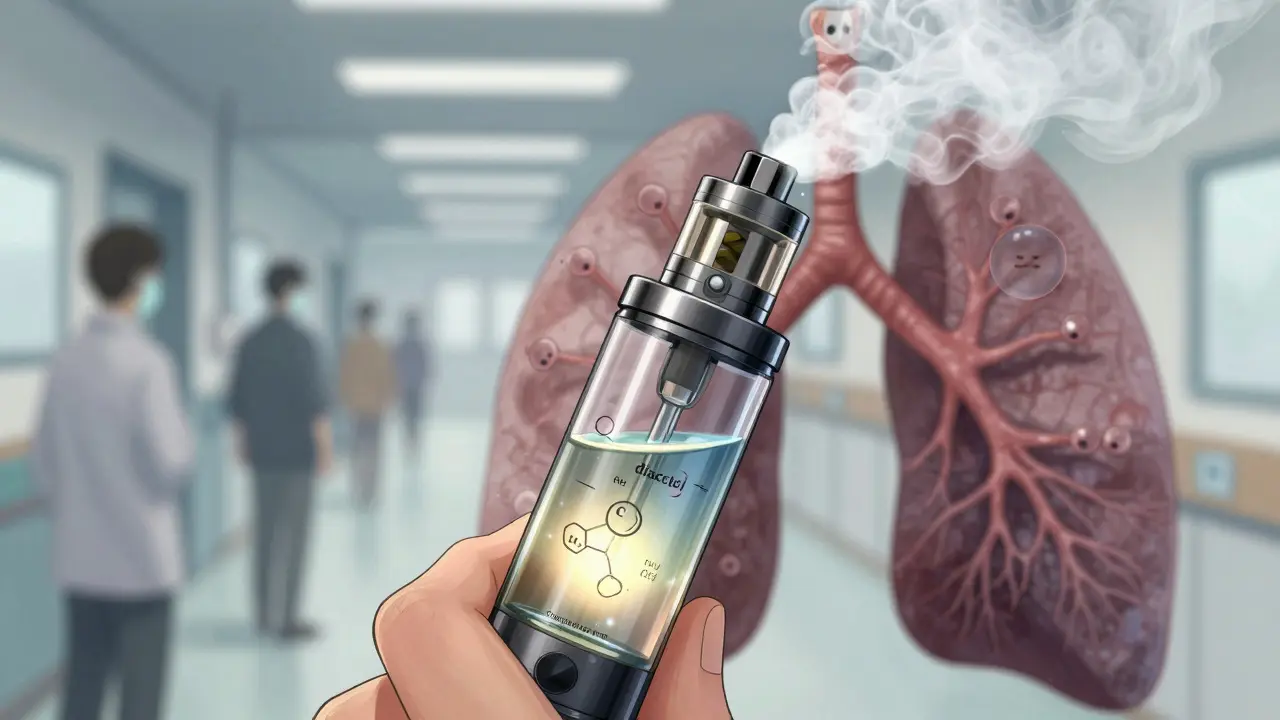
E-cigarettes don’t burn tobacco, so they don’t produce tar or the same levels of cancer-causing chemicals found in cigarettes. But that doesn’t mean they’re safe. The liquid inside these devices-usually a mix of propylene glycol, vegetable glycerin, nicotine, and flavorings-gets heated into a fine mist you inhale. That mist isn’t just water vapor. It’s a cocktail of chemicals, some of which are known to damage lung tissue.
Studies show that even basic e-liquids release toxic substances like acetaldehyde, acrolein, and formaldehyde when heated. These are the same chemicals found in car exhaust and industrial smoke. A University of North Carolina study found that the more ingredients in an e-liquid, the more toxic the aerosol becomes. Flavorings, especially sweet or creamy ones, often contain diacetyl, a chemical linked to a rare but serious lung disease called bronchiolitis obliterans-sometimes called "popcorn lung." While diacetyl has been banned in many countries, it still shows up in unregulated products, and even legal ones can contain similar compounds.
And it’s not just chemicals. The heating coils in vapes can break down into tiny metal particles. Nickel, tin, lead-you’re inhaling heavy metals with every puff. These particles don’t just disappear. They stick around in your lungs, triggering inflammation and potentially causing long-term damage.
How Vaping Affects Your Lungs
Your lungs aren’t designed to handle this kind of chemical assault. When you vape, the aerosol irritates the lining of your airways. This leads to inflammation, which might not feel like much at first. But over time, that constant irritation changes how your lungs work.
One major concern is immune suppression. Research from the American Thoracic Society shows that vaping reduces the ability of lung cells to fight off infections. This means vapers are more likely to catch colds, bronchitis, and pneumonia. Even people who’ve never smoked are seeing this effect. In fact, one study found that young adults who vape regularly are 48% more likely to develop COPD than those who don’t. That’s not a small risk. That’s a clear, measurable increase in disease.
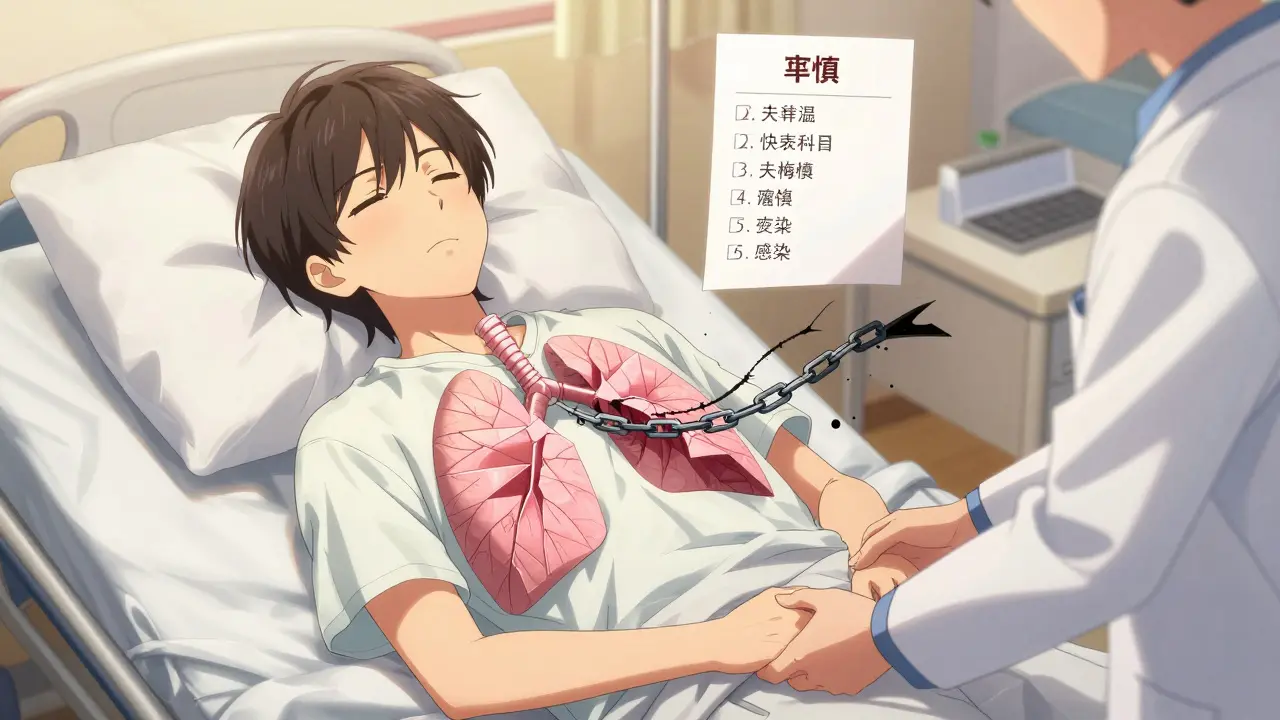
And then there’s EVALI-the 2019 outbreak that shocked the medical world. Over 2,800 people in the U.S. were hospitalized. At least 68 died. The cause? Vitamin E acetate, a thickening agent added to THC vaping oils. It wasn’t nicotine. It wasn’t flavoring. It was a cheap additive used to stretch the product. When heated, it turned into a sticky, toxic sludge that coated the lungs, causing severe injury. The outbreak faded from headlines, but the lesson didn’t: unregulated vaping products can cause sudden, life-threatening damage.
Symptoms You Can’t Ignore
Some people think if they don’t feel sick, vaping isn’t hurting them. That’s dangerous thinking. Lung damage from vaping often builds slowly. You might not notice it until it’s advanced.
Common signs include:
- A persistent cough that won’t go away
- Shortness of breath during light activity, like walking up stairs
- Chest tightness or pain
- Frequent respiratory infections
- Reduced ability to exercise or stay active
These symptoms don’t always show up right away. Someone who’s been vaping for two years might not feel any different-but their lung function could already be declining. That’s why experts now recommend that even asymptomatic vapers talk to a doctor about their habit. Routine lung screenings can catch problems before they become serious.
Vaping vs. Smoking: Is It Really Better?
You’ve probably heard that vaping is "less harmful" than smoking. That’s true-if you’re comparing it to lighting up a pack of cigarettes every day. Cigarettes contain over 7,000 chemicals, hundreds of which are toxic, and at least 70 cause cancer. Vaping doesn’t have that same level of poison.
But here’s the catch: "Less harmful" doesn’t mean "safe." Vaping introduces new risks that smoking doesn’t. While smokers get lung damage from tar and combustion, vapers get it from chemical irritation, metal particles, and immune suppression. The damage looks different, but it’s still damage.
And for young people? The risk is even higher. The National Academies found that teens who vape are more likely to develop asthma symptoms and wheezing. Many of them never smoked before. Vaping isn’t just a substitute-it’s a gateway. And nicotine, whether from a cigarette or a vape, rewires the teenage brain, making addiction more likely and harder to break.
What About Quitting?
If you’re vaping to quit smoking, you’re not alone. But the evidence is clear: vaping isn’t a reliable quitting tool. Many people end up using both. And even if you do stop smoking, you’re still exposing your lungs to harmful chemicals.
The best advice from doctors? Quit both. If you’re trying to stop nicotine entirely, there are proven methods-nicotine patches, gum, counseling, prescription medications-that don’t involve inhaling aerosols. They’re safer, better studied, and more effective.
Recovery after quitting vaping isn’t instant. Some inflammation can reverse within weeks. But if you’ve been vaping heavily for years, some damage may be permanent. Scar tissue, reduced lung capacity, weakened immune defenses-these don’t always heal.
The Bottom Line
Vaping isn’t a harmless hobby. It’s not just "breathing in flavor." It’s a direct, repeated exposure to chemicals that damage your lungs, weaken your immune system, and increase your risk of serious disease. The science is no longer up for debate. The National Academies, the CDC, the American Lung Association, and top medical societies all agree: vaping causes health risks.
If you vape, even occasionally, your lungs are paying a price. If you’re trying to quit smoking, there are better, safer ways to do it. And if you’re young and thinking about trying vaping because it looks cool or harmless? The data doesn’t lie. Your lungs will thank you for saying no.
Can vaping cause COPD even if I’ve never smoked?
Yes. Research shows that people who vape but have never smoked still have a 48% higher risk of developing COPD compared to non-users. Vaping damages the airways and reduces lung function over time, even without tobacco use. The chemicals in e-cigarette aerosols trigger inflammation and cell changes that contribute to chronic obstructive lung disease.
Is EVALI still a concern today?
Yes. While the 2019 outbreak was tied to THC oils containing vitamin E acetate, unregulated vaping products are still on the market. Many contain unknown additives, and some still use harmful thickening agents. Even legal, regulated products can contain toxins that damage lung tissue. EVALI showed how quickly vaping can cause severe injury-and that risk hasn’t gone away.
Do flavorings in vapes really hurt your lungs?
Absolutely. Flavorings like diacetyl, acetyl propionyl, and acetoin are linked to lung disease. Even when banned in one country, they often appear in products sold online or imported. A University of North Carolina study found that flavorings significantly increase toxicity in vaping aerosols. Sweet, buttery, or fruity flavors are especially risky because they contain chemicals that irritate the airway lining.
Can vaping weaken your immune system?
Yes. Studies show that vaping reduces the ability of lung cells to fight off viruses and bacteria. This makes vapers more susceptible to pneumonia, bronchitis, and other respiratory infections. The effect is stronger than what’s seen in cigarette smokers, because vaping chemicals directly interfere with immune cell function in the lungs.
How long does it take for lungs to heal after quitting vaping?
Some improvement starts within weeks-especially in inflammation and lung function. But full recovery isn’t guaranteed. If you’ve been vaping for years, especially heavily, some damage like scarring or reduced lung elasticity may be permanent. The earlier you quit, the better your chances of reversing harm. Doctors recommend regular check-ups to monitor lung health after quitting.
Marissa Staples
March 24, 2026 AT 02:15It’s wild how we’ve been sold this idea that vaping is just "flavored air." Like, if it were truly harmless, why do the chemicals in it have warning labels on industrial use? I’ve been thinking about how we normalize things that quietly wreck us-like sugar, or scrolling, or now this. We don’t see the damage until it’s deep inside.
It’s not even about willpower. It’s about how marketing makes something dangerous feel like self-care. "I’m just vaping to relax." But what are you really relaxing from? And at what cost?
Anil Arekar
March 25, 2026 AT 05:01While the scientific evidence presented is compelling and well-documented, I must respectfully observe that cultural contexts vary significantly. In certain regions, e-cigarettes are perceived not as recreational devices but as harm-reduction tools for individuals transitioning from traditional tobacco use. The narrative of absolute harm may overlook the nuanced realities faced by populations with limited access to regulated cessation programs.
Nonetheless, the presence of toxic byproducts such as acrolein and heavy metals in aerosols is unequivocally concerning. A balanced public health approach must prioritize both education and accessible alternatives, rather than moralistic condemnation.
Elaine Parra
March 26, 2026 AT 08:48Let’s be real-this isn’t about health. It’s about control. The same institutions that told us smoking was fine for decades now tell us vaping is evil. Why? Because they lost the tobacco monopoly and now they want to sell you patches, gum, and therapy sessions at $200 an hour.
Meanwhile, real smokers who switched to vaping? They’re healthier. Their lungs aren’t black. They’re not coughing up phlegm every morning. But now the media’s painting them as villains because profits are at stake. Don’t be fooled. This is corporate power playing victim.
Natasha Rodríguez Lara
March 27, 2026 AT 21:48I used to vape daily. Didn’t think twice. Then I started getting bronchitis every winter. My doctor asked if I vaped. I said "no, I’m not a smoker." She looked at me like I’d just lied about my age.
Got a pulmonary function test. My lung capacity dropped 18% in two years. No smoking history. Just vaping. That’s when it hit me-this isn’t about quitting smoking. It’s about not poisoning yourself for fun.
Now I use nicotine gum. I still get cravings, but at least I know my lungs aren’t being coated in metal dust. And honestly? I breathe easier. Not just physically. Mentally too.
peter vencken
March 29, 2026 AT 07:11bro i just started vaping last year and im fine. no cough, no wheezing, i even run 5k now. everyone’s acting like its a death sentence but like… have you seen how many people get cancer from smoking? vaping’s gotta be better right?
also the flavorings are fire. mango ice? cherry burst? why are we mad about that? its not like we’re smoking tar.
stop scaremongering. i dont trust these "studies"-they’re all funded by big pharma.
Chris Crosson
March 30, 2026 AT 14:55I get why people get defensive about vaping. It feels personal. Like you’re being told your choice is wrong. But here’s the thing: science doesn’t care how you feel. It just shows what happens.
That 48% increase in COPD risk? That’s not a typo. That’s from peer-reviewed longitudinal studies. And the fact that teens who vape are more likely to start smoking? That’s not speculation-that’s data.
It’s not about shaming. It’s about giving people real info so they can decide. If you’re vaping because you think it’s safe, you’re not being rebellious-you’re being misinformed.
Linda Foster
March 31, 2026 AT 18:01The evidence presented in this post is methodologically sound, comprehensive, and consistent with the consensus of major public health institutions. It is both unfortunate and concerning that misinformation persists in public discourse despite the clarity of peer-reviewed research.
It is imperative that individuals, particularly adolescents, are provided with accurate, evidence-based information regarding the physiological consequences of aerosol inhalation. The normalization of such behavior under the guise of harm reduction warrants urgent, coordinated public health intervention.
Rama Rish
April 2, 2026 AT 10:49Kevin Siewe
April 3, 2026 AT 06:03I’ve helped a few friends quit vaping over the years. One guy had been vaping for five years-no smoking, just "cool clouds." He thought he was fine. Then he got pneumonia and spent a week in the hospital.
After that, he switched to patches. Took three tries. But now? He hikes with his kids. Breathes deep. No more wheezing after climbing stairs.
It’s not easy. But it’s worth it. And you don’t have to do it alone. Talk to someone. Even just one person. That’s how change starts.
Chris Farley
April 3, 2026 AT 23:19Oh wow, another fearmongering article from the CDC-approved media machine. Let me guess-next you’ll tell me water is toxic because of chlorine? Or that sunlight causes cancer?
Real scientists don’t panic over aerosols. Real scientists look at the data. And guess what? The death rate from vaping? Near zero. The death rate from smoking? Hundreds of thousands.
So why are we treating vaping like a plague? Because the government wants you addicted to their nicotine patches. Because corporations want to sell you expensive rehab. Because control is more profitable than truth.
Darlene Gomez
April 4, 2026 AT 05:56I want to say something real: I used to be the person who said "vaping is fine, it’s just water vapor." I believed the ads. I believed the influencers.
Then I got pregnant. And I stopped. Not because I was scared-I was curious. So I read the studies. Not headlines. The actual papers. And what I found terrified me-not because it was dramatic, but because it was quiet. The damage wasn’t screaming. It was whispering.
My lungs didn’t hurt. My chest didn’t ache. But my lung function was already declining. And I was 28.
I quit. Used gum. Got therapy. Took six months. And now? I don’t miss it. Not one bit.
To anyone still vaping: you don’t have to be a smoker to be at risk. You don’t have to be sick to be damaged. And you don’t have to suffer to start healing. Just pause. Breathe. And ask yourself-am I really okay? Or am I just not feeling it yet?