
Meibomian Gland Dysfunction: Causes, Symptoms, and Real Solutions
When your eyes feel dry, burning, or like there’s sand in them, it’s easy to blame screen time or allergies. But if those symptoms stick around, you might be dealing with meibomian gland dysfunction, a condition where the oil-producing glands along your eyelids get clogged or stop working properly. Also known as MGD, it’s the leading cause of dry eye syndrome—far more common than people realize. These tiny glands, hidden right at the edge of your eyelids, make the oily layer of your tear film. Without that oil, your tears evaporate too fast. No amount of artificial tears will fix that if the root problem isn’t addressed.
Blepharitis, inflammation of the eyelid margins, often goes hand-in-hand with meibomian gland dysfunction. The same bacteria, skin conditions like rosacea, or even makeup residue can clog the gland openings. Over time, the glands shrink or harden, making it harder for oil to flow. This isn’t just discomfort—it affects vision clarity, increases light sensitivity, and can lead to chronic irritation. Many people get prescribed eye drops for years without realizing the issue isn’t lack of tears—it’s lack of oil. Tear film disorder, a broader category that includes MGD, shows up in over 80% of dry eye cases, yet it’s still underdiagnosed. Doctors often miss it because the signs aren’t obvious without a close look at the eyelid margins under magnification. If you’ve tried lubricating drops and still feel gritty, burning, or have crusty eyelids in the morning, you’re not just being dramatic. Your glands are struggling.
What helps? Warm compresses, gentle lid scrubs, and avoiding heavy eye makeup can make a difference. But if it’s advanced, you might need professional treatments like gland expression, intense pulsed light therapy, or prescription anti-inflammatory drops. It’s not a one-size-fits-all fix. The good news? Most people see real improvement once they understand this isn’t just "dry eyes"—it’s a structural issue with the oil system in your eyelids. Below, you’ll find real-world advice from people who’ve dealt with this, plus clear explanations of treatments, common mistakes, and how to tell if what you’re doing is actually helping—or just wasting time.
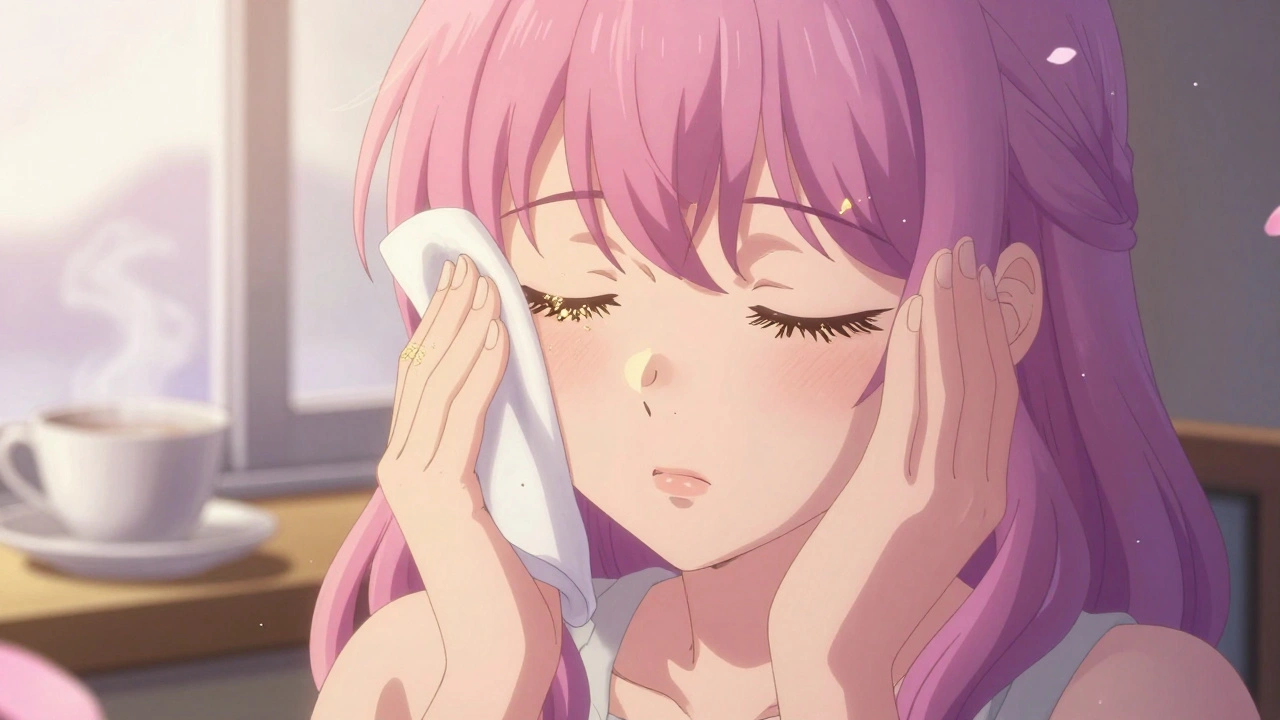
Blepharitis: How Warm Compresses Relieve Eyelid Inflammation
Blepharitis causes red, itchy eyelids and crusty lashes. Warm compresses applied correctly are the most effective first treatment, melting blocked oils and reducing symptoms in weeks. Consistency matters more than expensive tools.