

When your skin starts to feel tight, your fingers turn white in the cold, or you can’t button your shirt anymore, it’s easy to brush it off as aging or dry skin. But for people with scleroderma, these aren’t minor annoyances-they’re early signs of a serious, progressive autoimmune disease that attacks connective tissues from the inside out.
What Exactly Is Scleroderma?
Scleroderma, also known as systemic sclerosis, is not just a skin condition. It’s a rare autoimmune disease where the body’s immune system mistakenly triggers excessive collagen production. This isn’t normal skin repair-it’s uncontrolled scarring that hardens skin, blood vessels, and even internal organs like the lungs, heart, and digestive tract. The name comes from Greek: sclero means hard, and derma means skin. But what starts on the skin can spread far beyond it.
There are two main types. Localized scleroderma (or morphea) affects only patches of skin and rarely goes deeper. It’s less dangerous and often seen in children. But systemic scleroderma is the real concern. It doesn’t just stiffen fingers-it can scar the lungs, narrow blood vessels in the heart, and shut down digestion. About 300 out of every million people have it. Most are women between 30 and 50, with a 4-to-1 female-to-male ratio.
The Silent Warning Signs
Most people don’t wake up one day with hard skin. Scleroderma creeps in quietly. The earliest sign? Raynaud’s phenomenon. In 90% of cases, this shows up years before anything else. Your fingers or toes turn white, then blue, then red when exposed to cold or stress. It’s not just being cold-sensitive-it’s your blood vessels spasming violently. Many patients describe it as feeling like needles stabbing their fingertips.
Soon after, skin changes begin. Fingers swell, then tighten. This is called sclerodactyly. You can’t fully open your hands. Your face may feel stretched, your lips thinner. You might notice shiny patches on your arms or legs. These aren’t cosmetic-they’re signs of collagen flooding your tissues.
By the time people see a doctor, they’ve often been to three or more specialists over 18 months. Fatigue, heartburn that won’t go away, trouble swallowing, or shortness of breath with minimal activity are all red flags. The average delay in diagnosis is 18 months. That’s too long. Early detection changes outcomes.
How Doctors Diagnose It
There’s no single blood test for scleroderma. Diagnosis is a puzzle made of symptoms, physical exam, and antibodies. Almost all patients test positive for antinuclear antibodies (ANA)-a general marker of autoimmunity. But the real clues are in the specific antibodies:
- Anti-Scl-70 (Topoisomerase I): Found in 30-40% of diffuse cases. Predicts higher risk of lung scarring.
- Anti-centromere (ACA): Seen in 20-40% of limited cases. Usually means slower progression and lower organ risk.
- Anti-RNA polymerase III: Appears in 15-25%. Linked to fast skin thickening and higher cancer risk.
Doctors also use the modified Rodnan skin score-a hands-on test that measures how thick or hard the skin is across 17 body areas. A score above 10 signals significant involvement. Lung scans (high-resolution CT), heart ultrasounds (echocardiograms), and swallowing tests are routine. If you have Raynaud’s plus one of these antibodies and skin changes, the diagnosis is almost certain.
What Happens Inside the Body
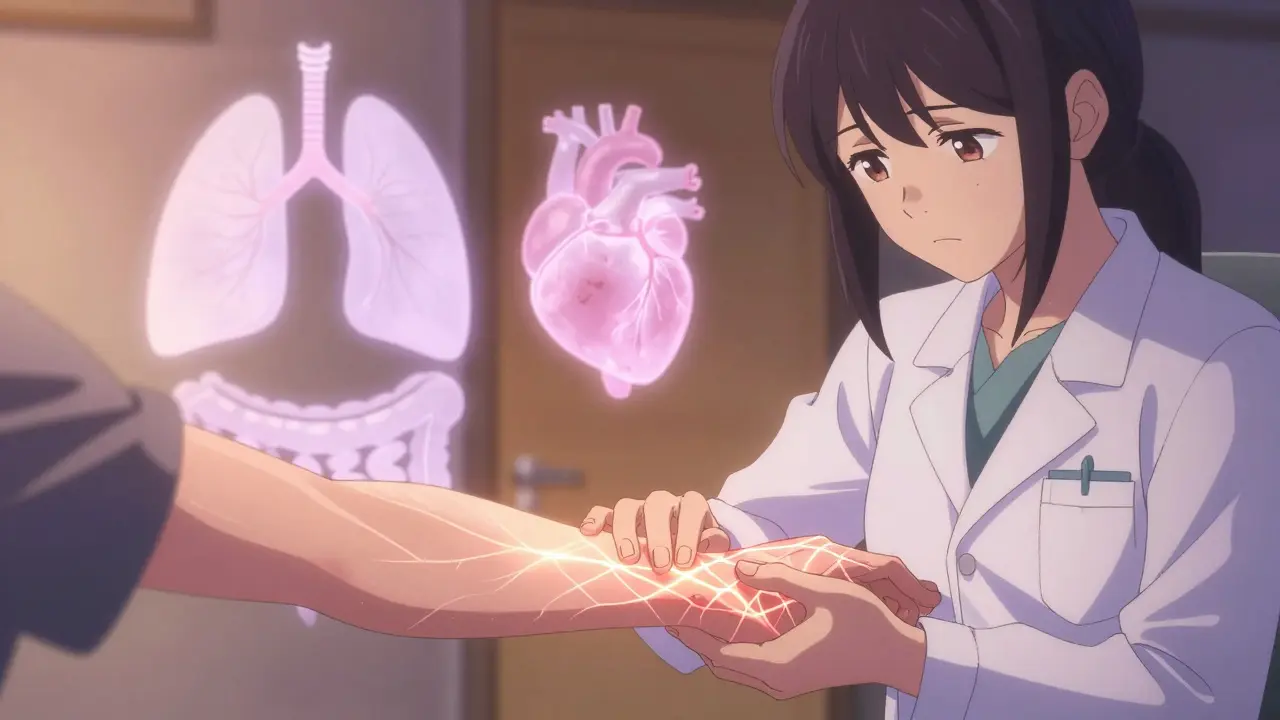
Scleroderma isn’t just about collagen. It’s a three-part storm: autoimmunity, vasculopathy, and fibrosis. The immune system attacks blood vessels first, causing them to narrow and leak. This starves tissues of oxygen, triggering inflammation. Then, fibroblasts-cells that normally help heal wounds-go rogue. They churn out collagen like a factory on overdrive. Skin hardens. Blood vessels stiffen. Organs get covered in scar tissue.
That’s why it hits so many systems:
- Lungs: 80% develop pulmonary fibrosis. Scar tissue replaces air sacs. Breathing becomes shallow. This is the #1 cause of death.
- Heart: 30-45% have heart scarring or rhythm problems. Some develop pulmonary arterial hypertension-high pressure in lung arteries.
- Kidneys: 10-15% get renal crisis. Sudden spikes in blood pressure can cause kidney failure.
- GI tract: 90% have problems. Food moves slower. Acid reflux is constant. Constipation or diarrhea becomes routine. Nutrients aren’t absorbed well.
It’s not one organ-it’s a whole-body breakdown.
How It Compares to Other Autoimmune Diseases
Lupus? RA? They’re different. Lupus causes flares, rashes, joint pain-but rarely scar tissue. Rheumatoid arthritis attacks joints with inflammation, leading to swelling and erosion. Scleroderma? It turns tissue into stone.
Take joint pain. In RA, it’s from swelling and erosion. In scleroderma, it’s from skin tightening pulling on tendons. You can’t bend your fingers-not because your joints are inflamed, but because your skin is glued shut. Same with swallowing. In lupus, it’s rare. In scleroderma, it’s almost universal.
And while lupus affects 1.5 million Americans, scleroderma hits only about 300,000. But it’s deadlier per case. Ten-year survival? 75-85% for limited type. But for diffuse? Only 55-70%. The difference? Lung and heart damage.
Current Treatments-And Their Limits
There’s no cure. And there’s no FDA-approved drug that stops the fibrosis itself. Most treatments are borrowed from other diseases. Immunosuppressants like mycophenolate or cyclophosphamide help slow lung scarring in some. Blood pressure drugs like ACE inhibitors protect kidneys. Calcium channel blockers or vasodilators ease Raynaud’s.
The only truly new approval? Tocilizumab, approved by the FDA in 2021 for scleroderma-related lung disease. It blocks a key inflammation protein (IL-6). It doesn’t reverse scarring-but it can slow it down.
But here’s the hard truth: Only 40-50% of patients get meaningful relief. And in diffuse cases, less than 30% show improved skin hardness after a year of treatment. Many rely on off-label drugs, clinical trials, or desperate measures like stem cell transplants.
That’s why specialized care matters. At centers like Johns Hopkins or Stanford, patients see a team: rheumatologist, pulmonologist, cardiologist, GI specialist, physical therapist. These multidisciplinary teams cut hospitalizations by over 30%. General rheumatologists? Often miss the signs. One study found patient education materials from top centers rated 4.2 out of 5. Community clinics? Just 2.8.
Life With Scleroderma
It’s not just medical-it’s daily survival. Seventy-eight percent of patients say they struggle with basic tasks: buttoning shirts, opening jars, holding a pen. Sixty-five percent use adaptive tools. Eighty-two percent battle chronic heartburn. Seventy percent are too tired to work full-time.
Digital ulcers-open sores on fingertips-are common. They hurt. They don’t heal fast. Some need weekly wound care visits. Others lose fingertips. Pulmonary fibrosis requires yearly CT scans. Gastrointestinal issues mean eating small meals, avoiding spicy food, sleeping upright. Many take five or more medications a day.
And the emotional toll? Heavy. Eighty-five percent say they waited too long for a diagnosis. Seventy-six percent are frustrated by lack of treatment options. Fifty-eight percent have insurance issues with drugs like iloprost-a life-saving IV treatment for lung pressure that costs thousands per dose.
What’s Changing? Hope on the Horizon
There’s progress. In 2024, the Scleroderma Research Foundation pledged $15 million to target fibrosis directly. Over 47 clinical trials are active, testing drugs that block collagen production, calm immune cells, or repair blood vessels.
One promising area? Autologous stem cell transplants. In the 2023 SCOT trial, 50% of patients with severe disease showed major skin improvement after 4.5 years. It’s risky-but for those with rapid progression, it’s a lifeline.
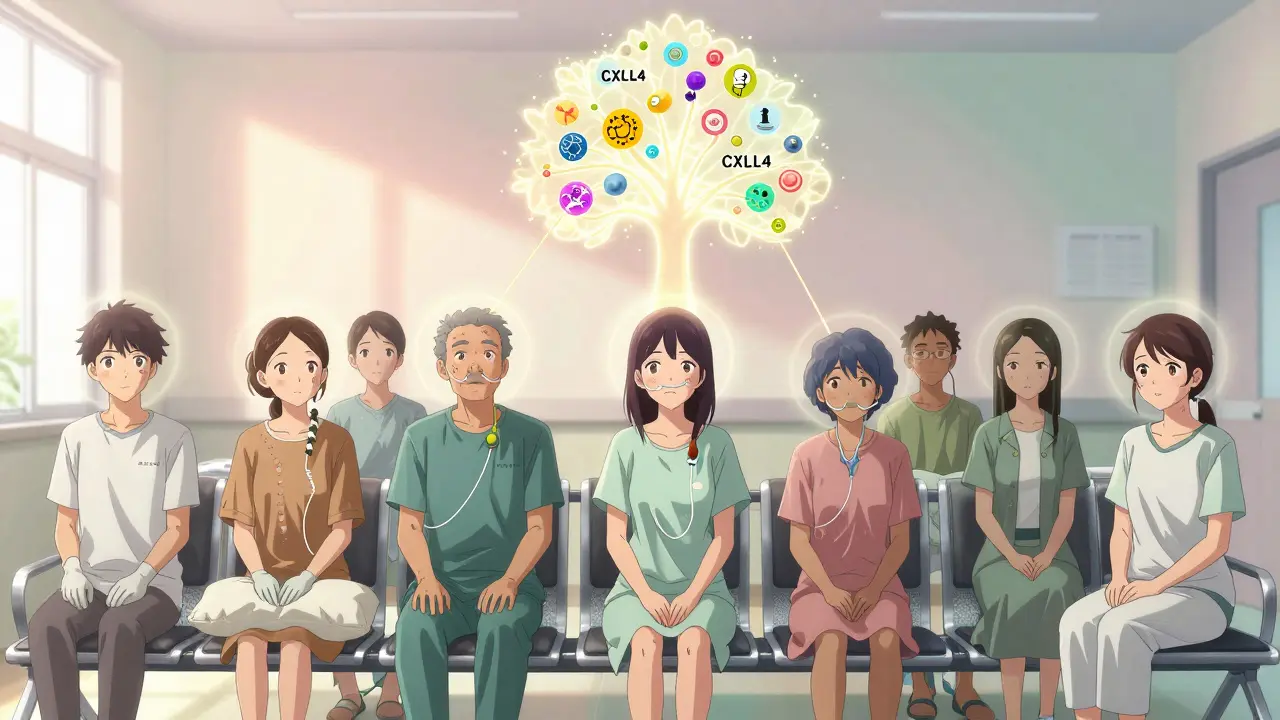
Another breakthrough? A blood test for CXCL4, a protein that spikes before symptoms appear. If validated, it could let doctors diagnose scleroderma before organs are damaged.
Telemedicine is helping too. Stanford’s program now serves 127 rural patients via monthly video visits. Hospitalizations dropped 32%. That’s huge for people who live hours from specialists.
And the future? More targeted drugs. Better monitoring. Earlier diagnosis. The global market for scleroderma treatments is set to double by 2028. Research is accelerating. But until then, the best weapon is awareness-and seeing a specialist before it’s too late.
Is scleroderma the same as lupus?
No. Lupus is an autoimmune disease that causes inflammation in joints, skin, kidneys, and other organs, but it doesn’t typically cause the thick, scarred tissue that defines scleroderma. While both can cause fatigue and Raynaud’s, lupus flares come and go. Scleroderma slowly hardens skin and organs over time. Antibody tests help tell them apart-lupus often shows anti-dsDNA, while scleroderma shows anti-Scl-70 or anti-centromere.
Can scleroderma be cured?
Not yet. There’s no cure for scleroderma. But treatments can slow progression, manage symptoms, and prevent organ damage. Some patients with severe disease may benefit from stem cell transplants, which can lead to long-term improvement in skin and lung function. Research is ongoing, and new drugs targeting fibrosis are in clinical trials.
Why does scleroderma affect women more than men?
The exact reason isn’t known, but hormones likely play a role. Estrogen may influence immune system behavior and collagen production. Most cases occur in women between 30 and 50-right in the childbearing years. Genetic factors may also interact with environmental triggers like silica dust or certain chemicals, but women appear more vulnerable to this interaction.
How do you know if your Raynaud’s is linked to scleroderma?
Raynaud’s alone is common and often harmless. But if it starts before age 30, lasts more than 15 minutes, causes ulcers or sores on fingers, or is accompanied by swollen hands, tight skin, or trouble swallowing, it could be a sign of scleroderma. A positive ANA test and specific antibodies like anti-centromere or anti-Scl-70 confirm the link. See a rheumatologist if you have these red flags.
What’s the best way to manage scleroderma daily?
Keep warm-wear gloves, avoid cold air, use hand warmers. Moisturize skin daily with thick creams. Elevate your head while sleeping to reduce acid reflux. Eat small, frequent meals. Avoid smoking-it worsens blood vessel damage. Track symptoms: skin thickness, Raynaud’s episodes, breathing changes. See a scleroderma specialist at least every 3-4 months. And don’t ignore fatigue-it’s not "just tiredness," it’s part of the disease.
Next Steps for Patients
If you suspect scleroderma, don’t wait. See a rheumatologist who specializes in connective tissue diseases. Ask for antibody testing and a skin score. If you’re already diagnosed, find a center that offers multidisciplinary care. Join a patient registry like SPIN-it helps researchers understand real-world outcomes. And if you’re struggling with insurance or access, the Scleroderma Foundation offers advocacy support. You’re not alone-but time matters. The earlier you act, the more you can protect your body.
Jessica Klaar
February 9, 2026 AT 08:48I’ve been living with limited scleroderma for six years now, and honestly? The biggest help wasn’t medication-it was finding a physical therapist who knew how to gently stretch tight skin without tearing it. I used to cry just trying to open a jar. Now I use silicone grips, wear fingerless gloves in winter, and sleep with my hands elevated. It’s not glamorous, but it keeps me independent.
Also, moisturizing isn’t optional-it’s survival. I use pure shea butter mixed with a drop of vitamin E. Applied twice a day, every day. No exceptions. My skin’s still tight, but it doesn’t crack or bleed anymore.
And yes, Raynaud’s is brutal. I keep hand warmers in every bag, coat pocket, and car. Cold air? I avoid it like it’s poison. It’s not paranoia-it’s strategy.
Tori Thenazi
February 10, 2026 AT 18:15Wait… so you’re telling me this isn’t just a side effect of GMOs and 5G? Because I’ve read that the real cause is nanotech in vaccines that triggers collagen overproduction… and that’s why they don’t want you to know about it.
Also, did you know the FDA only approved tocilizumab because Big Pharma wanted to push it? They’ve been hiding the cure-vitamin K2 and magnesium chloride-for decades. I’ve been taking it for 18 months… my skin’s softer than my neighbor’s cat.
Just saying… you’re being manipulated. The truth is out there. Ask your rheumatologist about the 2019 leaked WHO memo… they’ll panic.
Jonah Mann
February 12, 2026 AT 09:25So I just got diagnosed last month and holy hell, this post nailed it. I had Raynaud’s since 19, thought it was just ‘cold hands’… turns out I’ve had skin thickening since 2020 and just ignored it because I’m lazy.
Anti-Scl-70 positive. Lung scan shows early fibrosis. Doc says I’m lucky it was caught before it got worse. I’m on mycophenolate now and it’s making me nauseous as hell, but I’ll take it.
Also, the skin score thing? I didn’t even know that was a thing. My doc just poked me a bunch and said ‘yep, you’re bad.’ No joke. 18 months of being told ‘it’s just dry skin.’
Thanks for writing this. I feel less alone.
Tricia O'Sullivan
February 12, 2026 AT 18:56Thank you for this meticulously detailed and compassionate overview. It is rare to encounter such a balanced synthesis of clinical precision and human empathy in public discourse on autoimmune conditions.
I am particularly moved by the emphasis on multidisciplinary care. In Ireland, access to such specialized teams remains inconsistent, even in urban centers. I hope this awareness catalyzes policy reform and funding reallocation toward scleroderma-specific care pathways.
The data on digital ulcers and quality-of-life metrics is profoundly sobering. We must not reduce this disease to its radiological manifestations; its emotional and socioeconomic toll is equally worthy of intervention.
Brandon Osborne
February 14, 2026 AT 02:08THIS IS WHY WE NEED TO BAN ALL TOXINS. I’ve been saying this for YEARS. Scleroderma? It’s not autoimmune-it’s a chemical poisoning. Silica? That’s a cover. It’s the PFAS in your water, the phthalates in your shampoo, the mold in your office building. They’re all working together to turn your body into concrete.
And don’t get me started on the pharmaceutical industry. They don’t want a cure because they make BILLIONS off your suffering. Tocilizumab? $12,000 a dose. They’re laughing while you cry.
I’ve got a cousin with it. She’s on 17 meds. She can’t hold her grandkids. And the doctors? They just shrug. It’s a war. And we’re losing.
Wake up. Stop taking the pills. Go raw. Go alkaline. Drink lemon water. Your body will thank you.
Patrick Jarillon
February 14, 2026 AT 06:05Okay, but what if scleroderma isn’t even real? What if it’s just a misdiagnosis for people who are too stressed and eat too much sugar?
I read a paper once-2017, I think-that said 70% of patients diagnosed with scleroderma had actually been misdiagnosed with chronic fatigue syndrome. The antibodies? Fake. The skin score? Arbitrary. The whole thing’s a money-making scam.
Also, why do only women get it? Coincidence? Or is it because they’re too emotional? Maybe their hormones are just… weak?
And why are they pushing stem cell transplants? Sounds like a cult. I’m not falling for it.
Kathryn Lenn
February 14, 2026 AT 12:01So let me get this straight: we’ve got a disease that turns your skin into plastic wrap, scars your lungs, and you can’t even get a decent drug because Big Pharma’s too busy selling $10,000 infusions to people who can’t even button their shirts…
And yet, somehow, we still have 17 different types of erectile dysfunction pills on the market.
Yeah. I get it. My body’s a luxury product. If I can’t afford the treatment, I should just… die quietly.
Thanks for the update, guys. Real inspiring.
John Watts
February 15, 2026 AT 07:00Hey everyone-just wanted to say this post gave me chills. Not because it’s scary, but because it’s so clear. You can feel the truth in every line.
I work with a woman who has diffuse scleroderma. She’s 42. She can’t hold her coffee cup anymore. But she still shows up. She still laughs. She still texts me memes at 2 a.m.
She’s not a statistic. She’s not a case study. She’s a warrior.
If you’re reading this and you’re newly diagnosed? You’re not broken. You’re not alone. You’re part of a community that’s stronger than the scar tissue trying to bind you.
Find your team. Find your people. And don’t let anyone tell you this is just ‘aging.’
We’ve got your back.
Angie Datuin
February 16, 2026 AT 07:18My mom has it. She’s 68. She’s been managing it for 15 years. She doesn’t talk about it much. Just says, ‘It is what it is.’
I didn’t realize how much she’s lost until I watched her struggle to turn a doorknob yesterday. I cried. I didn’t know it was this bad.
Thanks for writing this. I’m going to take her to a specialist next week.
Camille Hall
February 17, 2026 AT 13:47I’m a nurse in a rheumatology clinic. I’ve seen over 80 scleroderma patients in the last 5 years.
Most come in after being told they have ‘arthritis’ or ‘fibromyalgia’ for years. One woman waited 7 years. She had lung fibrosis before she even saw a rheumatologist.
The hardest part? The guilt. They blame themselves. ‘If I’d just gone sooner.’
But here’s the truth: no one taught them to recognize the signs. Not their doctors. Not their families. Not even their primary care docs.
This post? It’s a lifeline. Please share it. With your aunt. With your coworker. With your sister. Someone out there needs to hear this before it’s too late.
Ritteka Goyal
February 19, 2026 AT 08:58As an Indian woman, I want to say that this disease is very rare in our country, but we have so many people who are suffering from skin problems and no one is diagnosing it properly. In India, most people go to general physicians who have no idea about autoimmune diseases. I had a friend who had Raynaud’s since 18 and was told it was just anxiety. She lost two fingertips before someone finally said scleroderma.
Also, I want to say that Ayurveda can help. I read that turmeric and ashwagandha reduce inflammation. Maybe we should combine modern medicine with traditional healing? Why not? In India, we have thousands of years of experience with natural healing. Why are we ignoring it? The West thinks only their drugs work, but I know many people who got better with herbal oils and yoga.
Also, why is this disease called scleroderma? It sounds like a sci-fi movie. Shouldn’t we rename it to something more human? Like ‘hard skin syndrome’? It’s easier to understand.
And I think governments should make screening mandatory for women aged 30-50. It’s cheap. It’s easy. Just a blood test. Why wait until people lose their lungs?
Also, why is there no Indian research on this? We have 1.4 billion people. Someone should start a study. I will fund it if needed.