
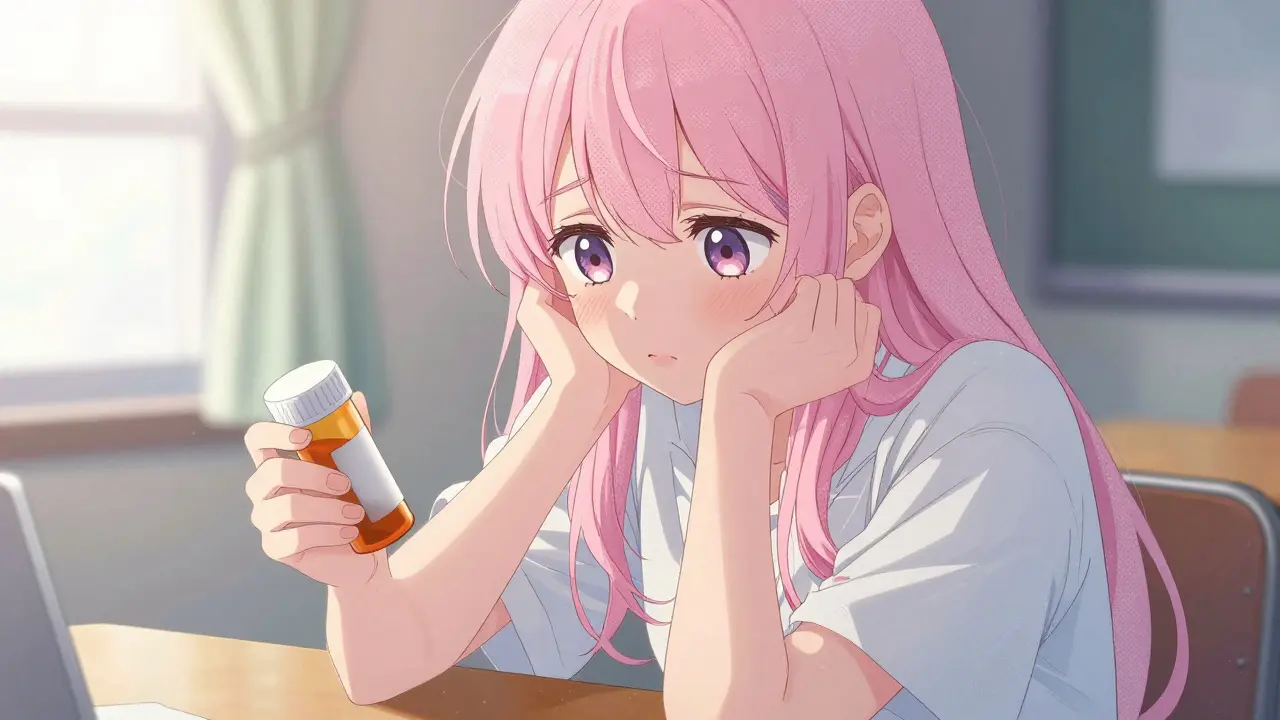
Did you know that skipping a single dose of your daily medication could quietly undo months of progress? Many people think missing a pill is harmless, but medication nonadherence is actually a silent crisis affecting half of all patients worldwide. When we talk about consequences of not taking medications as prescribed by your doctor, we aren't just talking about feeling a little sick tomorrow. We are discussing severe hospitalizations, preventable deaths, and financial burdens that could have been avoided with better understanding.
Quick Summary
- Skippping doses increases the risk of treatment failure and hospital visits by up to 25%.
- The cost of nonadherence impacts both personal finances and the wider healthcare system.
- Mental health conditions are particularly sensitive to inconsistent dosing.
- Cost, fear of side effects, and forgetting are the top reasons people stop taking meds.
- Simple tools like blister packs and pharmacy alerts can significantly boost adherence rates.
What Exactly Is Medication Nonadherence?
Before looking at the results, we need to define the problem clearly. Many people confuse this with simply "forgetting." While forgetfulness is part of it, nonadherence covers a much broader range of behaviors.
Medication nonadherence is the failure to follow the exact instructions given by a healthcare provider regarding how often, how much, and when to take a drug. It isn't always intentional rebellion against a doctor's orders. Sometimes, life gets in the way. You might run out of refills too soon because the price was too high, or perhaps you felt better and decided you didn't need the rest of the course. Maybe the bottle ran empty before the refill day came around.
A major study published in Frontiers in Pharmacology analyzed over 410 original studies. They found that this behavior is not a niche issue-it is a systemic one. Roughly 50% of patients with chronic conditions do not take their medicine exactly as directed. That means if you walk into a clinic where every person with diabetes or heart trouble sits down, nearly half of them aren't taking their meds right.
This creates a gap between what science knows works and what reality delivers. The World Health Organization suggests that adherence impacts outcomes more directly than the specific treatment itself. Essentially, even the best drug fails if you don't swallow it correctly.
Immediate Health Risks and Treatment Failure
When you stop taking your prescription drugs, the immediate concern is usually the return of symptoms. However, the long-term risks are far more dangerous. Let's look at chronic diseases, which require steady blood levels of medication to stay managed.
If someone with hypertension skips their blood pressure meds, their pressure spikes back up. Over time, this puts strain on the heart and kidneys. Research indicates that 10% of hospital admissions in the US alone are linked directly to missed medications. For older adults, the stakes are even higher. Some estimates suggest there are up to 100,000 preventable deaths annually among elderly patients due to poor adherence.
Consider organ transplantation. Rejection of a new organ often starts with missed doses of immunosuppressants. These drugs prevent your body from fighting off the new kidney or liver. A systematic review noted strong associations between nonadherence and emergency department visits for these patients.
Infectious diseases face a similar fate. If you stop antibiotics early because you feel better, bacteria may not be fully eliminated. Survivors can mutate into resistant strains. Now we face superbugs that are much harder to kill later. This turns a simple throat infection into a dangerous public health risk.
| Condition | Risk Increase | Hospitalization Link |
|---|---|---|
| Cardiovascular Disease | High re-admission rate | Up to 25% of visits |
| Mental Health | Relapse of symptoms | 59% inconsistency rate |
| Dialysis/Kidney | Organ rejection | Early graft loss |
| Dermatology | Severe flare-ups | Increased specialist visits |
Hidden Financial Consequences
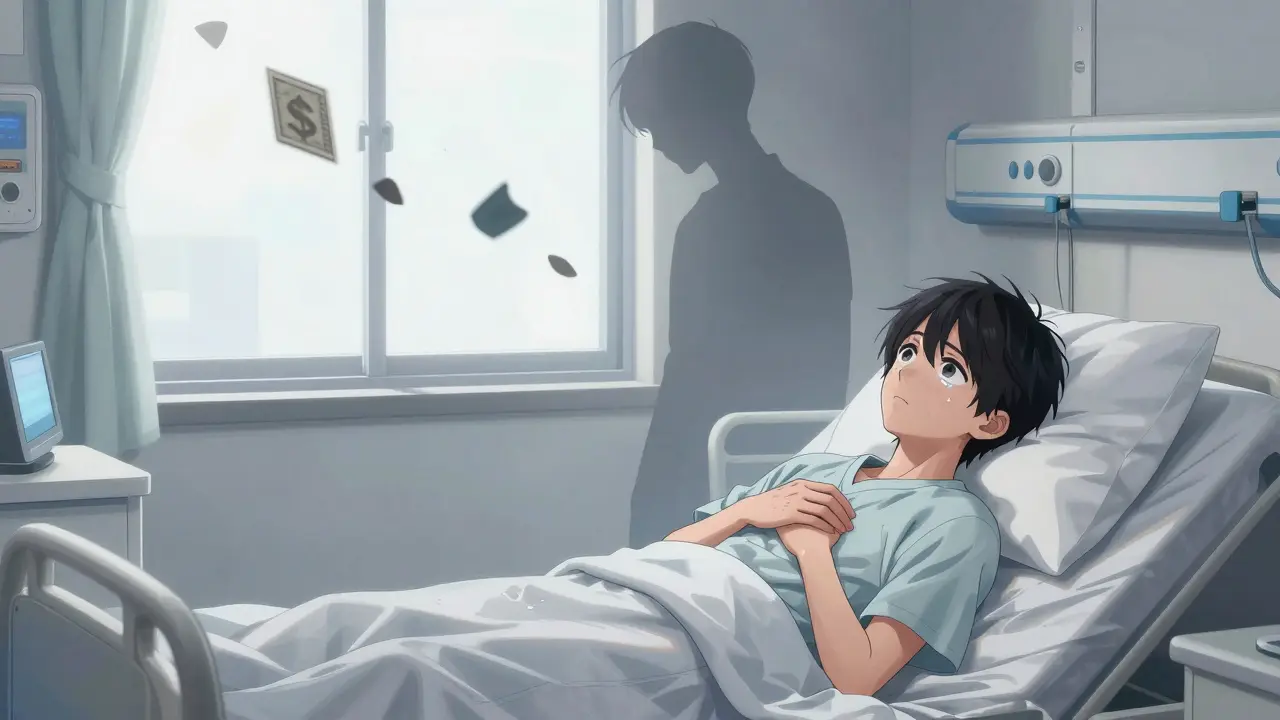
You might try to cut corners on prescriptions to save money today, but the math usually goes against you in the long run. Healthcare costs driven by nonadherence are astronomical.
In 2016, the United States estimated cumulative expenses of non-adherence reached approximately $529 billion. While we live in Australia, the principles apply everywhere. Poor adherence forces the healthcare system to treat the consequences of skipped treatments. Emergency care costs are exponentially higher than a regular script refill.
Data shows additional costs per patient ranging from $5,271 to over $52,000 depending on severity. But it's not just the bill paid at the counter. Indirect costs include lost work productivity. If you get sick enough to be hospitalized, that's days unpaid, or worse, days working while unwell (presenteeism). In Europe, estimates suggested €80 to €125 billion in avoidable economic losses purely due to people ignoring prescriptions.
This financial strain also hits vulnerable populations hardest. Minority groups often face barriers like prescription affordability and limited pharmacy access. These structural issues contribute to disparities where preventable deaths occur more frequently in disadvantaged communities.
Why Do Patients Stop Taking Their Meds?
Understanding the root cause helps us find solutions. It's rarely just stubbornness. According to the AMA Steps Forward Program, here are the real drivers:
- Cost Concerns: With out-of-pocket costs rising, some adults report stopping medication specifically because of the price tag. In 2021 surveys, 8.2% of adults admitted to this.
- Fear of Side Effects: People are afraid that a drug will hurt them more than help. They worry about liver damage, addiction, or dependency.
- Complexity: Regimens that require three different pills taken four times a day become impossible to manage with a busy job.
- Lack of Knowledge: If a patient doesn't understand why they are taking a pill for something they don't feel sick from, they will stop taking it the moment symptoms fade.
- Forgetfulness: Routine changes make it easy to lose track of whether a dose was taken yesterday or last week.
Research emphasizes that adherence typically declines over time after the initial prescription. The enthusiasm fades, barriers emerge, and rates drop below the optimal therapeutic efficacy threshold, which is usually around 80% consistency.
Strategies to Improve Adherence
The good news is that interventions work. We don't need a miracle; we need structure.
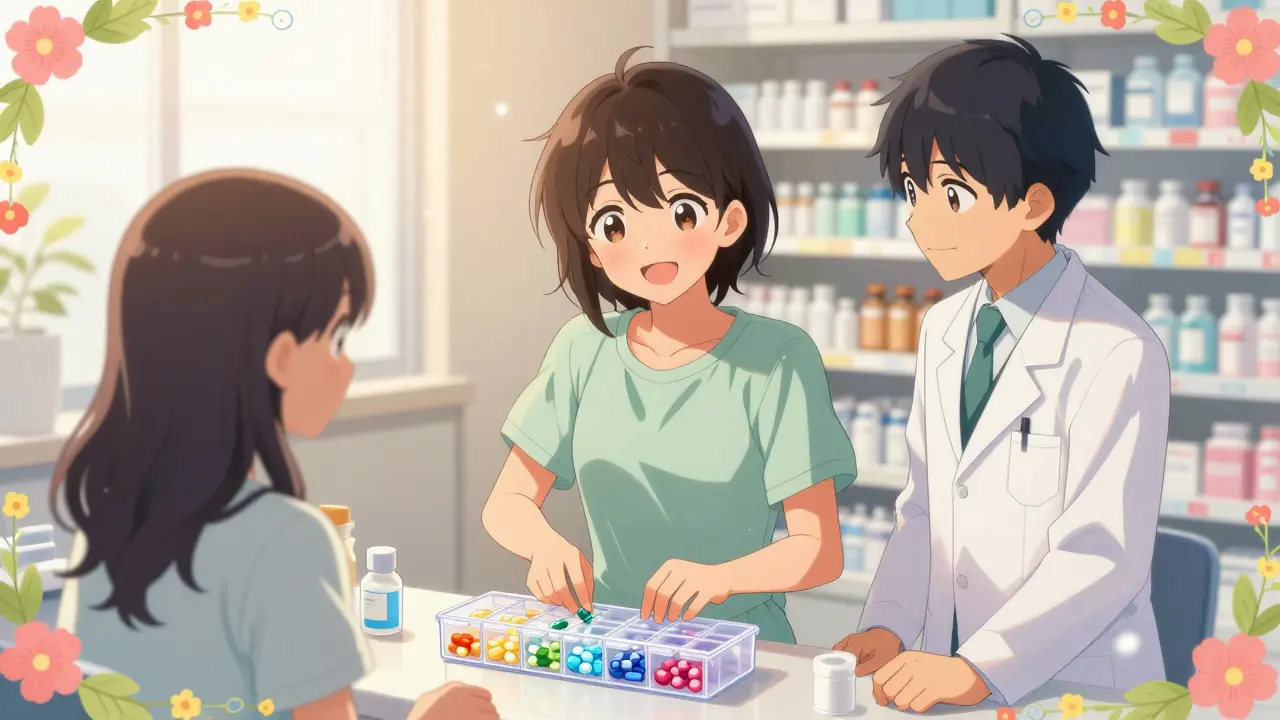
Pharmacist-led interventions have demonstrated improvements in adherence rates of 15 to 20%. Simply having your pharmacist review your regimen can spot interactions or confusing schedules.
Technology plays a massive role too. Mobile text messaging reminders have shown improvement in adherence by 12 to 18% in randomized trials. Setting up a recurring alarm on your phone for medication times is a low-tech version of this. Additionally, adherence packaging-where a pharmacy dispenses pills into weekly or monthly sorted boxes-removes the guesswork entirely.
Communication is another lever. Ask your doctor about cost-effective alternatives if price is the barrier. Generic options or subsidized programs might exist that you haven't been told about. Integrated medical plans are also being advocated to address disparities by linking primary care with pharmacy support directly.
Next Steps for You
If you suspect you aren't sticking to your plan, take action immediately. Audit your current supply. Do you have enough pills until the next date? Set a visual reminder in the morning routine, like putting the bottle next to your toothbrush. Finally, schedule a consultation with your GP or pharmacist not to complain, but to solve. Bring a list of all medications and ask, "Is there a simpler way for me to manage this?" Small adjustments yield significant results.
Frequently Asked Questions
Can I double up on a missed dose?
Never blindly double up. Some medications can be toxic in high doses. Always check the label or call your pharmacist before taking extra medication to catch up. Safety comes before making up the dose.
Why does my doctor insist I finish all antibiotics?
Stopping antibiotics early leaves surviving bacteria alive, which can develop resistance to the drug. Completing the full course ensures the infection is eradicated, preventing recurrence and reducing the risk of creating antibiotic-resistant superbugs.
Is it safe to change my dosage on my own?
Absolutely not. Dosage is calculated based on your weight, kidney function, and condition severity. Changing it can lead to under-treatment or overdose. Any changes must be authorized by your prescribing doctor.
Does cost really matter that much?
Yes. Surveys show millions skip doses due to price. However, untreated illness often leads to ER visits, which cost far more than the medication itself. Discuss cost-saving generics with your provider before stopping treatment.
How can I remember to take multiple pills daily?
Use tools like pill organizers divided by days, set alarms for each dose, or link the action to a habit like brushing teeth. Many pharmacies offer pre-sorted blister packs to simplify complex routines.
Christopher Curcio
March 31, 2026 AT 22:37It is crucial to understand the concept of steady state concentration when discussing adherence issues in clinical practice.
Patients often feel better because the acute symptoms subside but the therapeutic window remains compromised.
We observe significant fluctuations in plasma drug levels that directly impact efficacy metrics in real world scenarios.
Adherence barriers frequently stem from misunderstandings regarding pharmacokinetic profiles rather than intentional malice.
Healthcare providers must recognize the emotional burden associated with chronic regimen management during consultations.
Empathy plays a vital role in mitigating the psychological stress of lifelong treatment protocols for vulnerable populations.
Ignoring the nuances of half-life calculations leads to premature discontinuation decisions by distressed individuals.
We need systemic support mechanisms to bridge the gap between prescription intent and actual ingestion behaviors.
Calvin H
April 2, 2026 AT 06:54Everyone cares about pharmacokinetics until they realize they cannot afford the pill that controls the half life.
Biraju Shah
April 3, 2026 AT 23:34Price is a symptom of the problem but refusing treatment destroys the quality of life entirely regardless of financial status.
We cannot allow cost arguments to normalize medical negligence when effective alternatives exist within public systems.
Your dismissiveness regarding structural barriers ignores the gravity of mortality risks involved in nonadherence situations today.
Angel Ahumada
April 5, 2026 AT 02:22There is an inherent conflict between biological necessity and human autonomy that transcends mere pharmaceutical compliance statistics
We often forget the soul of the individual when we reduce existence to dosage schedules and blood work panels
The machine demands obedience while the spirit seeks freedom and this tension manifests as resistance against prescribed orders
Society projects judgment upon those who stumble yet refuses to address the root existential dread driving such behaviors away from the path
To judge is easy but to understand requires peering into the abyss of modern living where hope is scarce
We see the failure of willpower but rarely acknowledge the environment that crushes such fragile resolve daily without pause
It becomes a metaphysical battle between the flesh requiring sustenance and the mind craving liberation from chemical chains
Many speak of consequences without feeling the weight of each day spent in uncertainty and pain
The narrative shifts toward victim blaming rather than collective responsibility for creating a world that necessitates such rigid intervention
We must consider whether the drug fixes the disease or merely masks the suffering caused by living conditions themselves
The silence of pills is deafening compared to the noise of expectation placed upon the sick body every single day
Freedom might look like skipping a dose even if the cost is eventually paid in hospital corridors far away
Understanding this requires looking past the charts into the weary eyes of those navigating the system alone
It is a tragedy of sorts to become a statistic rather than a story told by someone who truly listens
Perhaps the medicine is necessary but the manner of administration fails to respect human dignity enough
William Rhodes
April 6, 2026 AT 14:45You paint the choice in terms of tragedy but autonomy must be respected even when the outcome proves detrimental to survival.
Humanity advances through consequence and shielding people from the reality of their decisions creates dependency cycles that never heal.
We demand agency so that when we succeed it counts as victory rather than luck dictated by external compliance officers.
Life requires ownership of actions whether they align with medical doctrine or diverge into chaos for personal reasons.
True healing begins when you choose the path rather than being forced into a corner by fear and societal pressure alone.
Cameron Redic
April 8, 2026 AT 05:15It's laughable how many people think their anecdotal evidence overrides the data.
Most nonadherence cases boil down to simple laziness or ignorance that spreads like wildfire.
They claim costs or side effects yet never verify what cheaper options actually exist on the market.
It's pathetic watching grown adults gamble with their heart function over petty grievances with insurance paperwork.
Sometimes the hard truth gets uncomfortable but the data doesn't lie about outcomes.
Dan Stoof
April 8, 2026 AT 10:54We absolutely can find a brighter solution to these complex challenges!
There are resources everywhere!
Support groups!
New apps!
We must keep fighting!
Every person deserves the best care possible!
Don't give up hope!
Together we change the system!
Marwood Construction
April 10, 2026 AT 00:38Structural interventions yield measurable improvements in aggregate population health outcomes.
Policy changes addressing economic barriers demonstrate higher retention rates than individual education campaigns alone.
Institutional alignment between pharmacy and primary care sectors remains a priority area for future development initiatives.