
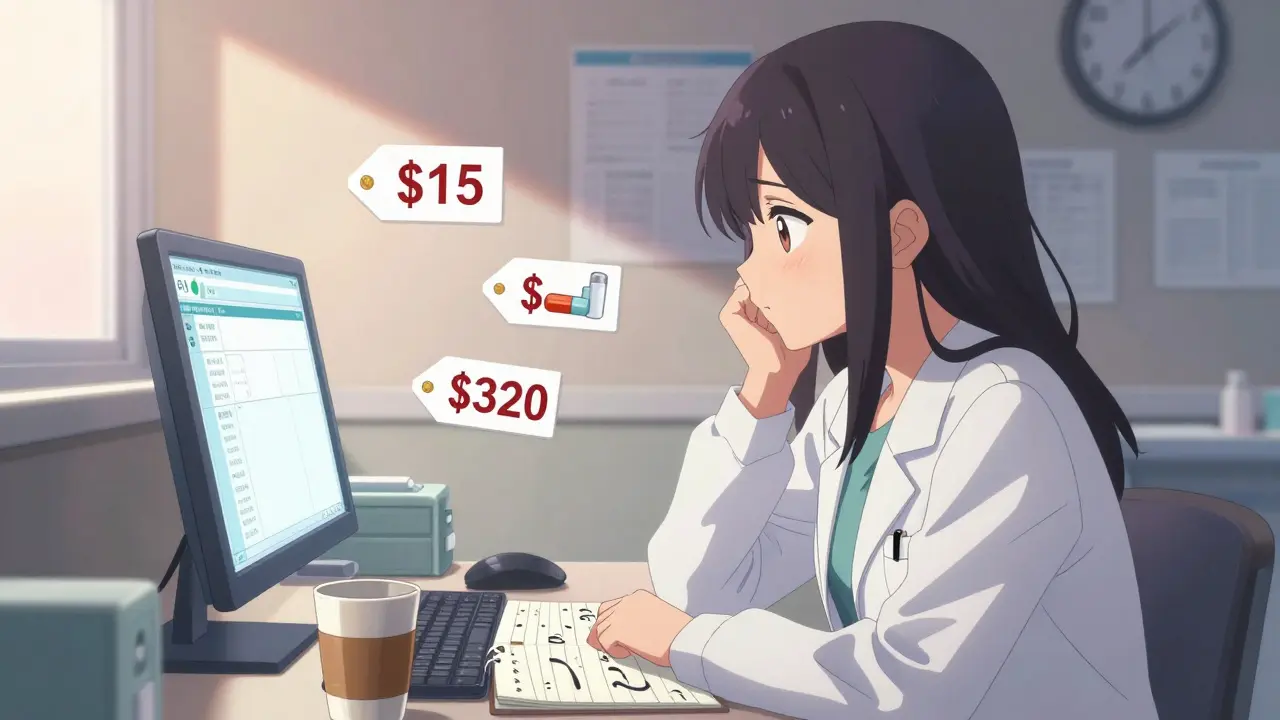
How much does a prescription really cost? For many doctors, the answer is surprisingly unclear. Despite prescribing medications every day, most clinicians have no reliable sense of what patients actually pay out of pocket. This isn’t just a curiosity - it’s a gap that affects treatment choices, patient adherence, and billions in healthcare spending. Studies show doctors frequently guess wrong: they overestimate the price of cheap generic drugs by over 30% and underestimate expensive brand-name medications by nearly three-quarters. When a patient can’t afford their medicine, the doctor often doesn’t know why - and that’s the problem.
Doctors Are Guessing, Not Knowing
A 2016 study of 254 medical students and practicing physicians found that only 5.4% of generic drug costs and 13.7% of brand-name drug costs were estimated within 25% of the actual price. That means 95 out of 100 times, a doctor’s guess about a generic pill’s cost was way off. For expensive drugs, the error was even worse - clinicians underestimated prices by over 50% on average. This isn’t because they’re careless. It’s because they’ve never been given accurate, real-time data.
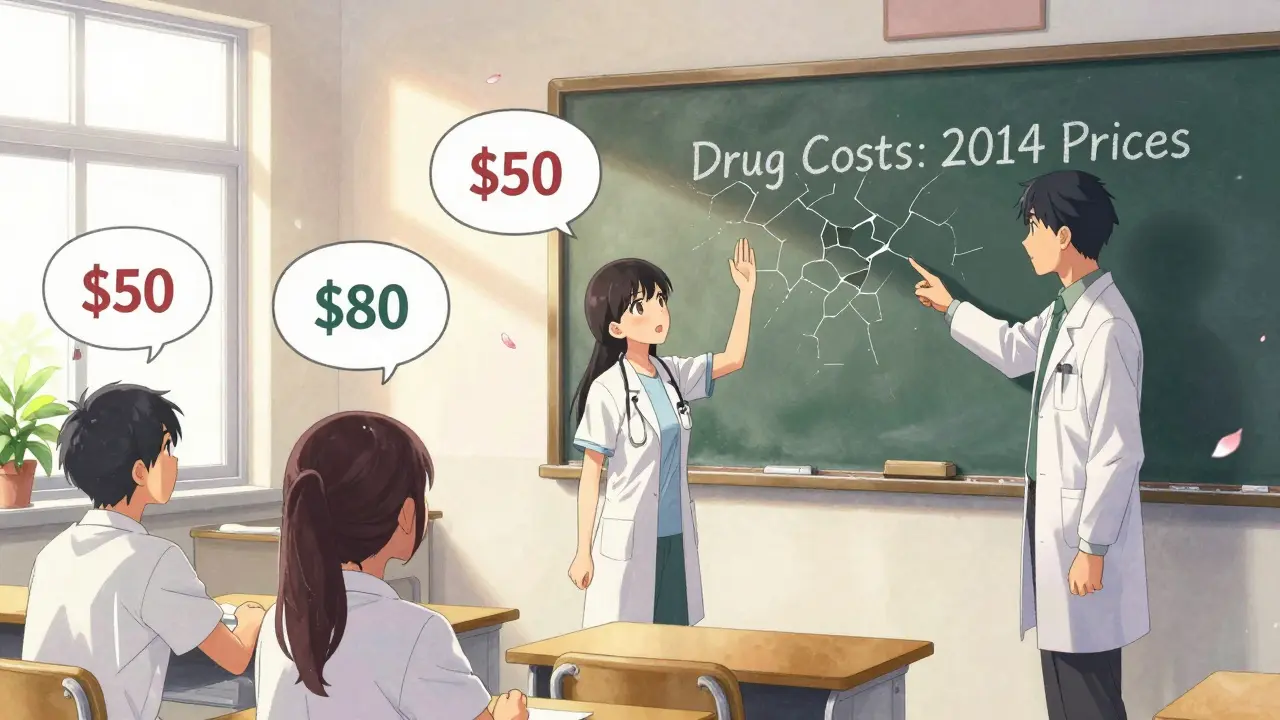
Most doctors learned about drug costs during medical school, where textbooks listed wholesale prices from 10 years ago. They hear anecdotes - “my patient couldn’t afford this,” “that drug cost $800 last month” - but those are unreliable. One doctor might think a $100 inhaler is expensive; another might not blink at it. Without standardized benchmarks, cost becomes subjective. And in a system where a single drug can cost $15 at one pharmacy and $320 at another, guesswork is dangerous.
The Hidden Cost of Ignorance
When doctors don’t know what a drug costs, patients pay the price - literally. Nearly 3 in 10 adults in the U.S. skip doses or don’t fill prescriptions because of cost, according to KFF data from 2023. That’s over 70 million people. And it’s not just low-income patients. Middle-class families with high-deductible plans often face surprise bills that push them into medical debt. A 2023 JAMA Internal Medicine study found that when clinicians had access to real-time cost data, patients’ out-of-pocket spending dropped by $187 per year on average.
But here’s the catch: most doctors don’t have that data. A 2007 systematic review found 92% of physicians wanted cost information at the point of care - but couldn’t find it. Even today, only 37% of U.S. health systems have integrated real-time benefit tools (RTBTs) into their electronic health records. Without these tools, doctors are forced to pause, log in to a patient’s insurance portal, search for the drug, check copay tiers, and then guess again. One primary care physician on Reddit described it: “Checking drug costs takes 3-5 minutes per prescription. That’s 30 extra minutes in a full clinic day.”
What Happens When You Give Doctors the Numbers
When cost information is built into the workflow - not as an afterthought, but as part of the prescription screen - things change. A landmark 2021 study in JAMA Network Open showed physicians with embedded cost alerts in their EHRs were significantly better at estimating drug prices. But more importantly, they changed their behavior. One in eight doctors switched a patient’s prescription after seeing an alert. When potential savings exceeded $20, that number jumped to one in six.
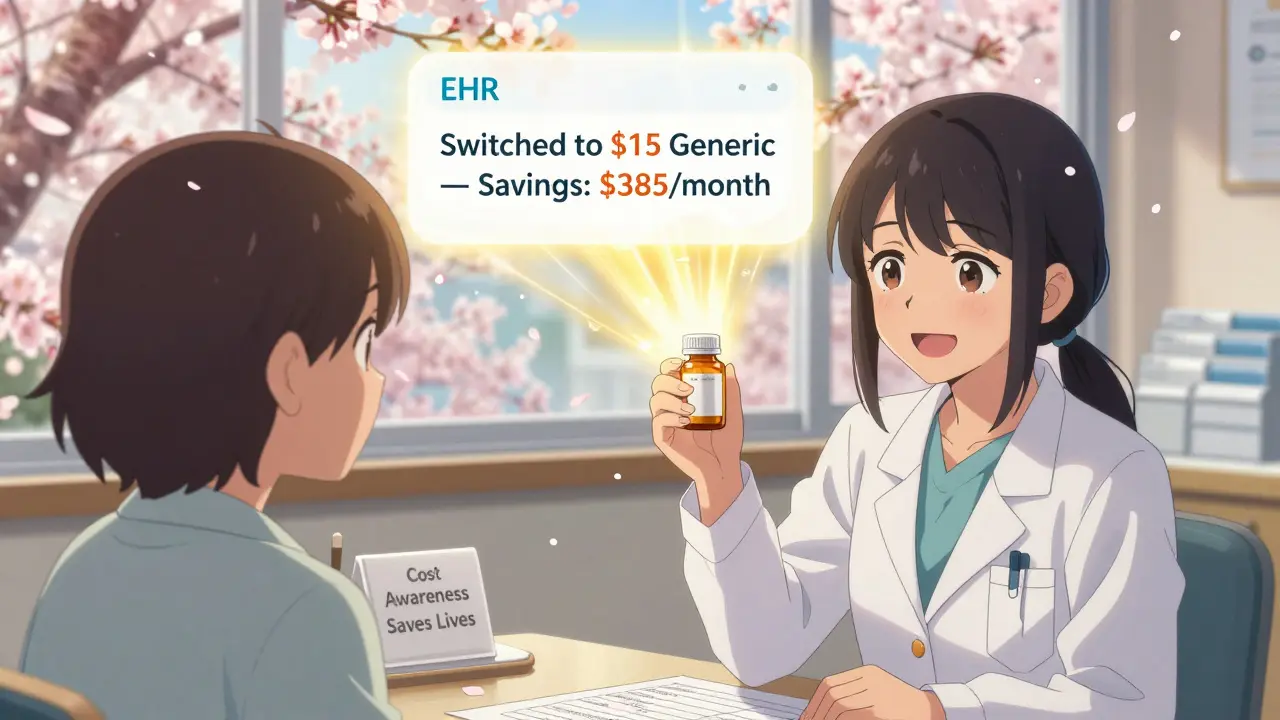
UCHealth, a major health system in Colorado, rolled out a real-time cost tool in 2020. Within a year, 12.5% of prescriptions were modified because of cost alerts. One doctor switched a $400 monthly injectable to a $15 generic tablet - and the patient’s adherence improved from 40% to 89%. That’s not just cost savings. That’s better health.
But these tools aren’t perfect. A resident on r/Residency in March 2024 complained: “Our Epic system shows insurer pricing, but not my patient’s actual copay. It says $50 - but their deductible means they’ll pay $200.” That’s the problem with fragmented systems. Drug prices vary by insurer, pharmacy, plan design, and even location. A tool that only shows the wholesale price or insurer list price is misleading. Real value comes from showing the patient’s actual out-of-pocket cost - and that requires integration with payer data.
Who Knows What - And Why
Not all clinicians are equally clueless. Experienced doctors are slightly better than students, but not by much. A 2016 study found doctors scored 17.81 out of 24 on a cost awareness scale; students scored 15.56. The difference? Experience, not training. Medical students’ knowledge improves as they progress - but only slightly. By graduation, they still get less than half of drug prices right.
Even more telling: fewer than half of medical students understand that drug prices have almost nothing to do with research and development costs. Most people - including many doctors - assume expensive drugs cost more because they took years and billions to develop. But that’s not how pricing works. A 2024 American Hospital Association report showed five major drugs increased in price by 4-7% in 2023 with no new indications, no new data, and no innovation. The price went up because the manufacturer could. And doctors didn’t know.
Younger doctors are more receptive. Those under 40 adopt cost-awareness tools at a rate of 78%, compared to 52% for those over 55. Why? Digital natives. They’re used to apps that show prices in real time - from Uber to groceries. They expect the same from healthcare. Older physicians, trained in a pre-digital era, often see cost tools as clutter. But the data doesn’t lie: when cost alerts are simple, accurate, and integrated, even skeptical doctors change their habits.
The Missing Curriculum
Medical schools don’t teach drug pricing. A 2021 study found 56% of U.S. medical schools have no formal curriculum on drug costs. Students learn about mechanisms of action, side effects, and dosing - but not about the $621 billion prescription market, or how formularies work, or how copays are calculated. That’s like training pilots without teaching them fuel efficiency.
Some institutions are stepping up. Mayo Clinic’s Drug Cost Resource Guide, updated quarterly since 2019, is rated 4.7/5 by over 1,200 physicians. It lists average out-of-pocket costs, alternatives, and patient assistance programs. Compare that to the generic Medicare Part D formulary, rated 2.8/5 - it’s outdated, hard to navigate, and doesn’t reflect real-world costs.
What’s missing is a standard. There’s no national database of drug prices tied to insurance plans. There’s no requirement for EHR vendors to include accurate out-of-pocket estimates. And until there is, clinicians will keep guessing.
What’s Changing - And What’s Coming
The Inflation Reduction Act of 2022 changed the game. For the first time, Medicare can negotiate prices for high-cost drugs. Eighty percent of Americans support this - including 76% of Republicans. That’s not just politics. It’s a signal that pricing is no longer a black box.
Meanwhile, the CMS now requires drug manufacturers to report estimated out-of-pocket costs. That data could eventually feed into EHRs. UCHealth and Harvard are already testing how cost alerts affect racial disparities - early results show safety-net clinics have 22% higher prescription modification rates than private practices. That suggests better cost awareness doesn’t just save money - it reduces inequity.
By 2027, 75% of U.S. health systems are projected to implement advanced real-time benefit tools. But that won’t happen unless clinicians demand it. The tools exist. The data exists. The evidence is clear: when doctors know the cost, they prescribe better. Patients take their meds. Health improves. Costs go down.
The question isn’t whether clinicians should know drug prices. It’s why it took this long to make it standard.
Do most doctors know how much medications cost?
No. Studies show most clinicians significantly misestimate drug prices - overestimating cheap generics by over 30% and underestimating expensive brand-name drugs by nearly 75%. Only 5-14% of prescriptions are estimated within 25% of the actual cost, meaning most doctors are guessing.
Why don’t doctors know drug prices?
Drug pricing is fragmented and opaque. Prices vary by insurer, pharmacy, deductible, and even location. Most electronic health records don’t show real-time out-of-pocket costs. Even when they do, the data is often inaccurate or incomplete. Doctors also weren’t trained in cost awareness during medical school - it’s rarely part of the curriculum.
Can real-time cost alerts change prescribing?
Yes. Studies show when cost information is embedded in EHRs, one in eight doctors change a prescription, rising to one in six when savings exceed $20. Patients also take their meds more often, and out-of-pocket spending drops by an average of $187 per year.
Are generic drugs always cheaper?
Not always. While generics are usually cheaper, pharmacy benefit managers and insurance formularies can make a generic cost more than a brand-name drug in certain plans - especially if the brand is on a lower tier or has a coupon. Without real-time data, doctors can’t know.
What’s being done to fix this?
The Inflation Reduction Act allows Medicare to negotiate drug prices, and CMS now requires manufacturers to report out-of-pocket cost estimates. Health systems like UCHealth and Mayo Clinic are integrating real-time cost tools into EHRs. But adoption is slow - only 37% of U.S. health systems have these tools as of 2024.
Donnie DeMarco
March 9, 2026 AT 16:10Denise Jordan
March 10, 2026 AT 01:14Adam Kleinberg
March 10, 2026 AT 16:22Tom Bolt
March 12, 2026 AT 08:12LiV Beau
March 12, 2026 AT 16:44Kenneth Zieden-Weber
March 13, 2026 AT 11:48Shourya Tanay
March 14, 2026 AT 01:15Gene Forte
March 15, 2026 AT 09:31Chris Bird
March 17, 2026 AT 00:43