
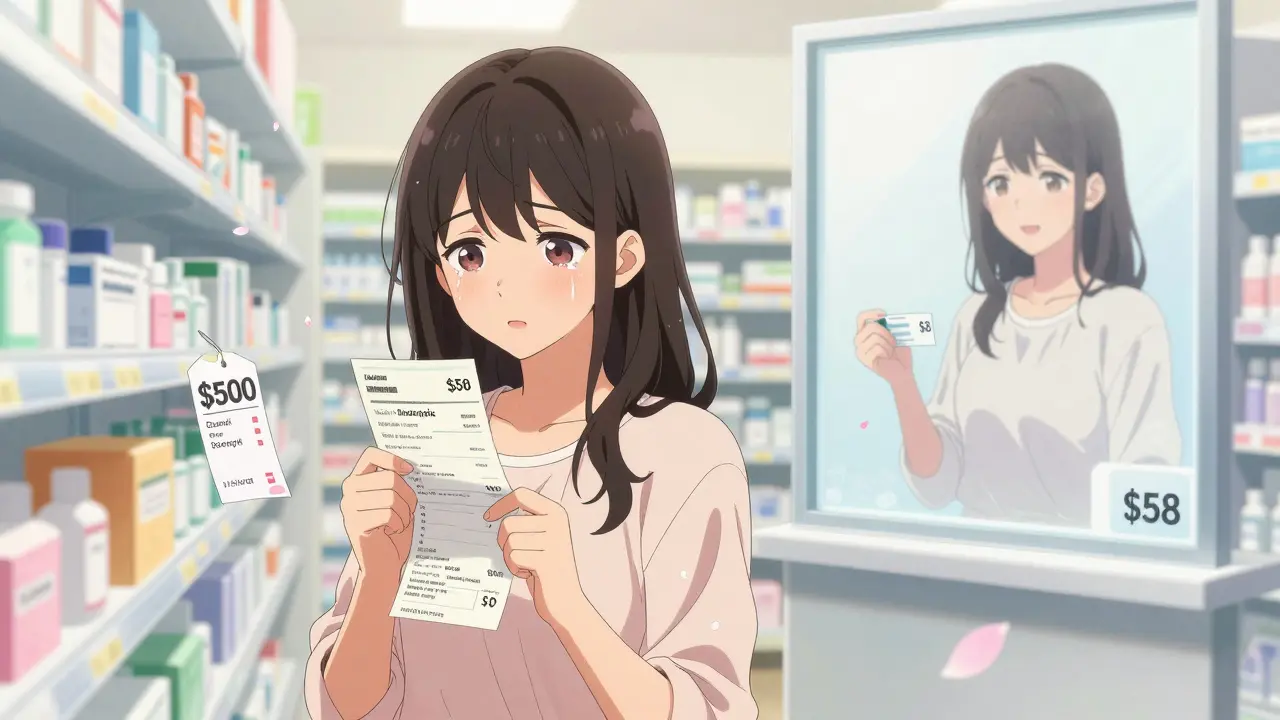
Why does the same pill cost $500 in the U.S. and $50 in Australia? It’s not a trick. It’s policy. And it’s not just about who’s rich or poor - it’s about how governments decide what drugs cost, and who pays for them. If you’ve ever stared at a prescription receipt and wondered why your neighbor across the border pays a fraction of what you do, you’re not alone. The truth is, pharmaceutical prices vary wildly between countries - not because of manufacturing costs, but because of laws, negotiations, and market rules that have nothing to do with science.
How the U.S. Compares - And Why It’s Not What You Think
The U.S. is often painted as the world’s most expensive country for drugs. And yes, if you look at the list price of brand-name medications - the sticker price before any discounts - American prices are sky-high. According to the U.S. Department of Health and Human Services, U.S. list prices for brand-name drugs are 422% higher than in other OECD countries. For drugs like Ozempic, Eliquis, or Jardiance, that means Americans pay nearly four times what people in Germany or Japan pay.
But here’s the twist: that number doesn’t tell the whole story. In the U.S., only about 7% of prescriptions are for brand-name drugs. The rest - 90% - are generics. And here’s where it gets interesting: U.S. generic drug prices are 33% lower than the global average. In fact, a 30-day supply of metformin, a common diabetes drug, costs less than $5 in the U.S. - while in Canada or the U.K., it’s often $10 or more.
This isn’t an accident. It’s the result of massive buying power from Medicare, Medicaid, and private insurers who negotiate hard with generic manufacturers. The U.S. doesn’t have price controls, but it has volume. And with over 3 billion prescriptions filled annually, manufacturers know they’ll sell millions of units - even at rock-bottom prices.
How Other Countries Do It - And What They Get
Most other developed countries don’t rely on market competition to set prices. They use direct control. Take France and Japan. Both use external reference pricing: they look at what other countries pay and set their own prices below the average. Japan, for example, often has the lowest prices for brand-name drugs. For Jardiance, a diabetes medication, the average price in Japan is $52. In the U.S., before Medicare negotiation, it was $204. In Australia, it’s $58.
Germany and Canada use a mix of reference pricing and internal negotiations. They don’t let drugmakers set prices freely. If a company asks for $1,000 per dose, the government says, “Here’s what we’ll pay - $400 - or we won’t cover it.” Many companies accept it because they still get access to millions of patients. In return, they get predictable sales.
Australia? It’s one of the most efficient systems. The Pharmaceutical Benefits Scheme (PBS) negotiates prices directly with manufacturers. If a drug is approved, the government sets a maximum price. Patients pay a co-pay - currently $32.50 per script - and the government covers the rest. That’s why Australians pay less for Eliquis, Xarelto, and Farxiga than almost anyone else.

The Hidden Math: Net vs. List Prices
Here’s where most reports go wrong. They compare list prices - the price on the box - without accounting for rebates, discounts, and secret deals. That’s like comparing the MSRP of a car to what you actually pay after trade-ins and dealer incentives.
The University of Chicago’s Energy and Climate Economics Hub found something surprising in July 2024: when you look at net prices - what insurers and governments actually pay after discounts - the U.S. is 18% cheaper than peer countries. Why? Because U.S. payers extract huge discounts from brand-name drugmakers. In exchange for access to 330 million patients, companies give up 30-50% off list price.
But here’s the catch: those discounts don’t always reach patients. If you’re uninsured or underinsured, you still pay the full list price. And for high-cost drugs like Stelara or Imbruvica, that’s $4,000-$6,000 per month. That’s why millions of Americans skip doses or go without.
Medicare’s New Role - And What It Means
For decades, Medicare was legally barred from negotiating drug prices. That changed in 2022 with the Inflation Reduction Act. In 2023, Medicare picked its first 10 drugs for negotiation. The results? For Jardiance, Medicare’s price is $204 - still 3.9 times higher than Japan’s $52. For Stelara, it’s $4,490 versus $2,822 in Australia.
But here’s the real story: Medicare’s negotiated prices are 2.8 times higher than the average of 11 other countries. And guess what? Canada and Germany are the next highest. That means even after negotiation, the U.S. isn’t catching up - it’s just lowering its sky-high prices to still-very-high levels.
The next round of negotiations is scheduled for early 2025. By February 1, 2025, Medicare must announce its next 15 drugs. These will likely include more biologics - expensive drugs for arthritis, cancer, and autoimmune diseases. If Medicare can bring down those prices even a little, it could save billions. But it won’t make U.S. prices match Japan’s. That’s not the goal. The goal is to stop the bleeding.
Global Patterns - And Who Pays the Most
A 2024 study in JAMA Health Forum looked at 549 essential medicines across 72 countries. It used a metric called the Laspeyres price index - which adjusts for how much people can actually afford. The results were eye-opening:
- Lebanon: prices at 18% of Germany’s baseline
- Argentina: prices at 579% of Germany’s - more than five times higher
- Western Pacific region (including Australia, Japan, China): median price index of 132.1
- Europe: 138.7
- Americas: 165.3 - the highest
That means, on average, medicines in the U.S., Canada, and Latin America cost nearly 70% more than in Europe or Asia - even after adjusting for income. And availability? In the Eastern Mediterranean, many essential drugs are simply hard to find. In the U.S., you can get almost anything - if you can pay for it.
Why This Matters - Beyond the Price Tag
It’s not just about money. It’s about access. In countries with strong price controls, people get the drugs they need. In the U.S., people ration insulin. They skip doses of blood pressure pills. They choose between groceries and prescriptions.
And then there’s innovation. Some argue that high U.S. prices fund global drug research. That’s partly true. Companies invest billions in R&D, and the U.S. market helps pay for it. But here’s the flip side: when other countries pay less, they still use those drugs. They just don’t pay the same price. So the U.S. isn’t subsidizing innovation - it’s subsidizing everyone else’s access.
The real question isn’t whether the U.S. pays too much. It’s whether the system is fair. Is it right that a person in Australia pays $58 for a drug that costs a U.S. patient $204 - even though both get the same pill? Should a diabetic in Texas have to choose between their medication and their rent - while someone in Tokyo gets it for $52?
The answer isn’t simple. But the data is clear: drug pricing isn’t about science. It’s about power. Who negotiates? Who decides? Who pays? And who gets left behind?
Jessica Chaloux
March 2, 2026 AT 01:23Deborah Dennis
March 2, 2026 AT 07:07Shivam Pawa
March 3, 2026 AT 15:24Diane Croft
March 5, 2026 AT 07:05Donna Zurick
March 6, 2026 AT 23:35Tobias Mösl
March 7, 2026 AT 09:35tatiana verdesoto
March 7, 2026 AT 20:42Ethan Zeeb
March 9, 2026 AT 05:41Darren Torpey
March 10, 2026 AT 06:50Lebogang kekana
March 10, 2026 AT 14:44marjorie arsenault
March 10, 2026 AT 16:05Aisling Maguire
March 11, 2026 AT 09:37Noah Cline
March 12, 2026 AT 04:57Justin Ransburg
March 12, 2026 AT 15:56Brandon Vasquez
March 13, 2026 AT 10:20