

SSRI Hyponatremia Risk Assessment Tool
Your Estimated Risk Profile
Recommended Next Steps:
Taking an antidepressant to manage depression or anxiety should improve a person's quality of life, not create new, dangerous health problems. For older adults, Selective serotonin reuptake inhibitors is a class of antidepressants that increase serotonin levels in the brain by blocking its reabsorption. Commonly known as SSRIs, these drugs are widely used because they are generally better tolerated than older antidepressants. However, they carry a hidden risk for seniors: a dangerous drop in blood sodium levels that can lead to confusion, instability, and devastating falls.
The Hidden Danger: What is SSRI-Induced Hyponatremia?
Hyponatremia happens when the concentration of sodium in your blood drops below 135 mmol/L. While it sounds like a simple salt imbalance, it is actually a complex reaction in the body. In older adults, SSRIs can trigger a condition called SIADH (Syndrome of Inappropriate Antidiuretic Hormone secretion). Essentially, the medication tricks the brain into releasing too much antidiuretic hormone, which tells the kidneys to hold onto water instead of flushing it out. This extra water dilutes the sodium in the blood, making it too thin.
Why does this happen more to seniors? As we age, our bodies change. We have less total body water, reduced renal blood flow, and a lower glomerular filtration rate (the speed at which kidneys filter waste). These physiological shifts make the elderly far more susceptible to this chemical imbalance than younger patients. In fact, a 2024 systematic review found that users of SSRIs have over twice the risk of developing hyponatremia compared to those not taking these medications.
Recognizing the Warning Signs and the Link to Falls
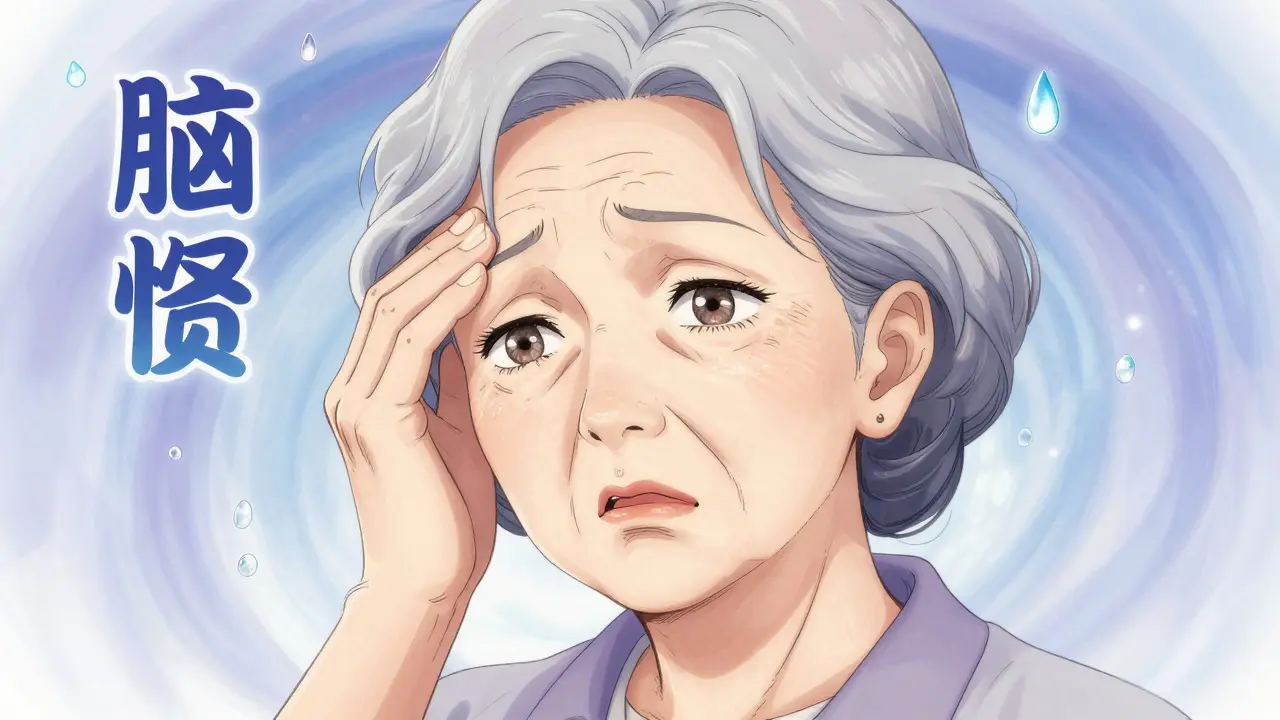
The scariest part about hyponatremia is that it doesn't always start with an obvious "sickness." In about 30-40% of cases, the early stages are almost asymptomatic. When symptoms do appear, they are often vague and easily mistaken for "just getting older" or a symptom of the depression itself. Watch for these red flags:
- Unexplained dizziness or lightheadedness.
- A sudden feeling of weakness or lethargy.
- Mild confusion or "brain fog."
- Unsteadiness when walking (gait instability).
This is where the danger of falls comes in. When sodium levels drop, the brain and muscles don't communicate effectively. A senior who feels dizzy or confused is significantly more likely to lose their balance. While it is hard to put an exact number on it, patient advocacy groups like the National Council on Aging have seen numerous cases where undiagnosed low sodium led directly to falls and subsequent hip fractures. These injuries often create a downward spiral of health that is difficult to recover from.
Who is Most at Risk?
Not every person on an SSRI will develop low sodium, but some factors make it much more likely. If you or a loved one fit these descriptions, you should be extra vigilant.
First, look at baseline health. People who already have sodium levels below 140 mmol/L or those with a lower Body Mass Index (BMI < 25 kg/m²) are more vulnerable. There is also a strong link between gender and risk, with women showing a higher tendency toward this complication.
Then, there is the "medication cocktail" effect. Many older adults take Thiazide Diuretics (water pills) for high blood pressure. Combining these with an SSRI is a high-risk scenario. Research shows that the odds of developing hyponatremia increase significantly when these two types of drugs are used together, as both can deplete sodium or alter fluid balance.
| Medication Type | Specific Example | Risk Level / Event Rate | Notes |
|---|---|---|---|
| SSRI | Fluoxetine | High (6.51%) | Highest risk among the SSRI class. |
| SNRI | Venlafaxine | High (5.66%) | Highest risk among the SNRI class. |
| Non-SSRI | Mirtazapine | Very Low | Often considered the safest alternative. |
| Non-SSRI | Bupropion | Low | Lower risk, but different efficacy for depression. |
Prevention Strategies: Monitoring and Management
Prevention starts with a proactive plan between the patient and the doctor. The general consensus among experts, including guidelines from the American College of Physicians, is to focus on individualized risk assessment. You shouldn't just start a pill and hope for the best.
The gold standard for prevention involves a few key steps:
- Baseline Testing: Get a serum sodium test before starting the medication to know where your levels stand.
- Early Follow-up: Test again within the first two weeks of starting the drug or after increasing the dose. Most cases of hyponatremia appear in this window.
- Medication Reconciliation: Ensure the doctor knows every single supplement and medication, especially diuretics.
- Symptom Education: The patient and their caregivers must know that "sudden dizziness" is a medical red flag, not just a part of aging.
It is worth noting that there is a debate in the medical community. Some studies, like one published in the AGS Journal, suggest that monitoring alone doesn't always reduce hospitalizations. This usually happens because a doctor sees the low number but doesn't act on it quickly enough. The key isn't just finding the low sodium-it's fixing it before it leads to a crisis.

What to Do If Sodium Levels Drop
If a blood test reveals hyponatremia, the response depends on how low the numbers have gone. It is a delicate process because correcting sodium too quickly can cause brain damage (known as osmotic demyelination syndrome).
For mild cases (sodium between 125-134 mmol/L), the standard move is usually to stop the SSRI immediately and restrict fluid intake. This allows the body to naturally re-balance the sodium concentration. For severe cases (sodium below 125 mmol/L), hospitalization is mandatory. Doctors will slowly introduce sodium under strict supervision to ensure the brain adjusts safely.
If the risk is too high to begin with, doctors may steer toward safer alternatives. Mirtazapine is frequently recommended for seniors because it has a minimal association with hyponatremia while still effectively treating depression and improving sleep.
Are all SSRIs equally risky for older adults?
No. Different medications have different risk profiles. For example, fluoxetine has been associated with a higher event rate of hyponatremia (about 6.51%) compared to other antidepressants. If a patient is at high risk, doctors may choose a different class of medication entirely.
Can a "water pill" make SSRIs more dangerous?
Yes, significantly. Thiazide diuretics are known to lower sodium levels on their own. When combined with an SSRI, which can cause water retention through SIADH, the risk of severe hyponatremia increases. This combination requires much closer medical monitoring.
Why is low sodium linked to falling?
Low sodium levels affect the electrical signaling in the brain and the function of muscles. This often manifests as gait instability, confusion, and dizziness. In an older adult, these symptoms directly impair balance, making a fall much more likely.
How often should sodium be checked?
Experts generally recommend a baseline test before starting the medication, followed by another test within two weeks of the first dose. If the dosage is increased later on, another check is advised, as dosage changes can trigger new imbalances.
Is there a safer alternative to SSRIs for seniors?
Mirtazapine and Bupropion are often cited as lower-risk options regarding hyponatremia. However, the "best" drug depends on the individual's specific symptoms, other health conditions, and how they react to the medication.
Next Steps for Caregivers and Patients
If you are caring for a senior on an SSRI, start by reviewing their current medication list. Check specifically for any diuretics (water pills). Schedule a conversation with their primary physician or psychiatrist to ask about a baseline sodium test if one hasn't been done recently.
Keep a simple log of any new behaviors. Is the person suddenly more confused? Are they leaning more on the furniture when they walk? Do not dismiss these as "old age." These can be the first signs of a chemical imbalance that is entirely reversible with the right medical adjustment. Early detection is the only way to prevent the progression from a mild imbalance to a life-altering fall.
Doug DeMarco
April 11, 2026 AT 12:20This is such a vital heads-up for anyone caring for their parents! 😊 I've seen a few folks in my community get blindsided by these side effects, and it's usually just because the communication gap between the GP and the specialist is too wide. Let's all make sure we're advocating for those blood tests early on! 🚀