
NSAID Kidney Risk Calculator
Assess Your Risk
This tool estimates your risk of NSAID-related kidney injury based on key factors. Note: This is for educational purposes only. Always consult your doctor before taking NSAIDs.
Risk Assessment
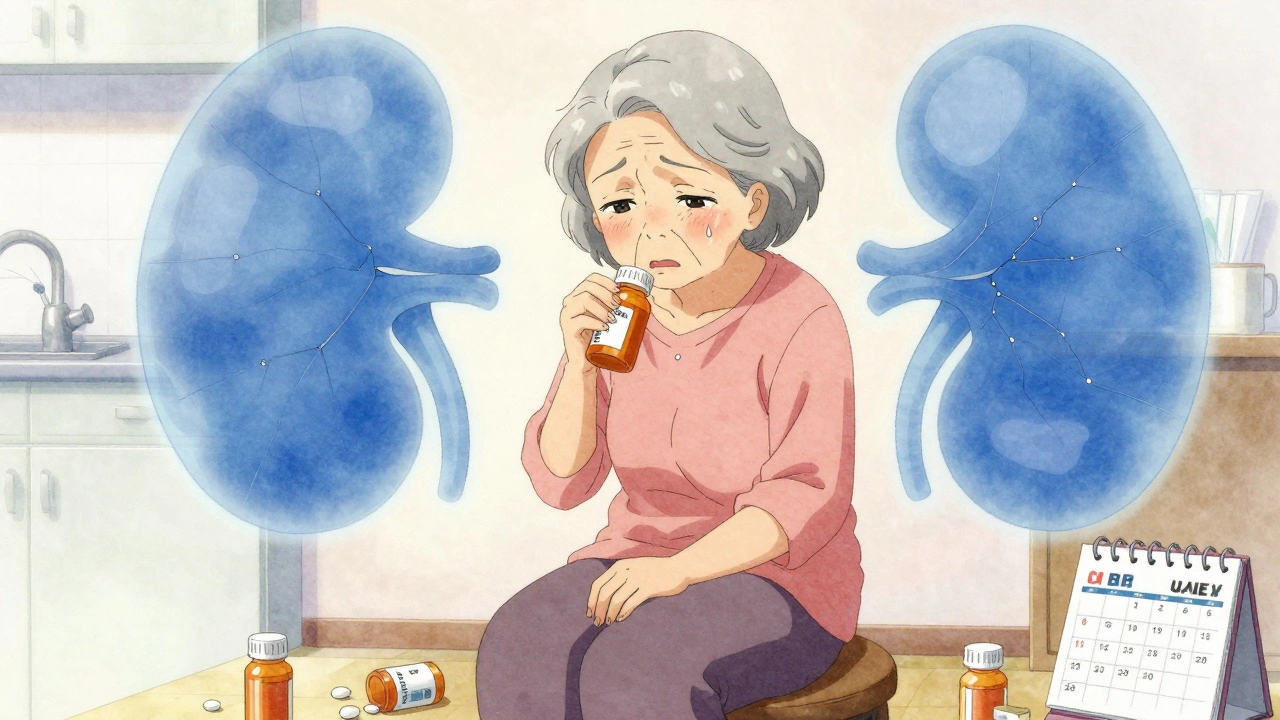
Every year, tens of thousands of people end up in the hospital not because of a heart attack or stroke, but because they took a common painkiller-ibuprofen, naproxen, or aspirin-without realizing it could damage their kidneys. These drugs, known as NSAIDs, are everywhere: on pharmacy shelves, in first-aid kits, and in the medicine cabinets of older adults managing arthritis. But for people with kidney disease or even just slightly reduced kidney function, these medications can trigger acute kidney injury in as little as 48 hours.
How NSAIDs Hurt the Kidneys
NSAIDs work by blocking enzymes called COX-1 and COX-2, which help produce prostaglandins. These prostaglandins aren’t just involved in inflammation-they’re critical for keeping blood flowing through your kidneys. When you take an NSAID, you reduce prostaglandin levels, which causes the blood vessels in your kidneys to narrow. That’s fine if your kidneys are healthy. But if you’re dehydrated, elderly, or already have kidney disease, your kidneys rely on those prostaglandins just to keep working. Without them, blood flow drops, and your kidneys can’t filter waste properly.
This isn’t just theory. A 2020 meta-analysis found that 70-80% of NSAID-related kidney injuries happen this way-through reduced blood flow. In some cases, the glomerular filtration rate (GFR), which measures how well your kidneys filter blood, can drop by 20-40% within a day. That’s enough to push someone with mild kidney disease into full-blown acute kidney injury.
There’s also a less common but serious type of injury called acute interstitial nephritis (AIN). This is an immune reaction where your body attacks the kidney tissue, often causing fever, rash, and high protein levels in urine. It’s rare-only 5-15% of NSAID kidney injuries-but it can lead to permanent damage if not caught early.
The Triple Whammy: When NSAIDs Combine With Other Drugs
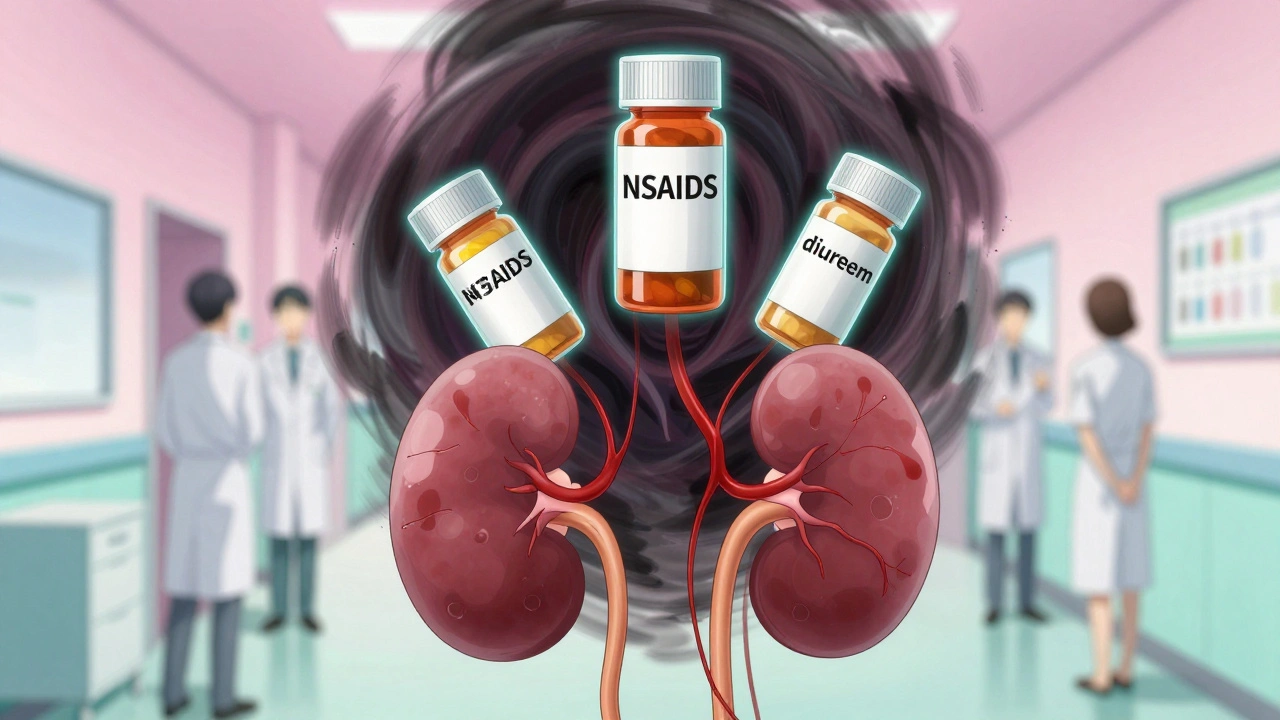
One of the most dangerous scenarios isn’t taking NSAIDs alone-it’s taking them with two other common medications: ACE inhibitors or ARBs (used for high blood pressure), and diuretics (water pills). Together, these three drugs form what doctors call the “triple whammy.”
Here’s why it’s deadly:
- ACE inhibitors/ARBs dilate the blood vessels leaving the kidney.
- Diuretics reduce fluid volume, making your kidneys rely even more on prostaglandins to maintain blood flow.
- NSAIDs block those prostaglandins.
The result? A perfect storm for kidney failure. Studies show this combination increases the risk of acute kidney injury by 31%, and within the first 30 days, the risk jumps to nearly 82% higher than normal. Many patients don’t even know they’re on this dangerous combo-especially if they’re seeing multiple doctors and filling prescriptions at different pharmacies.
Who’s at Risk?
You might think NSAIDs are safe if you’re not sick. But the truth is, risk isn’t always obvious. Here are the groups most vulnerable:
- People over 65: Kidney function naturally declines with age. Even if your creatinine looks normal, your GFR might be below 60 mL/min/1.73m²-already putting you at higher risk.
- Those with diabetes or high blood pressure: These conditions damage the tiny blood vessels in your kidneys, making them more sensitive to reduced blood flow.
- People with chronic kidney disease (CKD): If your eGFR is below 60, NSAIDs can accelerate decline. Studies show a 50% higher chance of CKD worsening with regular NSAID use.
- Dehydrated individuals: Whether from illness, heat, or exercise, low fluid levels force your kidneys to depend on prostaglandins even more.
- Those taking high doses: Ibuprofen at 800 mg three times daily is common for arthritis-but it’s also a major red flag for kidney damage.
A 2020 case study from the University of Rhode Island followed a 72-year-old man with an eGFR of 58 (mildly reduced) who started taking 800 mg of ibuprofen three times a day for back pain. Within 72 hours, his eGFR dropped to 22. He needed hospitalization. He had no prior kidney problems-just a common painkiller.
What Are the Warning Signs?
Here’s the scary part: NSAID-induced kidney injury often has no symptoms-at least not at first. Many people don’t feel anything until their creatinine levels spike. But some early signs include:
- Less urine output than usual
- Swelling in the ankles or feet
- Unexplained fatigue or weakness
- Nausea or loss of appetite
On patient forums like Reddit’s r/kidneybros, 72% of people who suffered NSAID-related kidney injury said their doctor never warned them. And 65% admitted they thought “over-the-counter” meant “completely safe.” That’s a dangerous myth.
What Can You Do Instead?
Not all pain relief options are equal when it comes to kidney safety.
Acetaminophen (Tylenol) is the go-to alternative. It doesn’t affect kidney blood flow the way NSAIDs do. Studies show it carries 40-50% less risk of acute kidney injury. But here’s the catch: it doesn’t reduce inflammation. So if you have arthritis or tendonitis, it won’t touch the root cause of your pain.
Topical NSAIDs (gels, creams, patches) are a smart compromise. They deliver the drug right to the sore spot with minimal absorption into the bloodstream. A 2024 JAMA trial found they reduce kidney risk by 40-50% compared to pills. If you have knee or shoulder pain, a topical gel is a much safer bet.
Physical therapy, heat, ice, or stretching can help manage chronic pain without drugs at all. For many older adults with osteoarthritis, combining gentle exercise with heat therapy reduces NSAID use by over 60%.

How to Use NSAIDs Safely (If You Must)
If your doctor says you need an NSAID, here’s how to minimize risk:
- Check your kidney function first. Ask for an eGFR and urine albumin-to-creatinine ratio before starting. If your eGFR is below 60, avoid NSAIDs unless absolutely necessary.
- Avoid the triple whammy. Never take NSAIDs with ACE inhibitors, ARBs, and diuretics together. If you’re on any of these, talk to your doctor about alternatives.
- Use the lowest dose for the shortest time. Don’t take NSAIDs for more than 7-10 days without reevaluating. For chronic pain, limit use to 3 days per week at most.
- Stay hydrated. Drink 5-10 mL of water per kilogram of body weight before exercise or hot weather. During activity, aim for 0.4-0.8 liters per hour to keep your urine specific gravity below 1.020.
- Monitor for symptoms. If you notice less urine, swelling, or fatigue while taking NSAIDs, stop and get your kidney function checked immediately.
What’s New in Kidney Protection?
Science is catching up. In 2023, the American Society of Nephrology launched the NSAID-RF Risk Calculator, which uses 12 factors-like age, blood pressure, and diuretic use-to predict your 30-day risk of kidney injury with 87% accuracy. If you’re over 60 and on blood pressure meds, this tool can tell you whether an NSAID is safe for you.
Researchers are also testing new formulations. One promising combo-ibuprofen with acetylcysteine-is in phase 2 trials. It aims to reduce oxidative stress in the kidneys while keeping pain relief. And in 2025, genetic testing for PTGS2 gene variants may soon help identify who’s most likely to suffer kidney damage from NSAIDs.
Meanwhile, early detection tools like urinary NGAL (neutrophil gelatinase-associated lipocalin) are being studied. Unlike creatinine, which only rises after damage is done, NGAL can signal kidney stress within hours-giving doctors a chance to act before injury becomes permanent.
The Bottom Line
NSAIDs aren’t evil. They help millions manage pain. But they’re not harmless, either. For people with kidney disease-or even just borderline kidney function-they’re a ticking time bomb. The biggest problem isn’t the drugs themselves. It’s the assumption that because they’re available without a prescription, they’re safe for everyone.
If you’re over 60, have high blood pressure, diabetes, or any kidney issues, talk to your doctor before taking another NSAID. Ask for your eGFR. Ask about alternatives. Ask if you’re on the triple whammy. And if you’re using them for chronic pain, consider whether the relief is worth the risk.
Your kidneys don’t shout. They whisper. And by the time they scream, it’s often too late.
Can I take ibuprofen if I have kidney disease?
If you have kidney disease with an eGFR below 60 mL/min/1.73m², NSAIDs like ibuprofen should be avoided unless absolutely necessary and only under close medical supervision. If your eGFR is below 30, they are strongly discouraged. Even small doses can worsen kidney function, especially if you’re dehydrated or on other kidney-affecting medications like ACE inhibitors or diuretics.
Is acetaminophen safer for kidneys than NSAIDs?
Yes, acetaminophen (Tylenol) is significantly safer for kidneys than NSAIDs. Studies show it carries 40-50% less risk of causing acute kidney injury because it doesn’t interfere with kidney blood flow. However, it doesn’t reduce inflammation, so it won’t help with conditions like arthritis or tendonitis where swelling is part of the problem.
What is the ‘triple whammy’ and why is it dangerous?
The ‘triple whammy’ is the combination of NSAIDs, ACE inhibitors or ARBs, and diuretics. Together, they severely reduce blood flow to the kidneys. ACE inhibitors and diuretics lower blood pressure and fluid volume, while NSAIDs block the body’s natural way of compensating for that drop. This combination can cause acute kidney injury in just days, especially in older adults. Risk increases by 31% overall and nearly doubles in the first 30 days.
Can topical NSAIDs damage the kidneys?
Topical NSAIDs (gels, creams, patches) are much safer than oral forms because they deliver the drug directly to the skin with minimal absorption into the bloodstream. A 2024 clinical trial found they reduce the risk of acute kidney injury by 40-50% compared to pills. They’re a good option for localized pain like arthritis in the knee or shoulder.
How do I know if NSAIDs are affecting my kidneys?
Early signs include reduced urine output, swelling in the legs or ankles, unexplained fatigue, nausea, or sudden weight gain. But many people show no symptoms until kidney damage is advanced. The only reliable way to know is to get your eGFR and urine albumin-to-creatinine ratio tested before and during NSAID use. Don’t wait for symptoms-ask your doctor for a simple blood test.
Sheldon Bird
December 12, 2025 AT 07:54Man, I had no idea ibuprofen could do this to your kidneys. I’ve been popping two every day for my back pain like it’s candy. 😅 Time to talk to my doc before I wreck something I can’t fix.
Jade Hovet
December 12, 2025 AT 22:03TOPICAL NSAIDS ARE A GAME CHANGER!! 🙌 I’ve been using the diclofenac gel for my knee and zero stomach issues + no kidney panic. My rheum doc said it’s like 90% safer. Do it. 🫶
Lauren Scrima
December 13, 2025 AT 06:58So… you’re telling me ‘OTC’ doesn’t mean ‘free pass to self-medicate like a caveman’? Shocking. 🤦♀️
Richard Ayres
December 14, 2025 AT 23:36This is one of the most important public health messages I’ve seen in years. Many older adults assume that because a drug is available without a prescription, it’s inherently safe. The reality is far more nuanced. The kidneys are silent organs-they don’t complain until they’re nearly broken. Regular eGFR checks should be standard for anyone over 50, especially if they’re managing chronic pain or hypertension. Knowledge isn’t just power-it’s protection.
Michael Gardner
December 15, 2025 AT 03:32Wait, so you’re saying the FDA doesn’t warn people about this? That’s not right. I bet Big Pharma is hiding this to keep selling pills. I’ve seen the data-this is all a scam to keep people hooked on drugs instead of ‘natural remedies’ like celery juice and moonlight walks.
Jennifer Taylor
December 16, 2025 AT 15:37MY DAD DIED BECAUSE OF IBUPROFEN. I SWEAR TO GOD THEY KNEW. I FOUND HIS PRESCRIPTIONS-HE WAS ON ACE INHIBITORS, LASIX, AND TAKING 800MG THREE TIMES A DAY. NO ONE TOLD HIM. NO ONE. I’M SENDING THIS TO EVERY GOVERNMENT OFFICIAL I CAN FIND. #JusticeForDad #NSAIDMurder
Shelby Ume
December 17, 2025 AT 14:40As a renal nurse for 18 years, I’ve seen this exact scenario play out too many times. Patients come in with creatinine at 5.2, asking why their ‘mild back pain’ turned into dialysis. The tragedy isn’t the drug-it’s the lack of education. We need mandatory warning labels on OTC bottles. And maybe a mandatory quiz before checkout. Yes, really. Your kidneys don’t care how ‘natural’ you think you are.
Willie Onst
December 17, 2025 AT 16:39Hey, I’m 68, have diabetes, and I’ve been taking naproxen for 10 years. My doc never said a word. But after reading this, I went and got my eGFR checked-turns out it was 54. I switched to Tylenol and started yoga. I feel better than I have in years. 🌱 Sometimes the best medicine isn’t a pill-it’s listening. Thanks for the wake-up call.
nithin Kuntumadugu
December 18, 2025 AT 14:27lmao u think this is bad? wait till u hear about how the WHO is secretly using NSAID data to control population growth in the global south. also, acetaminophen causes liver cancer in 3 out of 5 people who breathe near a pharmacy. 🤡
Ronan Lansbury
December 19, 2025 AT 05:00Let’s be honest: the entire medical-industrial complex is built on ignorance. NSAIDs? A distraction. The real issue is glyphosate in the water supply, which degrades mitochondrial function in renal tubules. You think your doctor knows this? Of course not. They’re paid by the same corporations that sell you the pills. Read Dr. Mertz’s 2019 paper on renal oxidative stress-no one wants you to.
John Fred
December 20, 2025 AT 10:11Just FYI-NGAL biomarkers are now being validated in point-of-care kits. If you're on the triple whammy and your eGFR is borderline, get a urinary NGAL test ASAP. It detects tubular stress within 2–4 hours, way before creatinine rises. This isn't sci-fi-it's 2024. Ask your nephrologist for it. #NephroTech
Harriet Wollaston
December 21, 2025 AT 09:25I’m so glad someone finally said this out loud. My mom’s a nurse and she always told me, ‘If it’s on the shelf, it can still hurt you.’ I wish more people had her wisdom. Thank you for sharing this. I’m printing it out for my parents’ medicine cabinet.
Karen Mccullouch
December 22, 2025 AT 09:35YOU’RE ALL BEING MANIPULATED. NSAIDs AREN’T THE PROBLEM-THEY’RE THE CANARY. THE REAL VILLAIN IS THE GOVERNMENT’S SECRET AGENDA TO MAKE OLD PEOPLE WEAK SO THEY’LL NEED MORE MEDICARE. THEY’RE PUTTING FLUORIDE IN THE WATER TOO. I SAW IT ON A YOUTUBE VIDEO. STOP TAKING ANYTHING. JUST DRINK COLD WATER AND PRAY.