

Antiemetic Selection Tool
Select Your Opioid Therapy
Recommended Antiemetic
Why This Choice Works Best
When you start taking opioids for pain, nausea isn’t just an inconvenience-it can stop you from taking your medicine at all. About one in three people who begin opioid therapy experience nausea or vomiting. For cancer patients or those with chronic pain, this side effect can be enough to make them quit their pain relief altogether. The good news? You don’t have to suffer through it. With the right timing, the right meds, and small changes to how you eat, you can keep your pain under control without the nausea.
Why Opioids Make You Sick
Opioids like morphine, oxycodone, and hydrocodone work by binding to receptors in your brain and spinal cord to block pain signals. But they also hit another target: the chemoreceptor trigger zone, a tiny area in your brainstem that acts like a vomiting alarm. When opioids activate this zone, your body thinks something toxic is inside you-even if it’s not. That’s why nausea hits so fast, often within hours of your first dose.This isn’t just a one-time thing. For most people, the nausea fades within 3 to 7 days as the body adjusts. But if you’re on a high dose or you’re older, the symptoms can stick around longer. And if you’re already feeling weak from illness or treatment, nausea can make everything worse.
Which Antiemetics Actually Work
Not all anti-nausea pills are created equal when it comes to opioid-induced vomiting. Some help a little. Others help a lot. Here’s what works based on real-world data:- Haloperidol (0.5-2 mg daily): A dopamine blocker that targets the brain’s vomiting center. It’s cheap-about $0.05 per tablet-and effective for 70-75% of users. But it can cause stiffness or tremors, especially in people over 65.
- Prochlorperazine (5-10 mg every 6-8 hours): Another dopamine blocker, often used as a first-line choice. It’s gentler than haloperidol and works well for people who can’t tolerate movement-related side effects.
- Metoclopramide (5-10 mg every 6-8 hours): This one does double duty. It blocks nausea signals in the brain and speeds up stomach emptying. It’s great if your nausea happens after eating, but it carries a 10-15% risk of muscle spasms or restlessness at higher doses.
- Ondansetron (4-8 mg every 8 hours): A serotonin blocker. It helps with acute nausea but doesn’t work as well if the nausea lasts more than a few days. It’s also expensive-up to $3.50 per tablet.
- Dexamethasone (4-8 mg daily): A steroid that helps in about half the cases. No one’s sure exactly how, but it’s often used in cancer patients alongside other antiemetics.
Here’s the catch: taking an antiemetic before you start opioids doesn’t usually prevent nausea. Studies show prophylactic use fails in most cases. The real trick? Use them after nausea starts-and use them smartly.
Timing Matters More Than You Think
You wouldn’t take painkillers after the ache hits-you’d take them before. The same logic applies to antiemetics. Opioids peak in your bloodstream about 60 to 90 minutes after you swallow them. If you take your antiemetic at the same time, it won’t be at full strength yet.Instead, take your antiemetic 30 to 60 minutes before your opioid dose. That way, when the opioid hits your brain, the antiemetic is already there, blocking the signal. For example, if you take oxycodone at 8 a.m., take prochlorperazine at 7:15 a.m. This small shift can cut nausea by 40% or more.
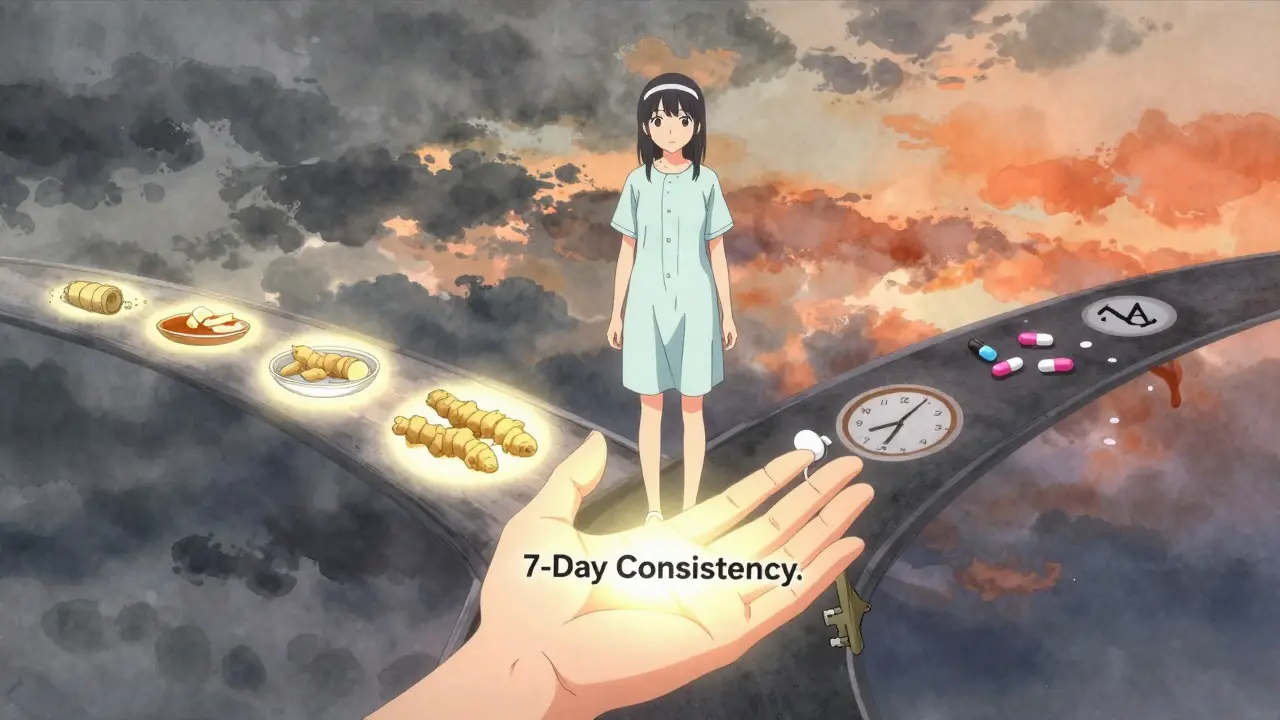
Also, don’t stop the antiemetic too soon. Even if you feel better after day 2, keep taking it for at least 7 days. Tolerance builds slowly. Stopping early can cause a rebound of nausea, making you think the medicine isn’t working when it’s just too soon to tell.
Diet Adjustments That Actually Help
Food doesn’t cause opioid nausea-but what and when you eat can make it better or worse.- Eat small, frequent meals. Large meals slow digestion, which makes nausea worse. Try five small meals instead of three big ones.
- Avoid greasy, spicy, or sweet foods. These are harder to digest and can trigger nausea in people with slowed stomach movement.
- Stick to bland, dry foods. Crackers, toast, rice, and bananas are easy on the stomach. Keep dry crackers by your bed-eating one before you get up can prevent morning nausea.
- Drink fluids between meals, not with them. Drinking while eating fills your stomach faster, which can trigger vomiting. Sip water, ginger tea, or clear broth an hour before or after eating.
- Try ginger. Studies show 1 gram of ginger powder (in capsule or tea form) daily reduces nausea in cancer patients on opioids. It’s not a cure, but it’s safe and cheap.
One overlooked tip: if you’re constipated from opioids, that pressure on your gut can make nausea feel worse. Stay hydrated, move gently (even a 10-minute walk helps), and talk to your doctor about stool softeners. A full stomach doesn’t just feel heavy-it can trigger vomiting reflexes.
When to Switch Opioids
If you’ve tried antiemetics and diet tweaks for 7-10 days and you’re still nauseated, it might be time to switch opioids. Not all opioids cause nausea the same way.- Morphine to oxycodone: Some patients switch and feel better. But evidence is weak-only about 30% see improvement.
- Morphine or oxycodone to methadone: This has stronger support. Methadone doesn’t trigger the vomiting center as much. But switching requires careful dosing-you need a specialist to do it right.
- Morphine to hydromorphone: New data from the National Comprehensive Cancer Network shows a 40-50% reduction in nausea with this switch, especially in cancer patients.
Don’t switch just because you’re uncomfortable. Wait until you’ve given the current drug and antiemetic enough time. And never switch on your own. Dose conversion between opioids is tricky and can be dangerous without expert guidance.
What Doesn’t Work
There’s a lot of advice out there-and a lot of it’s wrong.- Taking antiemetics before starting opioids rarely prevents nausea. Studies show it’s ineffective.
- Using scopolamine patches (used for motion sickness) doesn’t help opioid nausea. They target a different brain pathway.
- Waiting for nausea to go away on its own without any support can lead to opioid discontinuation. In fact, 30-35% of cancer patients quit opioids because of uncontrolled nausea.
- Using antihistamines like dimenhydrinate (Dramamine)-they’re designed for inner ear dizziness, not opioid-induced nausea. They rarely help.
Real-World Tips from the Front Lines
Doctors who manage pain every day have learned what works beyond the textbooks.- Start low, go slow. If you’re new to opioids, begin with half the usual dose. A 2.5 mg morphine dose instead of 5 mg cuts nausea risk by 35-40%.
- Don’t ignore pain relief for fear of nausea. If you’re getting good pain control but still feel queasy, lowering the opioid dose by 25-33% might remove the nausea without losing pain relief. In 60% of cases, this works.
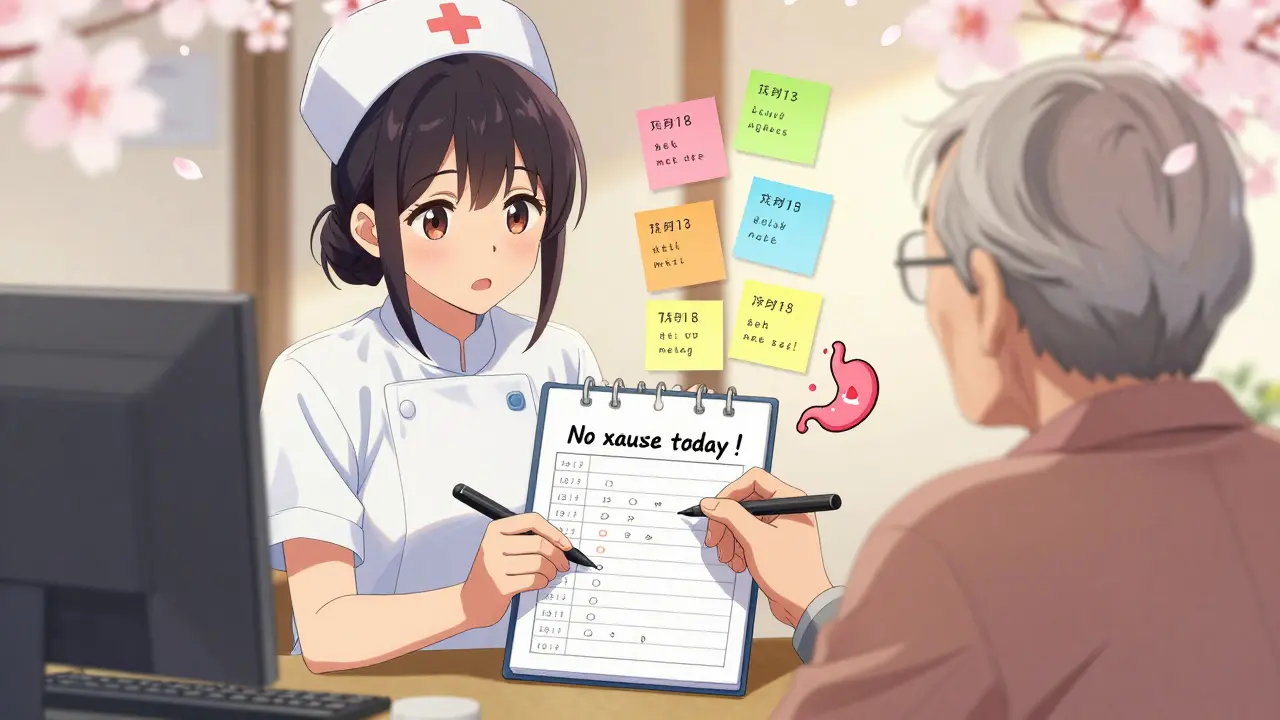
- Keep a nausea log. Write down when you feel sick, what you ate, what time you took your meds, and how bad it was. Patterns emerge. You might notice nausea always hits after lunch-and then you can adjust your meal or timing.
The goal isn’t to eliminate nausea completely. It’s to make it manageable so you can stick with your pain treatment. Most people find balance within two weeks. But you have to be proactive.
How long does opioid-induced nausea last?
For most people, nausea from opioids lasts 3 to 7 days after starting treatment. Tolerance builds as your brain adjusts to the drug. If nausea continues beyond 10 days, it’s likely not just from the opioid-you may need a different antiemetic, a dose adjustment, or a switch to another opioid.
Can I take ginger with my opioid and antiemetic?
Yes. Ginger is safe to use alongside opioids and antiemetics like metoclopramide or haloperidol. Studies show 1 gram of ginger per day (in capsule or tea form) reduces nausea severity. It doesn’t interfere with opioid metabolism. Just avoid large amounts if you’re on blood thinners.
Why is metoclopramide recommended for opioid nausea?
Metoclopramide works in two ways: it blocks dopamine receptors in the brain’s vomiting center, and it speeds up stomach emptying. Opioids slow digestion, so this dual action makes it uniquely helpful for opioid-induced nausea-especially if you feel full or bloated after eating.
Is it safe to use haloperidol long-term for opioid nausea?
Haloperidol is generally safe for short-term use (1-2 weeks). Long-term use (beyond 3 weeks) increases the risk of movement disorders like tardive dyskinesia, especially in older adults. If nausea persists beyond 10 days, switch to another antiemetic or consider opioid rotation instead of continuing haloperidol.
Can I stop my antiemetic once I feel better?
Don’t stop too soon. Even if your nausea improves after 3 days, continue the antiemetic for at least 7 days. Stopping early can cause a return of symptoms as your body hasn’t fully adapted to the opioid yet. Always follow your doctor’s guidance on duration.
Brandie Bradshaw
March 1, 2026 AT 10:45There’s no such thing as a universal solution to opioid nausea-only layered compromises. The brain’s chemoreceptor trigger zone doesn’t care about your dignity or your schedule. It responds to chemistry, not compassion. Haloperidol works because it silences the alarm, not because it’s kind. Prochlorperazine is gentler, yes, but it’s still a dopamine bulldozer. And metoclopramide? It’s the only one that addresses both the signal and the slow gut-but at the cost of your motor control if you’re dumb enough to push the dose. Timing isn’t a suggestion; it’s a biological necessity. Taking it with the opioid is like locking the door after the burglar’s already in the living room. You don’t get to choose when your neurochemistry rebels.
And ginger? It’s not a cure. It’s a placebo with fiber. But if it makes you feel like you’re doing something, go ahead. Just don’t confuse comfort with control. The real issue isn’t nausea-it’s the fear that drives people to abandon pain relief entirely. That’s not a medical problem. It’s a cultural one.
Justin Ransburg
March 2, 2026 AT 14:01Thank you for this incredibly thorough and compassionate breakdown. As someone who works with chronic pain patients daily, I can’t stress enough how vital this information is. Too often, patients are told to ‘just push through’ the nausea, when in reality, with the right timing and medication, most of these side effects are highly manageable. The point about not stopping antiemetics too soon is especially critical-many patients give up after three days, only to have symptoms return and assume the treatment failed. This is exactly the kind of clarity that saves lives and restores dignity to pain management.
Sumit Mohan Saxena
March 4, 2026 AT 07:08It is imperative to recognize that the pharmacological approach to opioid-induced nausea must be individualized, as physiological responses vary significantly across populations due to genetic, metabolic, and environmental factors. The efficacy of haloperidol, while statistically significant in clinical cohorts, may be attenuated in individuals with CYP2D6 polymorphisms, which are prevalent in South Asian populations. Furthermore, the pharmacokinetic profile of metoclopramide is influenced by renal clearance, necessitating dose adjustments in elderly or renally impaired patients. Dietary interventions, while adjunctive, must be contextualized within cultural eating patterns; for instance, the recommendation to consume bland, dry foods may be incompatible with traditional diets in regions where rice or lentils are staple carbohydrates. Therefore, while the outlined protocols are evidence-based, their universal applicability requires careful calibration.
Vikas Meshram
March 5, 2026 AT 08:38You people are missing the point entirely. Opioids are poison. You’re not managing nausea-you’re enabling addiction. The fact that you’re even discussing how to make people tolerate this crap is disgusting. If you’re in pain, fix the root cause. Don’t chemically blind yourself. And ginger? Seriously? You think a plant root can outsmart pharmacology? That’s not science, that’s witchcraft with a price tag. You’re all just looking for excuses to keep your pills. And don’t get me started on methadone-another opioid with a fancy name. You’re just swapping one prison for another. Wake up.
Byron Duvall
March 7, 2026 AT 07:14Anyone else notice how this article never mentions the real reason opioid nausea happens? It’s not the brainstem. It’s the pharmaceutical companies. They don’t want you to feel better-they want you dependent. That’s why they don’t fund research into non-opioid alternatives. And why is ondansetron so expensive? Because they’re milking you. Haloperidol is $0.05? That’s a front. The real cost is in the side effects they don’t tell you about. And they say ‘don’t switch on your own’-but who’s stopping you from switching to a better drug? The FDA? The DEA? The same people who let Big Pharma push this crap on grandma. I’ve seen it. This whole thing is a scam. You’re not managing nausea-you’re being managed.
Sophia Rafiq
March 8, 2026 AT 12:40Martin Halpin
March 10, 2026 AT 05:40Let me tell you what nobody’s saying: this entire framework is built on a lie. The notion that nausea fades in 3 to 7 days? That’s a textbook fantasy. I’ve been on morphine for 14 months. My nausea never left. Not because I didn’t try the meds. Not because I didn’t time them. Not because I didn’t eat crackers like a monk. I tried every single thing listed here. And then I realized-the real issue isn’t the nausea. It’s the fact that opioids are fundamentally incompatible with human physiology. They don’t just trigger vomiting centers-they hijack your entire reward system. The antiemetics? They’re just bandages on a hemorrhage. And they want you to believe you’re managing it? No. You’re surviving it. And if you’re still taking it after 10 days? You’re not a patient. You’re a statistic in a corporate report. The system doesn’t want you well. It wants you compliant. And ginger? That’s the placebo they give you to keep you quiet.
Charity Hanson
March 10, 2026 AT 14:30This is such a lifeline for so many people out there! I’ve watched my mom struggle with this after her surgery, and the way she was told to just ‘wait it out’ broke my heart. The timing tip? Genius. We started giving her the antiemetic 45 minutes before her pain med-and within two days, she was eating real food again. And ginger tea? We make it with fresh root and honey, and she says it feels like a warm hug inside. Small things, big difference. Keep sharing this. People need to know they don’t have to suffer in silence.
Noah Cline
March 11, 2026 AT 04:12Metoclopramide is the only rational choice here, period. The dual-action mechanism is biochemically superior for opioid-induced GI dysmotility. The dopamine antagonism is secondary to its prokinetic effect, which directly counteracts the mu-receptor-mediated delay in gastric emptying. Haloperidol? A blunt instrument. Prochlorperazine? Inconsistent absorption. Ondansetron? Only useful for acute emesis, not chronic. And dexamethasone? A steroid crutch with no mechanistic relevance to the vomiting center. This isn’t opinion-it’s pharmacokinetic fact. If you’re not using metoclopramide as first-line, you’re practicing therapeutic negligence.
Lisa Fremder
March 11, 2026 AT 08:06They say ‘use antiemetics after nausea starts’-but who’s paying for this? In America, you need insurance to get haloperidol, and even then, they make you try five other useless pills first. Meanwhile, the hospital gives you a $200 ondansetron script and says ‘here, deal with it.’ And ginger? Cute. Try eating crackers when you’re too weak to lift your arm. This isn’t medicine. It’s a privilege. If you’re not rich, you’re just supposed to suffer until you quit the opioids-or die trying. Don’t pretend this is about science. It’s about who can afford to live.
Brandon Vasquez
March 13, 2026 AT 07:34I appreciate how detailed this is. My dad started opioids last year after his spine surgery, and we were lost. The timing advice-taking the antiemetic before the opioid-was the game-changer. We didn’t know that. He’s been on it for six weeks now, and he’s not just pain-free, he’s eating meals again. I didn’t realize how much nausea was stealing his quality of life until it lifted. Thank you for writing this. It’s not just clinical-it’s human.
Ben Estella
March 14, 2026 AT 20:21Of course they say ‘don’t switch opioids on your own.’ That’s because the doctors want you stuck on the expensive ones. Methadone? It’s cheaper, safer, and less nauseating-but you can’t get it unless you go to a clinic and get judged every week. Hydromorphone? That’s just OxyContin with a new label. And why is haloperidol so cheap? Because it’s old. Because it’s generic. Because no one’s making billions off it. This whole system is rigged. You’re not managing nausea-you’re managing profits. And ginger? That’s what they give you when they don’t have a real solution.
Jimmy Quilty
March 14, 2026 AT 23:12Let’s be honest: if this were about cancer patients in Sweden or Switzerland, we’d have a national protocol with IV antiemetics, genetic testing for CYP2D6, and real-time nausea monitoring via wearable sensors. But here? We give you a pamphlet and a $3.50 tablet and call it a day. The fact that we still rely on 1970s-era dopamine blockers in 2024 is an embarrassment. And why is no one talking about the fact that the chemoreceptor trigger zone is also affected by vagal tone? We’re treating symptoms while ignoring autonomic dysregulation. The real innovation? A neurostimulator that modulates nausea signals without touching opioid receptors. But that’s not profitable. So we keep giving people crackers and ginger tea like they’re in the 1800s.
Miranda Anderson
March 14, 2026 AT 23:25I’ve been reading through this and I just want to say how much I appreciate the balance here. There’s so much fear around opioids, and so much shame attached to needing them. But this doesn’t feel like propaganda. It feels like a quiet, honest conversation between someone who’s been there and someone who’s trying to survive. The part about keeping the antiemetic for seven days even if you feel better? That’s the kind of detail that gets lost in rushed appointments. And the nausea log? I started one after reading this, and I realized my nausea always spiked after my 2 p.m. coffee. I stopped drinking it with meals, and now I’m actually sleeping through the night. It’s not glamorous. But it works. Thank you for not talking down to people. That matters more than you know.