

Medical Alert Information Checker
This tool helps you identify the most critical medical information to include on your medical alert bracelet based on your specific conditions and medications. Properly updated information could save your life in an emergency.
Your Medical Information
Critical Information to Include
Important Warning
Outdated information is dangerous. A 2023 Johns Hopkins audit found 19% of bracelets had outdated info. Always update your bracelet within 24 hours of any medication change.
Your Best Bracelet Option
Imagine you’re in a car crash. You’re unconscious. Paramedics arrive. They need to know what’s in your body - fast. But you can’t tell them you’re on warfarin. Or that you’re allergic to penicillin. Or that you’re insulin-dependent. In those first few minutes, a simple piece of jewelry on your wrist could mean the difference between life and death.
Why Medical Alert Bracelets Exist
Medical alert bracelets weren’t invented to look stylish. They were created in 1956 by the MedicAlert Foundation to give people a voice when they couldn’t speak. Today, over 4 million people worldwide wear them. And the reason hasn’t changed: drug safety in emergencies. Emergency rooms see medication errors in nearly 37% of cases, according to a 2022 study in the Journal of Emergency Medicine. Many of these errors happen because doctors don’t know what drugs a patient is taking. A broken arm might seem simple - until they’re about to give you a painkiller you’re allergic to. Or a fall might look like a concussion - until they realize you’re on a blood thinner and any internal bleeding could kill you. First responders are trained to check wrists and necks within seconds of arriving at a scene. That’s not a suggestion. It’s protocol. The American College of Emergency Physicians (ACEP) says it clearly: if you’re unconscious, they’re looking for your ID.What Information Saves Lives
Not all information on a medical alert bracelet is equal. Some details can be life-saving. Others? Just noise. Here’s what matters most, in order:- Drug allergies - especially penicillin, latex, NSAIDs, and sedatives. Penicillin allergies affect 10% of Americans. A single dose of the wrong antibiotic can trigger anaphylaxis - a reaction that shuts down breathing in minutes.
- Current medications that change emergency care - blood thinners like warfarin, apixaban, or rivaroxaban. These affect how doctors treat trauma. Giving you clotting agents when you’re on a blood thinner can cause strokes. Giving you the wrong fluid can cause internal bleeding.
- Chronic conditions with drug-specific protocols - Type 1 vs. Type 2 diabetes, insulin dependence, epilepsy, or heart failure. If you’re diabetic and unconscious, giving you insulin instead of glucose could kill you. The bracelet tells them which way to go.
Traditional vs. QR Code Bracelets
There are two main types of medical alert bracelets: engraved metal and digital QR code. Traditional metal bracelets have space for maybe 3 to 5 lines of text. That’s not enough for someone on five different medications. One user told Consumer Reports: “My bracelet only said ‘ON BLOOD THINNERS’ - not which one. They still had to run tests. I lost 45 minutes.” QR code bracelets solve this. Scan the code with a phone, and it pulls up your full digital profile: all medications, dosages, allergies, doctors, emergency contacts, even your pharmacy. MedicAlert Foundation launched this in 2018. Now, over 1.2 million people use it. The catch? QR code systems require a yearly subscription - usually around $60 - to keep your profile updated. But here’s the real advantage: they can auto-update. MedicAlert’s SmartProfile system, launched in January 2024, syncs with pharmacy databases. If your doctor changes your warfarin dose, the bracelet profile updates automatically. No more forgetting.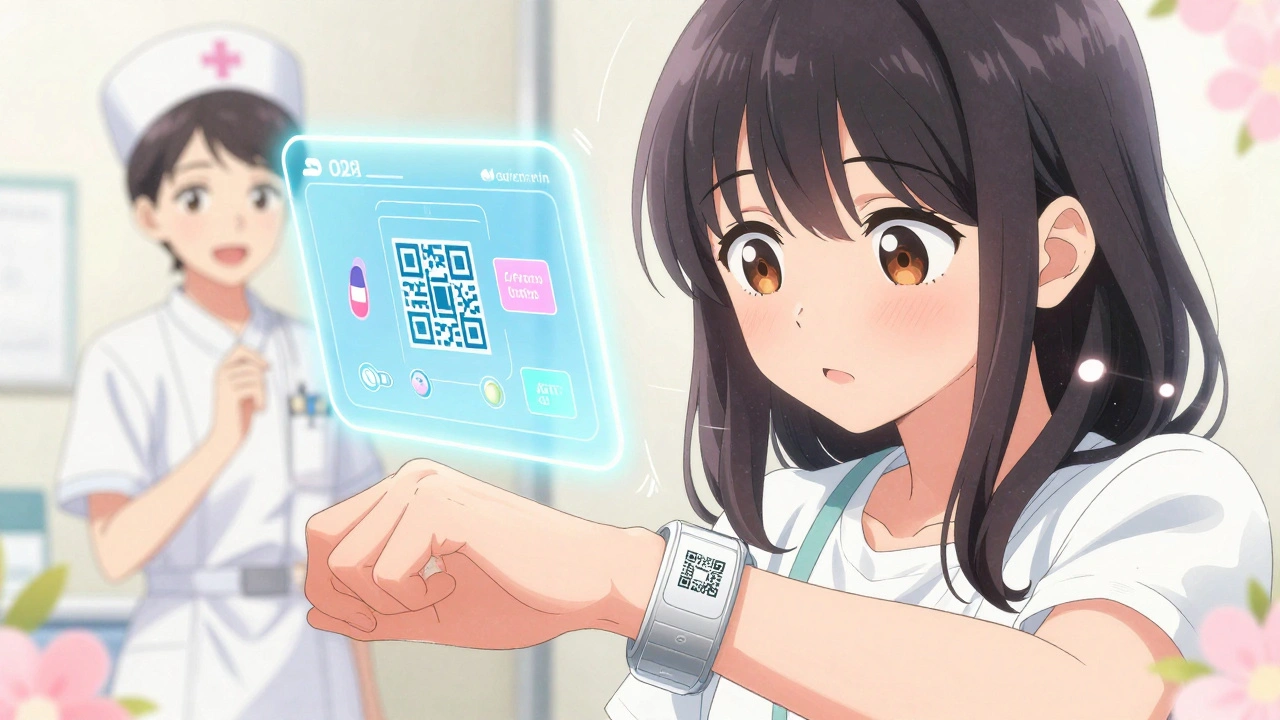
Real Stories, Real Results
People don’t buy these bracelets because they think they’ll need them someday. They buy them because they already did. On Reddit, user ‘AllergicAmy’ wrote about her 2022 emergency. She had appendicitis. ER staff were about to give her penicillin. Then they saw her bracelet: “ANAPHYLACTIC TO PENICILLIN.” The nurse stopped. “They told me they were seconds away from giving me the shot,” she wrote. “I’d have been dead in minutes.” Trustpilot reviews for MedicAlert show a 4.7/5 rating. Sixty-three percent of users say they bought it for drug safety. One man on warfarin said his bracelet stopped a hospital from giving him an NSAID for pain - a combo that could have caused a bleed. “They changed the plan because of my bracelet,” he said. “I’m alive because of it.” But it’s not perfect. A 2023 Johns Hopkins audit found 19% of bracelets had outdated info. Someone listed aspirin as an allergy - but stopped taking it two years ago. Or they forgot to update after switching from warfarin to apixaban. That’s dangerous. Outdated info is worse than no info.How to Keep Your Bracelet Accurate
The American Pharmacists Association says 35% of users never update their bracelets after a medication change. That’s a huge risk. Here’s how to fix it:- Set a calendar reminder every 3 months to check your meds and your bracelet.
- If you use a QR code system, enable auto-sync with your pharmacy. Most modern systems do this now.
- When your doctor prescribes something new, ask: “Does this affect emergency care?” If yes, update your bracelet immediately.
- Don’t just write ‘blood thinner.’ Write the name. Warfarin. Apixaban. Rivaroxaban. Each has different reversal agents. First responders need to know which one.
What to Look for When Buying
Not all bracelets are created equal. Here’s what to check:- Material - Stainless steel or titanium. Avoid cheap plastic. It breaks.
- Engraving quality - Should be deep, clear, and legible. No fuzzy letters.
- Customer support - MedicAlert Foundation scored 4.3/5 in a 2024 J.D. Power study. Independent brands? Average 3.1/5.
- Update options - Does it sync with your pharmacy? Can you update online in 30 seconds?
- Price - Traditional: $50. QR code with membership: $70 upfront, $60/year. Medical Guardian’s 2025 system (with emergency monitoring) starts at $30/month.

The Bigger Picture
This isn’t just about one bracelet. It’s about a system. The 2022 CARES Act requires all U.S. hospitals to have protocols for checking medical IDs. 67% of hospitals now do. Epic and Cerner - the two biggest hospital software systems - are building direct links to medical ID profiles. When your doctor updates your meds in the system, your bracelet updates too. That’s the future. No more forgetting. No more outdated info. Just real-time safety. The National Institutes of Health predicts a 21% rise in adoption among high-risk users by 2027. That’s not just growth. It’s recognition. People are finally seeing these bracelets for what they are: a basic, life-saving tool - like a seatbelt for your health.Who Needs One?
You don’t have to be old or sick to need one. Here’s who benefits most:- Anyone on blood thinners - even if you’ve been on them for years.
- People with severe allergies - especially to antibiotics, NSAIDs, or latex.
- Diabetics, especially those on insulin.
- People with epilepsy, heart failure, or kidney disease on multiple meds.
- Anyone who takes 3+ prescription drugs regularly.
Final Thought
A medical alert bracelet isn’t a luxury. It’s a backup system for your body. You don’t plan to crash your car. But you wear a seatbelt anyway. You don’t plan to have a stroke. But you take your meds. You don’t plan to collapse. But you wear your bracelet. It’s not about fear. It’s about control. In a moment when you can’t speak, your bracelet speaks for you. And in drug safety, seconds count.Do medical alert bracelets really work in emergencies?
Yes. First responders are trained to look for them, and studies show they correctly use the information in 89% of cases where the bracelet is present. The American College of Emergency Physicians confirms they reduce medication errors by up to 28% in unconscious patients. Real-world cases - like preventing a penicillin reaction or avoiding a dangerous drug combo - prove they save lives.
Can I just write my info on a regular bracelet?
You can, but it’s risky. Regular jewelry isn’t designed for medical use. Engraving may fade, be too small to read, or look like decoration. First responders expect standardized, durable medical IDs. A handwritten note on a cheap bracelet might be ignored. Stick with a certified medical ID provider - they’re built to last and recognized globally.
What if I have too many medications to fit on a bracelet?
Use a QR code bracelet. Traditional engraved bracelets only hold 3-5 critical items. QR versions link to a full digital profile with every medication, dosage, allergy, and doctor’s note. Prioritize the top three: allergies, blood thinners, and insulin dependence. The rest goes in the digital profile. You can update it anytime - no engraving limits.
How often should I update my medical alert bracelet?
Immediately after any medication change - new prescription, dose adjustment, or allergy diagnosis. Set a quarterly reminder on your phone. If you use a QR code system with pharmacy sync, it updates automatically. But always double-check. Outdated info is dangerous. A 2023 study found 19% of bracelets had incorrect or old data.
Are medical alert bracelets covered by insurance?
Most insurance plans don’t cover them. But some Medicare Advantage plans and HSA/FSA accounts allow reimbursement. Check with your provider. If you’re on blood thinners or have severe allergies, ask your doctor for a prescription. Some pharmacies will help you submit for reimbursement. Even without insurance, a basic bracelet costs less than a monthly coffee habit - and could save your life.
Do children need medical alert bracelets?
Yes, if they have a condition that affects emergency treatment. Kids with severe allergies, Type 1 diabetes, epilepsy, or on chronic medications like blood thinners (rare but possible) should wear one. Pediatric versions are smaller, colorful, and designed for active kids. The same rules apply: keep it updated, wear it always, and make sure caregivers know it’s there.
sean whitfield
December 5, 2025 AT 03:13They're just glorified nametags for people who don't trust doctors. Next they'll make us wear QR codes to prove we didn't eat gluten. The system is rigged. They want you dependent. Always updating. Always paying. Always scared.
aditya dixit
December 5, 2025 AT 16:20This is one of those rare cases where technology serves humanity without overcomplicating it. A simple band, a clear message, and seconds saved - that’s dignity in crisis. We forget that medicine isn’t just about curing. It’s about respecting the person behind the diagnosis.
Norene Fulwiler
December 7, 2025 AT 11:16I’m a Latina mom of three. My daughter has Type 1 diabetes. We got her a bracelet after her first low-blood-sugar scare at school. The teacher didn’t know what to do. But the nurse? She saw it. Acted fast. That bracelet didn’t just save her life - it gave our whole family peace. Wear it. Don’t overthink it.
William Chin
December 9, 2025 AT 06:36It is imperative to note that the utilization of unregulated, non-certified medical identification devices constitutes a significant public health risk. The FDA classification is not arbitrary; it is a safeguard against the proliferation of substandard, potentially life-threatening alternatives. One must exercise due diligence in procurement.
Lucy Kavanagh
December 9, 2025 AT 10:57QR codes? Sounds like Big Pharma’s way of tracking us. Who’s really behind these databases? The government? The WHO? I’ve heard they’re linked to vaccine passports. I’ll stick with my engraved steel one - no scans, no data, no tracking. Freedom isn’t free, folks.
Chris Brown
December 10, 2025 AT 00:13It’s not about safety. It’s about compliance. They want you to wear this so you never question the system. You take the drugs, you wear the tag, you never ask why. You’re just a compliant patient now. And that’s the real tragedy.
Stephanie Fiero
December 10, 2025 AT 14:21My cousin got one after her heart attack and she forgot to update it after switching meds. They gave her the wrong thing in the ER. She’s fine now but… yikes. Just update it. Like, right now. Go do it. I’ll wait. Seriously. Do it.
Laura Saye
December 11, 2025 AT 13:31The existential weight of a medical ID is profound - it’s an externalized autonomy, a silent covenant between your body and the world. When consciousness dissolves, the bracelet becomes the last locus of agency. It doesn’t just convey data - it reasserts personhood in a moment when the self is rendered inert. The QR system, while technologically elegant, risks commodifying vulnerability. Yet, when synced with pharmacy databases, it becomes an extension of care - not surveillance.
Michael Dioso
December 12, 2025 AT 20:39Look, if you’re on more than three meds, you’re probably overmedicated. Stop blaming the system. Stop buying fancy bracelets. Just talk to your doctor. And if you’re allergic to penicillin, maybe don’t take 17 different antibiotics in the first place. Also, your ‘QR code’ thing? It’s just a glorified Google Doc on a metal band. Stop falling for tech hype.