
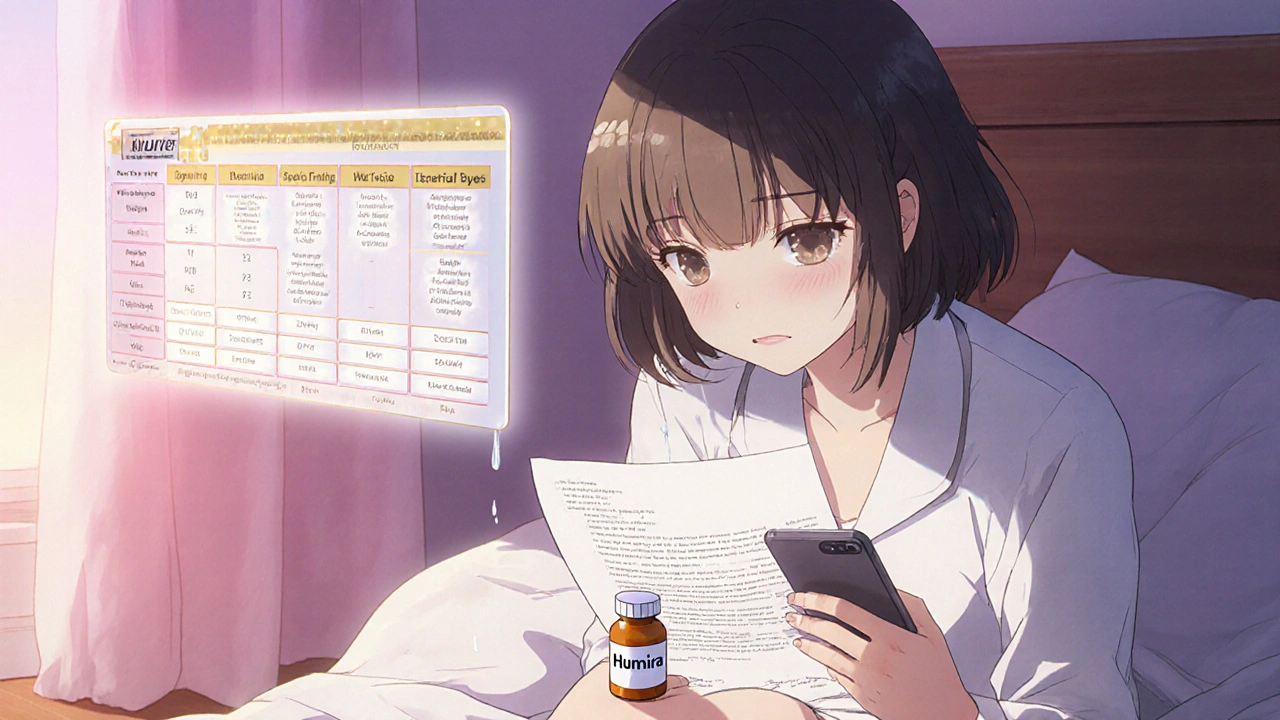
When your insurance plan suddenly stops covering your medication, it’s not just a paperwork issue - it’s a health crisis. Imagine taking Humira for Crohn’s disease for seven years, then waking up one day to find your monthly cost jumping from $50 to $650. That’s not speculation. That’s what happened to real patients in 2024. Formulary changes like this aren’t rare. They’re happening to millions of people every year. And if you don’t know how to respond, you could end up skipping doses, delaying treatment, or paying thousands more than you should.
What Exactly Is a Formulary?
A formulary is the list of prescription drugs your health plan agrees to cover. It’s not just a catalog - it’s a decision-making tool that determines which medications are affordable and which aren’t. Most plans use a tiered system: Tier 1 is usually generic drugs with the lowest copay, Tier 2 is brand-name drugs with higher costs, and Tier 3 or 4 are specialty drugs that can cost hundreds or even thousands per month. Some plans even have a Tier 5 for the most expensive treatments, like those for cancer or rare diseases.Over 90% of Medicare Part D plans and 85% of commercial insurance plans use this tiered structure. The goal? Control costs. But the side effect? Confusion. Nearly 41% of Medicare beneficiaries say they don’t understand why their drug moved to a higher tier. And when that happens, patients often don’t know where to turn.
Why Do Formularies Change?
Formularies aren’t set in stone. They’re reviewed regularly - often quarterly - by Pharmacy and Therapeutics (P&T) committees. These groups look at clinical data, new generic options, price negotiations with drugmakers, and rebates. If a cheaper, equally effective drug becomes available, the formulary might switch. If a drug’s price spikes or a manufacturer stops offering rebates, it could get moved to a higher tier or dropped entirely.In 2024, 78% of large pharmacy benefit managers (PBMs) conducted formal formulary reviews at least once a quarter. That means your medication could be affected at any time. And while Medicare plans are required to give you 60 days’ notice before removing a drug, commercial plans often give as little as 22 days. You might not even know until you go to fill your prescription.
How Formulary Changes Hurt Patients
The impact isn’t theoretical. A 2023 Scripta Insights report found that 22% of patients stop taking their medication when coverage changes. For diabetes patients, that number jumps to 58%. Why? Out-of-pocket costs. When a drug moves from Tier 2 to Tier 3, patients pay 47% more on average. For someone on insulin, that could mean choosing between food and medicine.Patients with chronic conditions are hit hardest. A 2023 National Pharmaceutical Council report found that 73% of specialty drugs for rare diseases require prior authorization - a bureaucratic hurdle that can delay treatment by weeks. And when patients are forced to switch, they’re not just paying more - they’re risking worse outcomes. A 2023 Health Affairs study showed patients pay an extra $587 per year on average when forced to change drugs.
It’s not just about money. A Harvard Medical School professor found that excessive formulary restrictions led to a 12% increase in emergency room visits among low-income Medicare beneficiaries. When patients can’t get their meds, their conditions worsen - and the system ends up paying more in the long run.

What You Can Do When Your Drug Is Removed
You’re not powerless. Here’s what to do right away:- Check your notice. Your plan must send a letter if they’re removing or changing your drug. Read it. It will tell you why and what options you have.
- Request a formulary exception. This is a formal request asking your plan to cover your current drug anyway. You’ll need a letter from your doctor explaining why the alternative won’t work. According to CMS data, 64% of medically justified exceptions are approved.
- Ask about manufacturer assistance. Most drugmakers offer patient assistance programs. In 2024, these programs covered $6.2 billion in out-of-pocket costs for patients. For drugs like Humira or Enbrel, you could get it for free or at a steep discount.
- Switch to a therapeutic alternative. Your doctor might have another drug in the same class that’s covered. For example, if your blood pressure med is dropped, there are often 5-8 generic alternatives that work just as well.
- Use State Health Insurance Assistance Programs (SHIP). If you’re on Medicare, SHIP counselors help with appeals, understand formularies, and even call your plan for you. Medicare beneficiaries who use SHIP have a 37% higher success rate getting exceptions approved.
How Providers Can Help Patients Stay on Track
Doctors and pharmacists aren’t just witnesses - they’re frontline defenders. Large medical groups with 76% of their staff using e-prescribing systems that check formulary status in real-time catch problems before the patient even leaves the office. These systems flag if a prescribed drug is no longer covered or requires prior authorization.Proactive clinics don’t wait for the letter. They monitor formulary updates 60 days in advance. One nurse on AllNurses shared how her clinic uses this lead time: “We switch patients during routine visits. No panic. No gaps. No emergency calls.” That’s the gold standard.
If you’re a provider, make formulary checks part of every prescription. Don’t assume your patient knows their plan changed. Don’t assume they’ll call in time. Set up alerts. Use your pharmacy network. Talk to your patients before the crisis hits.

What’s Changing in 2025 and Beyond
The rules are shifting. Starting in 2025, the Inflation Reduction Act caps out-of-pocket drug costs for Medicare beneficiaries at $2,000 per year. That’s huge. It means plans can’t keep pushing expensive drugs to high tiers without consequences. More plans will likely shift toward value-based formularies - where coverage is based on how well a drug works, not just how cheap it is.By 2027, experts predict 45% of employer plans will use value-based formularies, up from 25% today. That means drugs with better real-world outcomes - like fewer hospitalizations or improved quality of life - will get priority, even if they cost more upfront.
And AI is coming. New tools can predict with 89% accuracy whether a formulary change will cause patients to stop taking their meds. That’s not science fiction - it’s already being used by top PBMs to avoid costly disruptions.
How to Prepare Before It Happens
Don’t wait for the letter. Be proactive:- Check your formulary every year during open enrollment. Don’t assume your drugs are still covered.
- Use your plan’s online formulary tool. Most insurers have one - 92% of them do.
- Sign up for email alerts from your pharmacy or insurer. Some will notify you if your drug is changing.
- Keep a list of your meds, dosages, and why you take them. That’s your armor when you need to request an exception.
- Know your plan’s appeal process. How long do you have? Who do you call? Write it down.
If you’re on Medicare, use the Plan Finder tool. It’s used by 68% of beneficiaries and lets you compare formularies side by side before you enroll. Don’t just pick the cheapest plan - pick the one that covers your drugs.
Final Thought: You Have Rights - Use Them
Formularies exist to manage costs. But they shouldn’t manage your health. You have the right to know why your drug was removed. You have the right to appeal. You have the right to ask for help. Too many people suffer silently because they think there’s no way out. There is. It’s just not always easy.Take action. Call your doctor. Call your plan. Call a SHIP counselor. Use manufacturer programs. Don’t let a formulary change decide your treatment. You’re not just a member number. You’re someone who needs to stay healthy. And that’s worth fighting for.
What should I do if my insurance stops covering my medication?
First, don’t stop taking your medication. Contact your insurer to confirm the change and get the official notice. Then, ask your doctor for a formulary exception letter explaining why you need the specific drug. You can also check if the manufacturer offers a patient assistance program. If your drug is on Medicare, you can request a temporary 30- to 60-day supply while your appeal is processed.
How much notice do insurance plans have to give before changing coverage?
Medicare Part D plans must give you 60 days’ notice for non-urgent changes. Commercial plans are not federally required to give the same notice - many only give 22 days on average. Always check your plan’s summary of benefits. If you’re not notified in time, you can still request a temporary supply or file an exception.
Can I switch to a different drug if mine is removed from the formulary?
Yes, but not all alternatives are equal. Ask your doctor if there’s another drug in the same therapeutic class that’s covered and clinically appropriate. For example, if your brand-name blood pressure drug is dropped, there are often multiple generic options with the same effect. Don’t assume the replacement is better - make sure it’s right for your condition.
What’s the difference between a formulary exception and a prior authorization?
A prior authorization is a pre-approval step your doctor must complete before the plan will cover a drug - often required for specialty or high-cost medications. A formulary exception is a request to cover a drug that’s not on the plan’s list at all. Both require documentation from your doctor, but exceptions are harder to get because you’re asking the plan to make an exception to its rules.
Are there free resources to help me understand my formulary?
Yes. If you’re on Medicare, contact your State Health Insurance Assistance Program (SHIP) - they offer free, personalized help with formulary questions and appeals. For commercial plans, your insurer’s customer service line can explain your formulary tiers. You can also use GoodRx or NeedyMeds to compare cash prices and find patient assistance programs.
Why do formulary changes happen so often?
Drug prices change, new generics enter the market, and manufacturers renegotiate rebates. Insurance plans and pharmacy benefit managers (PBMs) review formularies quarterly to cut costs. A drug that was once covered because it had a good rebate might be removed if the manufacturer lowers that rebate. It’s not personal - it’s business. But that doesn’t mean you’re powerless.
Can I switch insurance plans if my drug is removed?
You can only switch plans during open enrollment unless you qualify for a special enrollment period - like losing other coverage or moving. If your drug is removed mid-year, you can’t switch plans just because of that. But you can still appeal, request an exception, or use manufacturer assistance to bridge the gap until next enrollment.
How can I avoid surprises with my formulary next year?
Check your formulary every year during open enrollment - even if you’re staying with the same plan. Use your insurer’s online tool to search for your medications. Compare plans side by side. Look for plans that list your drugs on lower tiers. If you take multiple medications, prioritize plans that cover all of them without prior authorization. Don’t wait until you’re at the pharmacy counter.
Jake Ruhl
November 27, 2025 AT 23:43so like... i just found out my insurance dropped my biologic and now i gotta choose between rent and my meds? this isn't healthcare this is a trap set by big pharma and the gov to keep us docile. they dont care if you die slow as long as the stock price goes up. i saw a video on tiktok where a guy in ohio got denied his insulin and died in the ER - they said he was 'non-compliant'. non-compliant?! i cant even afford to breathe anymore. this system is designed to fail us. wake up people.
Chuckie Parker
November 28, 2025 AT 12:49Stop crying about your drug costs. You think Medicare is broken? Try living in a country where you dont even get basic care. You want affordable meds? Work more. Pay taxes. Dont expect freebies because you chose a brand name over a generic. Your doctor shouldve prescribed the cheaper option. This is personal responsibility 101.
George Hook
November 30, 2025 AT 02:06I understand the frustration. I’ve been on a similar drug for five years and had the same experience last year. It’s not just about money-it’s about stability. When your body adapts to a medication, switching can cause flare-ups, fatigue, even hospitalizations. I spent three months appealing, working with my doctor, and using manufacturer programs. It took time but I got it back. You’re not alone. The system is stacked but there are paths through it. Just don’t give up.
Katrina Sofiya
December 1, 2025 AT 16:47To everyone feeling overwhelmed: You have rights. You have resources. You have people who want to help. Please reach out to your State Health Insurance Assistance Program-SHIP counselors are trained to walk you through every step. They’ll call your insurer for you. They’ll help draft your exception letter. You don’t have to fight this alone. And if you’re reading this and you’re a provider? Check formularies before you write the script. Prevent the crisis before it starts. This is how we heal the system-one thoughtful action at a time.
kaushik dutta
December 2, 2025 AT 01:05As someone from India where insulin costs $3 a vial, I find this conversation both tragic and absurd. In the US, you have a $6.2 billion patient assistance industry, formulary exception protocols, and 92% of insurers offering online formulary tools-yet people still panic. The issue isn't access to solutions-it's awareness. Most patients don't know about NeedyMeds, GoodRx, or SHIP because the system doesn't proactively educate. This isn't capitalism-it's negligence. We need mandatory patient education at point-of-prescription. Not after the crisis.
doug schlenker
December 2, 2025 AT 15:48I just want to say that I read this whole thing and I felt seen. I’ve been on Humira since 2020 and when they dropped it, I thought my life was over. But I did all the things they listed-called my doctor, got the exception letter, found the manufacturer program, and used GoodRx to bridge the gap. It’s not perfect, but it works. I’m still here. And I’m not giving up. If you’re reading this and you’re scared-breathe. You’ve got this. One step at a time.
Olivia Gracelynn Starsmith
December 3, 2025 AT 12:15Formulary changes are not random. They are calculated. PBMs negotiate rebates with manufacturers and move drugs based on who pays the most-not who helps the most. This is why generics dominate Tier 1. It’s not about efficacy. It’s about profit. If your drug is expensive and your insurer gets a bigger kickback from a competitor, you’re getting swapped. Don’t take it personally. Take it to your state legislator. Demand transparency. And always, always keep a printed copy of your formulary. Digital portals change overnight.
Skye Hamilton
December 3, 2025 AT 23:13They say 'you have rights' like that's supposed to comfort me. My rights are a spreadsheet. My rights are a 3-week wait for a formulary exception. My rights cost $400 in copays and a 2-hour phone call with a robot. I'm tired of being told to 'advocate' when advocacy is a full-time job I can't afford to take. My body is not a cost center. But the system treats it like one. And I'm done pretending this is fair.
Maria Romina Aguilar
December 5, 2025 AT 15:03And yet… the article says you have the right to appeal… and yet… 64% approval rate… which still means 36% get denied… and then what? You’re supposed to just… accept it? And the manufacturer programs? They’re great… until you’re denied because you made $2 over the income limit… or your insurance says you're 'not medically necessary'… even though your doctor says you are… and then… you’re just… stuck…
Brandon Trevino
December 6, 2025 AT 09:50Let’s be brutally honest: 78% of PBMs review formularies quarterly because they’re profit engines, not healthcare entities. They’re incentivized to push drugs with the highest rebates, not the best outcomes. The Inflation Reduction Act’s $2k cap is a Band-Aid. It doesn’t fix the rebate system. It doesn’t stop prior auth nightmares. It doesn’t prevent patients from being dropped mid-cycle. This isn’t reform-it’s PR. Real reform requires dismantling the PBM oligopoly. And that won’t happen until people stop treating this as a personal problem and start treating it as a systemic one.
Denise Wiley
December 7, 2025 AT 04:00I work in a clinic and I see this every week. A patient comes in crying because their drug was dropped. We check the formulary, call the insurer, get the exception letter drafted by noon. We even call the manufacturer for samples. We’ve saved people from going off their meds. You are not alone. You are not broken. You are not failing. You are fighting a broken system-and you’re doing it with dignity. I see you. And we’ve got your back.
Hannah Magera
December 7, 2025 AT 21:09Can someone explain what a P&T committee is? I’ve never heard that term before. Is it like a group of doctors who decide what drugs are covered? Do they ever talk to patients? I just want to understand how this all works. I’ve been on the same med for 10 years and I just got a letter saying it’s no longer covered. I don’t know who to trust anymore.
Austin Simko
December 8, 2025 AT 22:35They’ll drop your drug. Then they’ll say 'here’s a cheaper alternative'. Then you switch. Then it stops working. Then they say 'we told you so'. Then you’re stuck. This is how they kill you slowly.
Nicola Mari
December 10, 2025 AT 09:11It’s tragic, really. People are dying because they can’t afford to live. And yet, we live in a country where a single vial of insulin can cost more than a month’s rent in some places. This isn’t capitalism-it’s moral bankruptcy. You think this is the natural order? It’s not. It’s chosen. By people who sit in boardrooms and count profits while patients count pills. Shame on all of us for letting this continue.