

Generic medications are affordable alternatives to brand-name drugs that deliver the same active pharmaceutical ingredient. They represent a huge savings for most people, often costing 80% less than their branded counterparts. But there's a catch that many doctors don't discuss during a consultation. That catch lies in what makes up the bulk of the pill itself.
While the active drug molecule does the healing work, it only accounts for a fraction of the tablet's total weight. A study from MIT and Brigham and Women's Hospital highlighted that more than half of a typical pill consists of inactive substances. For some formulations, this number creeps as high as 99%. This might not seem like a problem until you consider that approximately 93% of all medications contain potential allergens. If you've ever switched from a brand-name drug to a generic one and suddenly felt different, this guide explains exactly why that happens and how to protect yourself.
What Exactly Are Inactive Ingredients?
When you swallow a tablet, you aren't swallowing pure medicine. You are swallowing a complex cocktail of compounds designed to get the medicine into your bloodstream. These are technically called excipients, also known as inactive ingredients. Their job isn't to cure you, but to make the pill stable, tasteable, and manufacturable.
Think of them like the ingredients in a cake. The egg provides the structure (binders), the flour adds bulk (fillers), and the frosting makes it look appealing (colorants). Without these components, the active ingredient might degrade before it reaches you, or dissolve too slowly to work effectively. However, unlike the active ingredient, which is strictly regulated across both brand and generic versions, these fillers can change completely depending on who manufactured the pill.
The Food and Drug Administration (FDA) requires that generic drugs demonstrate bioequivalence. This means the generic must release the drug into the body at roughly the same rate and extent as the brand name. While this protects you regarding the active drug concentration-usually allowing only a small variation around 4%, though regulations permit up to 20%-it places no strict limit on the variety of inactive ingredients used. Consequently, two bottles containing the exact same "generic" label might actually hold completely different filler profiles.
Why Do Generics Differ From Brand Names?
You might wonder why a manufacturer would choose to swap ingredients. The answer usually comes down to supply chains and cost efficiency. When a pharmaceutical company formulates a drug, they select a mix of excipients that works well within their specific manufacturing process. When a second company develops a generic version, they are not required to copy the recipe book. They simply need to prove their version hits the same blood levels in humans.
This flexibility leads to significant variability. A 2022 survey by MedShadow found that 27% of respondents experienced new side effects after switching to generic versions. Of those, nearly 70% believed the cause was linked to these non-active components. While the industry argues that safety standards remain high, the lack of standardization on fillers creates a blind spot for patients with specific sensitivities.
| Function | Example Substances | Potential Patient Impact |
|---|---|---|
| Fillers | Lactose, cellulose, magnesium stearate | Can trigger digestive distress or lactose intolerance |
| Binders | Povidone, gelatin, starch | Gelatin affects vegetarians/vegans; starches may affect digestion |
| Colorants | Titanium dioxide, FD&C Dyes | Metallic oxides and azo dyes can cause allergic reactions |
| Preservatives | Sulfites, parabens | Sulfites are a known trigger for asthmatics |

Identifying High-Risk Inactive Ingredients
For most patients, these differences are harmless. However, for those with compromised immune systems, severe allergies, or functional digestive disorders, these tiny variations can spell trouble. Research indicates that about 55% of medications contain FODMAP sugars. If you suffer from irritable bowel syndrome (IBS), taking a medication loaded with these fermentable carbohydrates could spark an attack indistinguishable from a disease flare-up.
One of the most concerning classes of excipients includes bisulfites. Compounds like sodium metabisulfite are often used to prevent oxidation in liquid medicines. While beneficial for the drug's stability, they are notorious for causing bronchoconstriction in sensitive asthmatics. Similarly, trace amounts of peanut oil appear in certain vitamin formulations, which poses a life-threatening risk for those with severe nut allergies. Unlike food products, where labeling laws are incredibly strict, pharmacological labeling has historically lagged behind regarding these minor ingredients.
Another hidden variable is gluten. Some manufacturers use wheat-derived excipients as binders. Even minute quantities can trigger celiac disease symptoms in highly sensitive individuals. With the average older adult taking multiple prescriptions-a phenomenon known as polypharmacy-these small amounts can accumulate in the body. By the time a person takes five or six tablets a day, each with a different filler profile, they are consuming a substantial dose of chemicals beyond the therapeutic agents.
Recognizing Adverse Reactions to Fillers
So, how do you know if a reaction is due to the drug itself or the inactive parts? Symptoms often mimic other issues, leading to misdiagnosis. Common signs of intolerance to excipients include digestive bloating, nausea, skin rashes, or unexplained fatigue shortly after switching prescriptions. There are numerous reports on community forums where users described developing stomach cramps after switching from brand-name Synthroid to a generic levothyroxine formulation, only for symptoms to resolve upon returning to the original brand.
Data from the FDA Adverse Event Reporting System (FAERS) supports the idea that these reactions happen. While attribution is difficult because reporting is voluntary, patterns emerge showing that adverse event rates sometimes rise for specific drug classes immediately after generic versions become available. This doesn't mean the generic failed to work; it suggests the delivery system changed in a way that upset the patient's tolerance. Dr. Giovanni Traverso noted in his analysis that clinicians often lack the tools to distinguish which specific ingredients caused the issue because prescribing databases rarely detail every filler included in a pill.
Practical Steps for Patient Safety
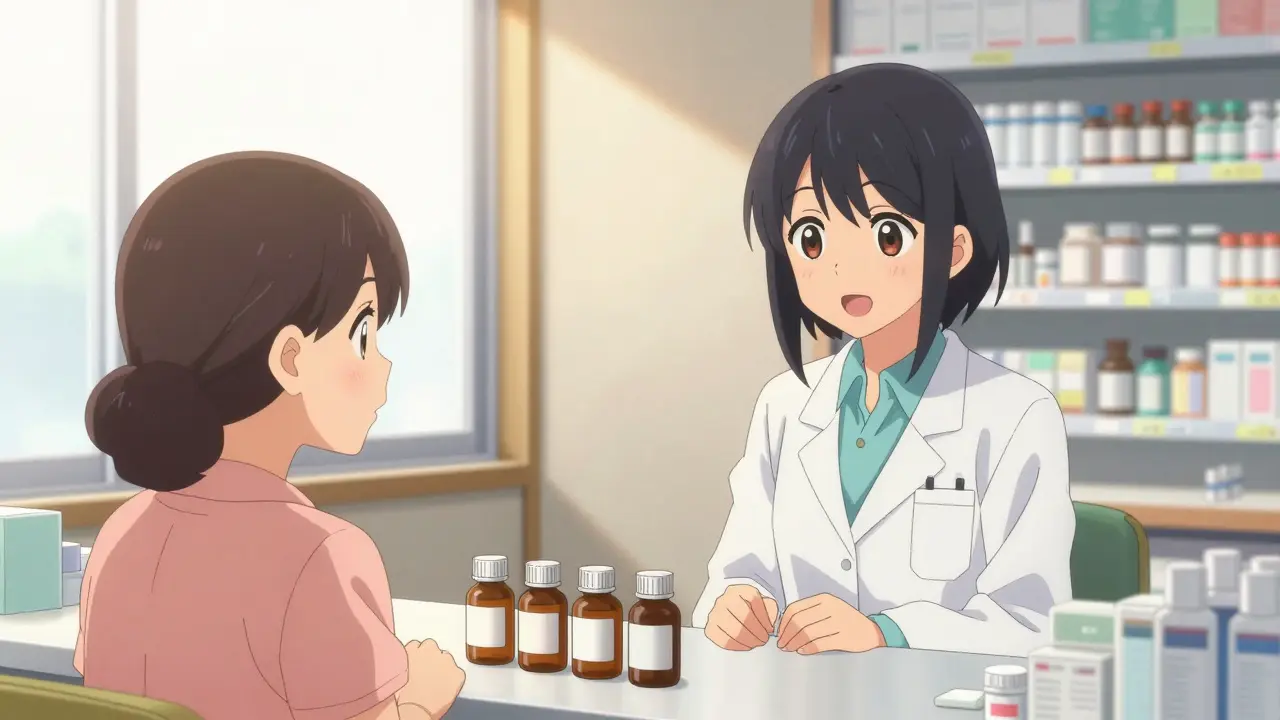
Protecting yourself doesn't mean avoiding generics entirely, as they provide critical access to affordable care. Instead, it involves adopting a proactive approach to medication management. When you pick up a new prescription, ask your pharmacist to verify the manufacturer. Different manufacturers produce different batch compositions. By asking to stick to one specific generic manufacturer, you minimize the variable of changing fillers.
If you have a history of severe allergies or digestive issues, talk to your doctor about requesting a brand-name product. Many insurance plans allow for exceptions in documented medical necessity cases. Alternatively, check the Inactive Ingredient Database provided by the FDA, though it can be technical to navigate. Your goal is to build a personal record of which brands tolerate well. Keep a medication diary that tracks the specific manufacturer alongside any new symptoms. If you see a correlation, present that data to your physician. Transparency between you, your pharmacist, and your doctor is the most effective tool you have in navigating the world of drug formulation.
Frequently Asked Questions
Are generic medications safe to take?
Yes, for the vast majority of patients, generic medications are safe and effective. They meet strict bioequivalence standards set by the FDA. The safety concerns regarding inactive ingredients primarily apply to patients with specific, known sensitivities to fillers or dyes.
Can I control which generic I receive?
Yes. Pharmacists typically dispense whichever generic is cheapest or in stock. You can ask for a specific manufacturer or a brand-name product, but your insurance plan may require additional authorization or higher co-pays for these requests.
What is bioequivalence in simple terms?
Bioequivalence means the generic drug enters your bloodstream at the same speed and amount as the brand name. It ensures the active drug is absorbed properly, but it does not dictate the non-active components inside the pill.
Why do some people get sick from generics?
Reactions are usually triggered by inactive ingredients like lactose, dyes, or binders that differ between brands. While rare for the general population, these can cause significant allergic or digestive issues for sensitive individuals.
How do I report a reaction to a generic drug?
You can report adverse events through the FDA MedWatch program or directly via the FDA Adverse Event Reporting System (FAERS). Be sure to note the specific manufacturer and lot number of the medication if available.
Callie Bartley
April 1, 2026 AT 10:17Americans always think our system is perfect until you look closer at what goes into your body. It is absolutely infuriating that companies swap fillers without telling us properly. I switched to a generic and felt terrible for weeks, yet my doctor just shrugged it off like I was crazy. They prioritize saving money over keeping patients safe with these random chemical changes. You can bet that big pharma does not want you knowing how much junk is actually in those pills. It feels like they treat us like guinea pigs for their supply chain experiments. Really disappointing to see this kind of negligence in something as basic as medicine. We deserve better transparency than getting stuck guessing why we are allergic to sugar in a pill. It’s like playing Russian roulette with your own health insurance plan honestly. Stop ignoring the warning signs when side effects appear after a switch.
Rod Farren
April 1, 2026 AT 12:41The pharmacokinetics are often misunderstood here. Excipient variability creates bioavailability discrepancies even within the therapeutic window. Magnesium stearate acts as a glidant which can alter dissolution rates significantly depending on particle size distribution. When you introduce lactose monohydrate as a diluent instead of microcrystalline cellulose you change the osmotic load entirely. This impacts the gut microbiome composition which leads to secondary inflammatory responses. Regulatory frameworks focus on the API mass but ignore excipient matrix interaction potentials. Clinical trials rarely isolate the filler contribution to adverse events adequately. We need stricter labeling protocols regarding the excipient profile specifically. Otherwise clinicians cannot differentiate between drug toxicity and formulation hypersensitivity reactions. It is a systemic issue requiring deeper analytical characterization methods during approval phases.
Molly O'Donnell
April 2, 2026 AT 08:00Just read the label yourself and stop expecting doctors to know everything.
James DeZego
April 3, 2026 AT 13:55It really shows how easy it is to overlook the non-active stuff. I’ve found that asking the pharmacist for the specific manufacturer name helps a lot 🏥 Sometimes sticking to one brand prevents those weird gut issues from popping up unexpectedly. Keep your records updated so you can spot patterns quickly ✅ Health is definitely worth the extra effort to manage proactively 😊
Russel Sarong
April 5, 2026 AT 01:24Record keeping is essential for spotting symptom patterns consistently!!! It drives me crazy when people ignore the importance of tracking symptoms carefully!!! But yes!!! Sticking with one manufacturer is key!!! Please share more advice if you find anything else useful!!! We need to support each other through these health hurdles together!!! 💪✏️
Eleanor Black
April 6, 2026 AT 13:07I feel compelled to discuss the profound implications of this matter regarding patient autonomy and informed consent procedures throughout the prescription process 🌹 It is quite evident that the regulatory framework currently lacks sufficient granularity to protect sensitive individuals from potential allergenic exposures hidden within standard formulations 😲 Furthermore, the cumulative burden of polypharmacy introduces a significant risk vector for adverse reactions that are poorly documented in existing literature bases 📓 Many practitioners fail to appreciate the nuanced interactions between excipients and pre-existing gastrointestinal conditions such as IBS or celiac disease diagnoses ❗⚪ Consequently, patients must undertake a rigorous self-monitoring protocol to ensure their safety remains uncompromised despite systemic oversight failures 🛡️ It would be beneficial if pharmaceutical companies adopted transparent labeling standards similar to food industry regulations currently mandated elsewhere 🌍 Until such changes occur, vigilance remains the primary defense mechanism for those managing chronic health conditions daily 🕯️ One must remain optimistic that legislative bodies will eventually address these critical safety gaps effectively ✨ However, we must acknowledge the current reality where insurance coverage dictates availability options heavily 🧑🧊🤎 The cost savings associated with generics cannot overshadow the potential physical toll exacted on vulnerable physiological systems ⚖️ Every individual deserves the right to know exactly what chemicals they are introducing into their bloodstream consistently 🔌 There exists a distinct lack of education among medical staff regarding inactive ingredient profiles unfortunately 😴 We need to demand better resources for patient advocacy groups fighting for these changes 🤖💻 Communication between pharmacists and prescribing physicians needs to be standardized to prevent cross-manufacturer confusion 🤝 Ultimately, the goal is safety above all else when dealing with necessary medication administration routines ❤️ Let us hope for improved awareness campaigns in the near future regarding these overlooked components 📢 Thank you for bringing attention to this important topic overall 🌈
Arun Kumar
April 7, 2026 AT 06:50Better communication across the healthcare system is vital for every patient. It is important that we work together to ensure everyone gets the best care possible regardless of background. Your insights are valuable for many of us who are trying to navigate these complex medication choices safely. Let us support one another in building knowledge about what goes into our medicines daily. Together we can push for changes that make the system safer for everyone involved in the process.
Sharon Munger
April 7, 2026 AT 12:52Collaboration and shared learning are crucial approaches here
Julian Soro
April 9, 2026 AT 04:10It is super important to track which manufacturer makes your meds. I did this when I had stomach issues and switching back to the original brand fixed everything. Ask your pharmacy to check their supplier database before you pick up a new script. It takes five minutes but saves you a lot of hassle later on. Knowledge is power when it comes to managing your own health journey effectively.
Cullen Zelenka
April 9, 2026 AT 06:08Checking supplier details is very important for anyone experiencing issues. It is nice to know you figured out what worked for you without giving up on affordable options completely. Hopefully more people catch on to this trick soon so they do not have to deal with unnecessary side effects. Staying proactive is the best way to handle these situations calmly.
Jenny Gardner
April 10, 2026 AT 16:40Recent shifts in pharmaceutical manufacturing standards require immediate attention from consumers!! The data presented suggests a clear correlation between filler variations and reported intolerance incidents!! Patients should feel empowered to request specific formulation details from their healthcare providers!! Transparency must become the norm rather than the exception in modern medical practice!! Everyone deserves accurate information regarding their treatment options regardless of cost constraints!!