
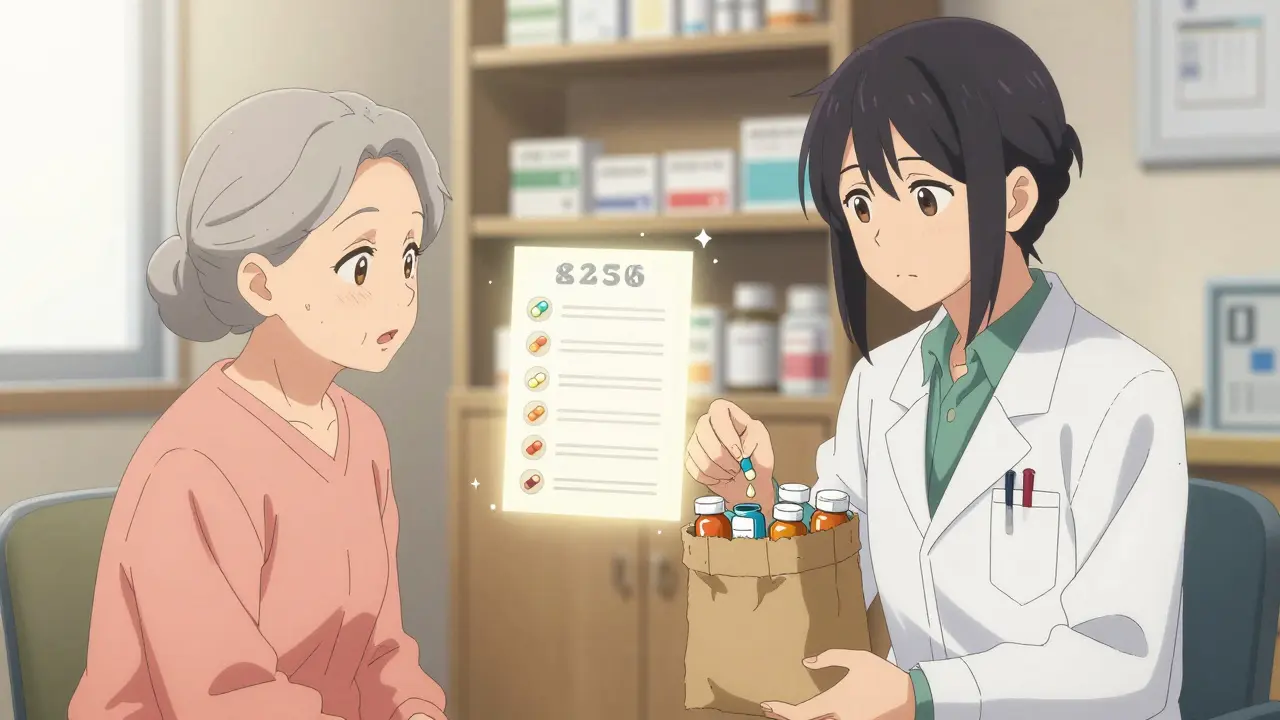
Every year, millions of people in the U.S. and Australia take medications they no longer need. Some started years ago for a short-term issue. Others were added by different doctors without a full review. And many are still on the list simply because no one ever asked if they were still necessary. The result? Higher bills, more side effects, and unnecessary risk - all while the cost of prescriptions keeps climbing.
You don’t have to accept this. Working with your doctor to deprescribe - the careful, planned process of stopping medications that aren’t helping anymore - isn’t just about safety. It’s one of the most direct ways to cut your monthly drug costs without losing any health benefits.
What Is Deprescribing, Really?
Deprescribing isn’t about quitting all your meds. It’s about removing the ones that don’t belong anymore. Think of it like cleaning out your closet: you keep what fits, what you use, and what still serves you. Everything else gets tossed.
According to the American Academy of Family Physicians, nearly 41% of adults over 65 take five or more medications at once - a situation called polypharmacy. That number jumps even higher for people with chronic conditions. And while some of those drugs are essential, studies show that up to 30% of them are unnecessary, outdated, or even harmful.
For example, a 2021 study in JAMA Network Open found that patients who stopped taking proton pump inhibitors (PPIs) for heartburn - after their condition had improved - saved an average of $420 a year. At the same time, their risk of getting pneumonia dropped by 25%. That’s not a coincidence. Many long-term medications have hidden downsides: dizziness, confusion, falls, kidney stress, or even interactions with other pills you’re taking.
And the financial side? The Lown Institute estimates that inappropriate polypharmacy costs the U.S. healthcare system over $30 billion each year in avoidable hospital visits and ER trips. For you personally, cutting just one unnecessary $50/month pill saves $600 a year. Eliminate three, and you’re saving over $1,800 - money that could go toward groceries, travel, or an emergency fund.
How to Start the Conversation
Most doctors support deprescribing. But they don’t always bring it up. That’s because appointments are short - often just 15 minutes - and they’re focused on your newest concern. So you need to lead.
Before your next visit, do this:
- Make a full list of everything you take - prescription, over-the-counter, vitamins, supplements, and herbal remedies. Don’t leave anything out. Even that daily gummy you think is harmless.
- Write down the cost of each one. You can find this on your pharmacy receipt or through your insurer’s app. Seeing the numbers side by side can be eye-opening.
- Bring the actual pills in a brown bag. This simple step - called a “brown bag review” - helps your doctor spot duplicates, expired meds, or pills you might be taking wrong.
At the appointment, ask these five questions:
- Why am I taking this medication?
- What am I supposed to gain from it - and how do we know it’s still working?
- Could this be causing side effects like dizziness, memory issues, or fatigue?
- Is there a chance I can stop or lower the dose?
- If I stop, who should I check in with, and how often?
These aren’t confrontational questions. They’re smart, evidence-based ones. In fact, a 2021 study in the Journal of the American Board of Family Medicine found that when patients came prepared with a full list and cost details, doctors were 68% more likely to consider deprescribing.
What Happens After You Ask?
Your doctor won’t say, “Stop everything tomorrow.” That’s dangerous. Deprescribing is a process, not an event. It’s slow, careful, and monitored.
Here’s how it usually works:
- Prioritize - Not all meds are equal. Your doctor will look at which ones have the highest risk or lowest benefit. For example, a statin for someone with advanced dementia might be stopped before a blood pressure pill. Tools like the Beers Criteria (a list of potentially inappropriate drugs for older adults) help guide this.
- Start with one - You’ll likely begin by tapering off just one medication. This could mean reducing the dose slowly over weeks or switching to a less frequent schedule.
- Monitor closely - You might be asked to track symptoms like sleep, energy, or mood. If you feel worse, you’ll go back to the original dose. If you feel better or notice no change, you may continue to reduce.
- Revisit every few months - Your body changes. So should your meds. A review every 6 to 12 months is standard. For high-risk drugs (like sleeping pills or painkillers), check-ins may be more frequent.
Real stories show this works. A 72-year-old woman in Ohio stopped three medications after a brown bag review: a $120/month sleep aid she didn’t need, a $70/month supplement her cardiologist said was redundant, and an old anxiety pill that was causing dizziness. Her annual drug cost dropped by $840. She also slept better and stopped falling.
Who Else Can Help?
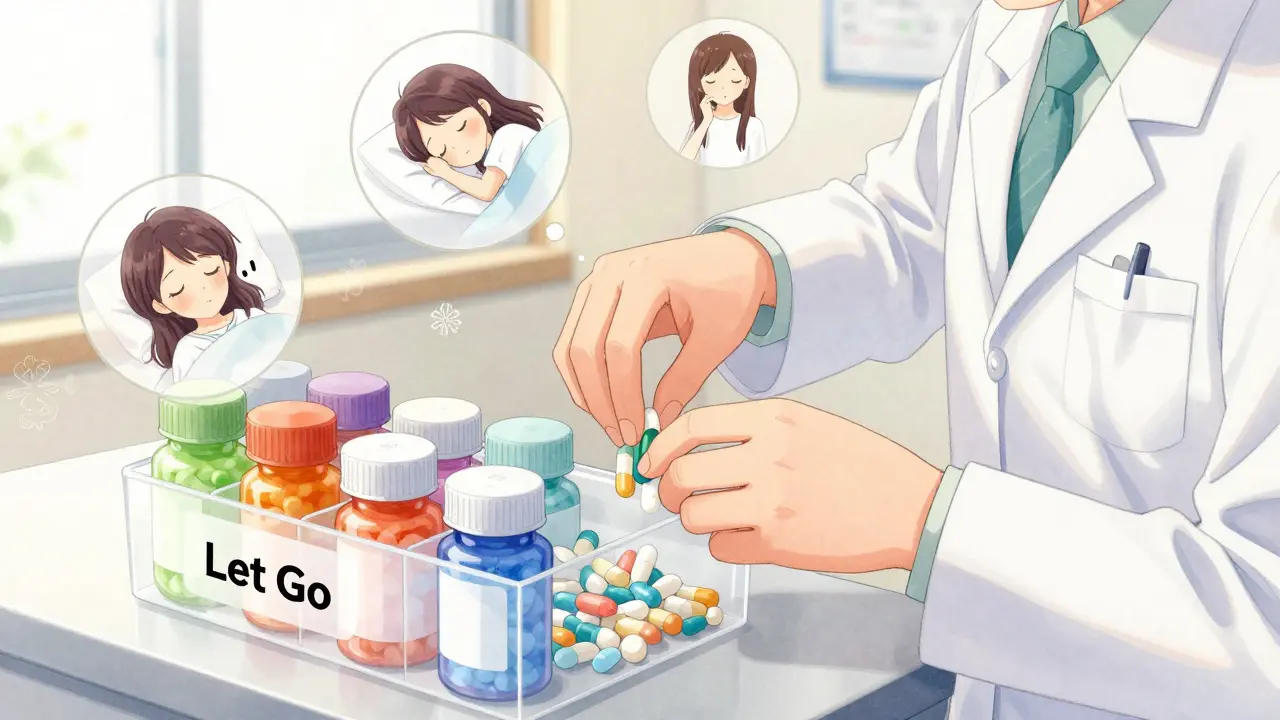
You don’t have to do this alone. Pharmacists are your secret weapon.
Under Medicare Part D and many private plans, community pharmacists offer free Medication Therapy Management (MTM) services. That means they’ll sit down with you, review all your meds, check for interactions, and spot savings.
A 2022 study in the Journal of Managed Care & Specialty Pharmacy found that pharmacists using MTM identified an average of $1,200 in annual savings per patient - often by switching to generics, eliminating duplicates, or catching expired prescriptions.
Some clinics even have dedicated deprescribing programs. Kaiser Permanente, for example, reduced medication costs by $1.2 million annually across its system while cutting adverse drug events by 28%. Their success? Structured reviews, trained staff, and patient education.
Don’t hesitate to ask your pharmacist: “Can you help me review my meds for possible savings or risks?” Many don’t even know this service exists - but it’s legally required to be offered to high-risk patients.
What If You’re Scared to Stop?
It’s normal to worry. What if I get my old symptoms back? What if I feel worse?
Here’s the truth: most people don’t feel worse when they stop unnecessary drugs. In fact, they feel better. A 2023 review of 127 studies found that 73% of patients reported improved energy, fewer side effects, or better sleep after deprescribing.
But if you’ve been on a medication for years - especially something like a blood pressure pill or antidepressant - stopping suddenly can be risky. That’s why tapering matters. Your doctor will create a safe plan. You might go from one pill a day to half a pill every other day over six weeks. Then, you’ll pause and see how you feel.
And if you do have a rebound? That’s why follow-ups exist. Your doctor won’t abandon you. They’ll help you adjust.
On the flip side, trying to stop meds on your own? That’s where things go wrong. A 2022 survey by the National Council on Aging found that 18% of people who tried self-deprescribing ended up in the ER with avoidable problems - costing an average of $1,200 in extra care. Don’t risk it. Always work with a professional.

Why This Matters More Than Ever
Prescription prices have risen 60% since 2014. For seniors on fixed incomes, medication costs now eat up 18.3% of their income - more than food or housing in some cases. The 2023 Inflation Reduction Act helped by capping insulin at $35/month and expanding coverage for medication reviews. But it’s not enough.
Deprescribing is the most underused tool we have. The U.S. Deprescribing Research Network estimates that 37% of hospitalizations in adults over 65 are caused by medication errors - and most of them are preventable.
And it’s not just about money. It’s about quality of life. Fewer pills means fewer side effects. Fewer trips to the pharmacy. Fewer worries about interactions. More clarity. More energy.
Think of it this way: if you’re taking ten pills a day and five of them don’t do anything anymore, you’re spending time, money, and mental energy on something that doesn’t help. Why keep doing that?
What to Do Next
Here’s your simple action plan:
- Get your complete medication list - including supplements and OTCs.
- Write down the cost of each one.
- Bring the pills to your next doctor’s visit in a bag.
- Ask the five key questions listed above.
- Ask your pharmacist for a free medication review.
- Schedule a follow-up in 3 months to check how you’re doing.
You don’t need to be perfect. You don’t need to stop everything at once. Just start the conversation. One less pill can mean hundreds - even thousands - of dollars saved. And maybe, just maybe, a better day.
Is deprescribing safe?
Yes - when done properly. Deprescribing is a slow, supervised process that removes medications only when their risks outweigh their benefits. Studies show it reduces side effects, falls, and hospital visits. The key is working with your doctor to taper off one medication at a time and monitor how you feel.
Can I stop my meds on my own?
No. Stopping certain medications suddenly - like blood pressure pills, antidepressants, or steroids - can cause serious reactions including rebound high blood pressure, seizures, or worsening anxiety. Always talk to your doctor first. Even if you think a pill is harmless, it might interact with others or mask an underlying issue.
Will my doctor think I’m trying to save money?
Most doctors welcome the conversation. In fact, 78% of primary care physicians support deprescribing but say they lack time or training to do it well. Bringing up cost is not only okay - it’s helpful. Doctors use tools like the Beers Criteria and Medication Appropriateness Index to make clinical decisions, not financial ones. But cost is part of the bigger picture: if a drug isn’t helping, why pay for it?
How much money can I save?
It varies, but the numbers are clear. Eliminating one unnecessary $50/month medication saves $600 a year. A 2022 study found patients saved an average of $1,200 annually through pharmacist-led reviews. Some patients have saved over $2,000 by stopping just three redundant or outdated drugs. And that’s not counting avoided ER visits or hospitalizations, which can cost tens of thousands.
Do I need to see a specialist to deprescribe?
No. Your primary care doctor is the best person to start with. They see your full history and can coordinate with specialists. If needed, they may refer you to a pharmacist for a free medication review or a geriatric specialist for complex cases. You don’t need a specialist to begin - just the willingness to ask the right questions.
Daniel Dover
February 14, 2026 AT 10:26Just asked my pharmacist for a med review last week. Saved $300/year by ditching a supplement I didn’t need and switching two prescriptions to generics. Best 10 minutes of my year.
Mike Hammer
February 15, 2026 AT 15:11Man, I wish I’d known about this sooner. My grandma’s on like 12 pills and half of them are for side effects from other pills. She’s been falling a lot lately. I’m bringing her brown bag to her next appointment. Hope she doesn’t throw a fit.
Joe Grushkin
February 15, 2026 AT 16:31Deprescribing is just another liberal buzzword designed to make people feel better about cutting corners on healthcare. If you’re not taking every pill your doctor gives you, you’re playing Russian roulette with your life. Also, pharmacists? They’re paid by Big Pharma to push generics. Don’t trust them.
Mandeep Singh
February 15, 2026 AT 20:55Oh please. You think stopping meds is easy? I was on antidepressants for 8 years. Tried to quit cold turkey after reading some blog post. Ended up in the ER with serotonin syndrome. Now I’m on 4 meds instead of 2. You don’t know what you’re talking about unless you’ve lived it. And even then, you probably still don’t.
Esha Pathak
February 17, 2026 AT 03:34Life is a tapestry of chemical signals, my friends. Each pill is a thread pulled from the cosmic loom-some frayed, some woven too tight. To deprescribe is not to reject medicine, but to listen to the silence between the doses. The body remembers what the mind forgets. Are we healing… or just numbing?
Betty Kirby
February 18, 2026 AT 07:00Wow. So now we’re encouraging people to stop taking their meds because they’re expensive? This is why America is falling apart. No discipline. No responsibility. You think your body can just ‘adjust’? My uncle had a stroke because his doctor listened to him and stopped his blood thinner. He’s in a nursing home now. Don’t be that guy.
Kaye Alcaraz
February 19, 2026 AT 14:33Thank you for this clear, actionable guide. I’ve shared it with my senior center group. One woman just stopped her nighttime sleep aid after our chat-she says she’s sleeping deeper without it. Small changes, huge impact. Keep advocating. You’re not just saving money-you’re reclaiming your life.
Erica Banatao Darilag
February 19, 2026 AT 17:43I’m 69 and have been on 6 prescriptions for years. I printed out my list, brought my pills, and asked my doctor the five questions. He looked at me like I’d just solved world hunger. We cut two, lowered one dose. My monthly bill went from $412 to $203. I cried. Not from sadness-from relief.
Charlotte Dacre
February 20, 2026 AT 06:11Oh sweet merciful heavens, another post about ‘saving money’ by stopping pills. Next you’ll be telling me to stop brushing my teeth to save on toothpaste. I’m sure the $50/month ‘unnecessary’ pill is the one keeping me alive. Please. Let’s all just stop taking medicine and start doing yoga.
Chiruvella Pardha Krishna
February 21, 2026 AT 01:00The body is not a machine. It is a symphony of unseen forces. To remove a pill is to disrupt a harmonic resonance that only the soul can perceive. Perhaps the true cost is not in dollars, but in the quiet erosion of trust between patient and healer. We must ask not ‘can I stop?’ but ‘why was I given this?’
Virginia Kimball
February 21, 2026 AT 04:42This is the most important thing I’ve read all year. I told my mom to bring her pills in a bag-she thought I was crazy. But last week she called me, laughing: ‘Turns out I’ve been taking two different blood pressure pills for 12 years.’ We saved $700. She’s dancing in her kitchen now. Thank you.
Josiah Demara
February 21, 2026 AT 06:31Let’s be real. This whole deprescribing thing is just a Trojan horse for healthcare rationing. You think your doctor is going to cut your meds because you asked nicely? They’re under pressure from insurance companies to slash costs. This isn’t patient empowerment-it’s cost-shifting. And don’t get me started on pharmacists. They’re not your friends. They’re middlemen in a broken system.