
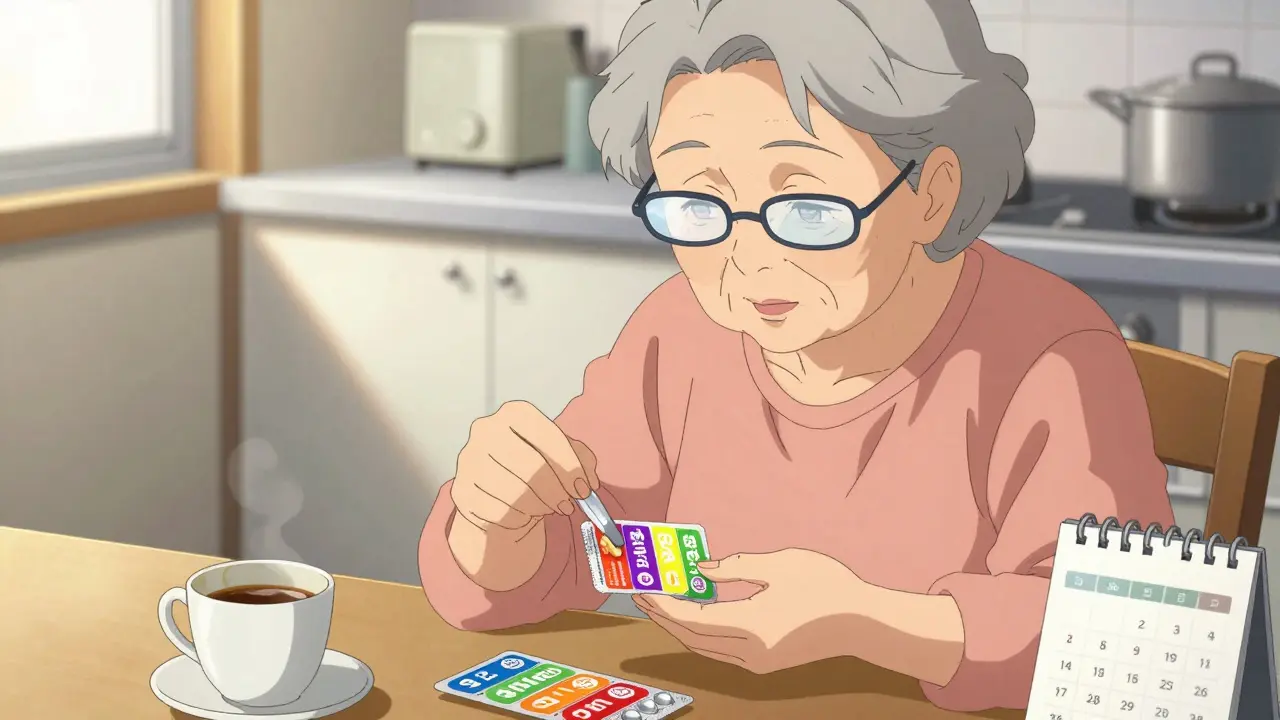
Why Medication Management Gets Harder with Age
Imagine taking eight different pills every day-some in the morning, some at night, others only on Tuesdays and Thursdays. Now imagine your hands shake, your vision is blurry, and you can’t remember if you already took your blood pressure pill. This isn’t rare. Nearly half of seniors miss doses or take them at the wrong time. That’s not laziness. It’s a system that wasn’t built for them.
Traditional pill bottles are a nightmare for older adults. Small caps that won’t twist open. Tiny print that fades under fluorescent lights. Empty spaces you can’t see until it’s too late. And when you’re juggling five or more medications, mistakes happen fast. The CDC says 39% of seniors over 65 take five or more daily meds. That’s a recipe for confusion.
That’s where pill packs and blister packaging come in. These aren’t fancy gadgets. They’re simple, smart solutions designed by pharmacists to stop errors before they start.
What’s the Difference Between Pill Packs and Blister Packs?
Both systems sort your meds by time and day. But how they’re built makes a big difference in daily use.
Blister packs are rigid plastic trays with foil-sealed compartments. Each one holds a single dose-morning, noon, evening, bedtime-and is labeled with large, bold text. The whole week fits in one flat unit, about the size of a small notepad. You press your thumb firmly on the back of the foil to push the pill through. You can see right away if you missed a dose because the hole is still covered.
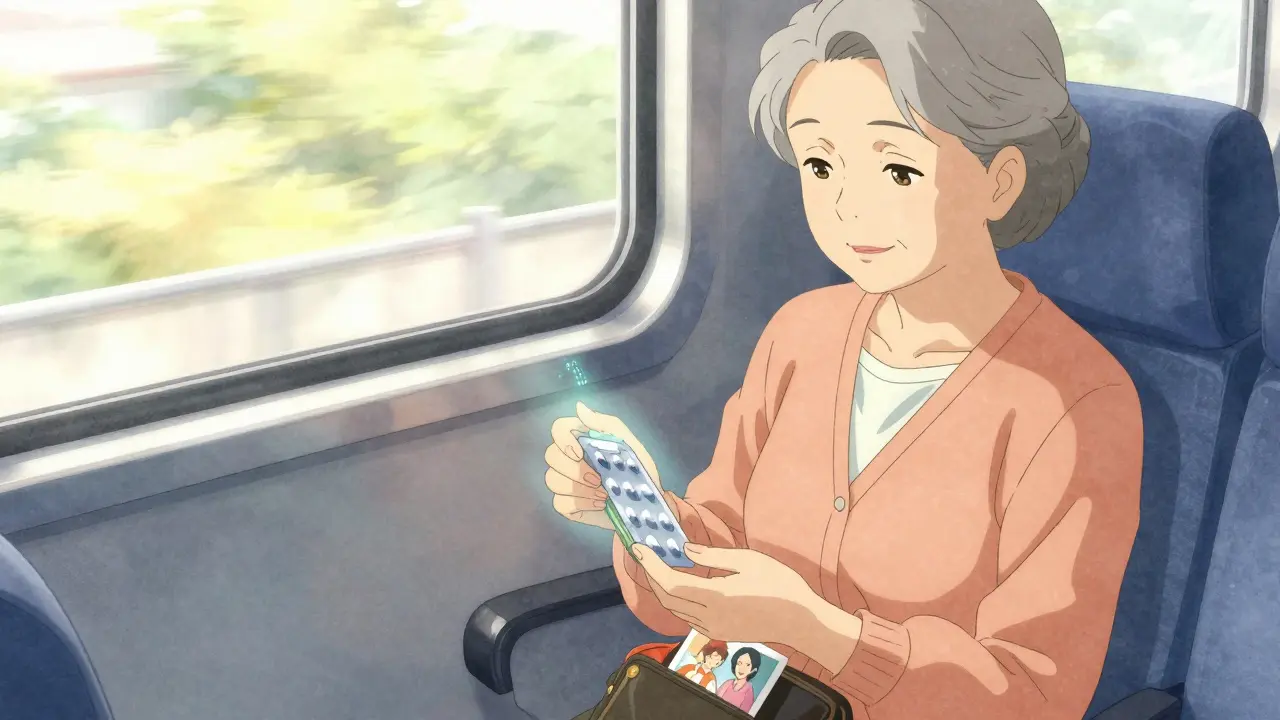
Pill packs are flexible, connected pouches. Each day is its own sealed pouch, so you can tear off just today’s dose. That’s why they’re better for travel. If you’re going to visit your daughter for the weekend, you don’t need to carry the whole week’s worth-you just grab Monday and Tuesday.
Here’s the catch: blister packs can’t be split up. If you need to travel, you bring the whole thing. Pill packs can be separated, but they don’t show you the whole week at once. So if you forget what you took yesterday, you have to remember-or check your calendar.
How Pharmacies Build Your Pack (And Why It Matters)
You don’t make these yourself. A pharmacist does. And that’s the safety net.
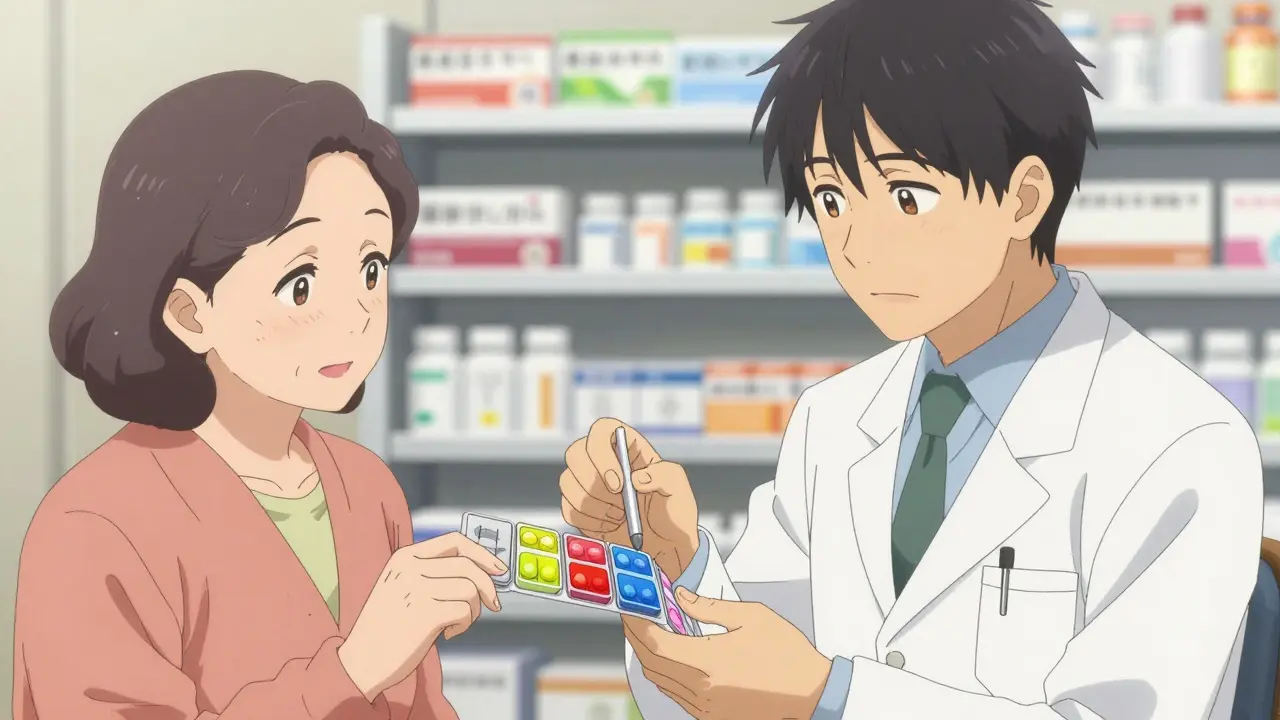
When you sign up for blister or pill packaging, your pharmacist pulls all your prescriptions. They check for dangerous drug interactions. They confirm dosages. They make sure you’re not getting two pills that do the same thing. Home Instead Belfast found this step cuts potential drug errors by 37% for seniors on multiple meds.
Then they sort everything into the right compartments. No guesswork. No mixing up your heart pill with your thyroid pill. Everything is labeled in big, high-contrast fonts. If you’re colorblind, they use symbols. If your hands are stiff from arthritis, they make the foil easier to push through.
This isn’t just convenience. It’s a medical review. And it’s why these systems are trusted in nursing homes and home care programs across Australia and the U.S.
Real Benefits: Less Stress, Fewer Trips to the ER
People who switch to blister or pill packs don’t just remember their meds better-they feel better.
One Reddit user, u/SeniorCaregiver2023, said her mom used to call her three times a day just to ask if she’d taken her pills. After switching to a blister pack, the calls stopped. The visual confirmation gave her mom peace of mind.
Family caregivers report a 42% drop in medication-related stress. Seniors feel more in control. They don’t need someone to remind them every morning. That independence matters.
And the numbers back it up. PharmcareUSA found that facilities using blister packaging saw 27% fewer hospital visits due to medication errors. That’s not just saving money-it’s saving lives. The Annals of Internal Medicine estimates poor medication adherence causes 125,000 preventable deaths a year in the U.S. alone.
Smart blister packs are even starting to include tiny sensors that track when a pill is taken. These aren’t sci-fi-they’re already being tested in homes. By 2028, nearly half of senior packaging systems are expected to have some kind of digital tracking.
Who Benefits Most From These Systems?
These aren’t for everyone. But they’re perfect for:
- Seniors taking five or more medications daily
- Those with memory issues or early dementia
- People with vision problems or difficulty reading small labels
- Those with arthritis or weak grip-blister packs eliminate twisting caps
- Anyone who’s ever taken a pill twice-or missed one entirely
If you’re on a simple regimen-maybe just one blood pressure pill and one vitamin-then a pill organizer might be enough. But if you’re juggling anticoagulants, diabetes meds, heart pills, and pain relievers? Blister or pill packs are a game-changer.
What You Need to Know Before Signing Up
It sounds simple. But there are a few things to plan for.
Timing matters. Pharmacies need 3 to 5 business days to prepare your pack. You can’t get it the same day. That means if your doctor changes your meds on Tuesday, you might have to wait until next week’s pack to get the update. That’s the biggest downside. Blister packs can’t be tweaked mid-week.
Travel is tricky. If you’re flying or visiting family for a few days, pill packs are easier. Blister packs mean carrying the whole week. Some people cut the blister pack into daily strips with scissors-but that’s risky. It breaks the tamper-proof seal. Better to ask your pharmacist about a travel-sized pill pack instead.
Cost varies. In Australia, many pharmacies include this in your regular dispensing fee. In the U.S., some charge $4.99 a week. Medicare Part D is starting to cover it as part of medication therapy management. Ask your pharmacist-don’t assume it’s extra.
Strength matters. About 28% of users in PharmcareUSA’s survey said pushing through the foil was hard. If your hands are very weak, ask for a pack with softer foil or a punch tool. Some pharmacies give you a small plastic pusher to help.
How to Get Started
It’s easier than you think.
- Call your local pharmacy and ask if they offer blister or pill packaging. Not all do-only 62% of rural pharmacies offer it, compared to 89% in cities.
- Bring a list of all your medications, including vitamins and supplements. Don’t leave anything out.
- Ask if they can adjust the compartments for your schedule. Some need three doses a day. Others only need two.
- Confirm how often you’ll get refills. Weekly? Monthly?
- Ask for a quick demo. Most pharmacists will show you how to open the pack on the spot.
Within two or three days, most seniors get the hang of it. The hardest part is remembering to call ahead for refills.
What to Watch Out For
These systems aren’t perfect. Here’s what to keep an eye on:
- Medication changes. If your doctor adds, removes, or changes a dose, your pack may be wrong until the next refill. Always check with your pharmacist if anything changes.
- Refill delays. Don’t wait until you’re out of pills. Call at least 5 days before you need a new pack.
- Travel gaps. If you’re away for more than a few days, plan ahead. Ask for a separate travel pack or ask your pharmacist to mail you one.
- Storage. Keep packs away from heat and moisture. Don’t leave them in the bathroom or in a hot car.
If you notice a pill missing, or the label looks wrong, stop. Call your pharmacy. Don’t guess.
Final Thought: It’s Not About Convenience. It’s About Safety.
Blister and pill packs aren’t just for seniors who forget. They’re for anyone who wants to stay healthy, avoid hospital visits, and live independently longer.
They turn a confusing, stressful chore into something visual, predictable, and safe. That’s not just good design. It’s good medicine.
If you or a loved one is struggling with meds, ask your pharmacist. It’s one of the simplest, most effective things you can do to protect your health.
Can I use blister packs if I have arthritis?
Yes, but you may need help. While traditional pill bottles are nearly impossible to open with stiff hands, blister packs require pressing through foil, which can also be tough. Many pharmacies offer packs with softer foil or provide a small plastic pusher tool to make it easier. Ask your pharmacist for a version designed for low hand strength.
Do I need a prescription to get blister packaging?
No, you don’t need a separate prescription. Your existing prescriptions are enough. The pharmacy will use your current medication list to build your pack. But you must be under the care of a doctor who has prescribed your medications.
Can I switch back to regular bottles if I don’t like it?
Absolutely. There’s no contract. If the system doesn’t work for you, just ask your pharmacy to refill your meds in regular bottles. Many people try it for a month and decide it’s worth continuing-but you’re never locked in.
Are blister packs covered by Medicare or private insurance?
In the U.S., Medicare Part D increasingly covers blister packaging as part of medication therapy management services. In Australia, most pharmacies include the cost in your standard dispensing fee, so there’s usually no extra charge. Always check with your pharmacy or insurer to confirm.
What if I need to take a pill at a different time one day?
Blister packs are pre-filled for a reason-they’re designed to prevent mistakes. If you need to change your schedule, don’t move pills around. Call your pharmacy. They can create a new pack for the next refill. For short-term changes, your pharmacist might give you a few extra pills in a separate container to use as needed.
How long does it take to get used to a blister pack?
Most seniors adapt within 2 to 3 days. The key is to look at the pack each morning and press the pill out slowly. The visual layout makes it obvious what’s been taken. Once you see the empty holes, it becomes second nature.
Can I use pill packs for supplements too?
Yes. Many pharmacies will include vitamins, fish oil, or other supplements in your pack as long as they’re taken at consistent times. Just make sure to tell your pharmacist about everything you take-even over-the-counter stuff.
Aditya Gupta
February 2, 2026 AT 07:53Melissa Melville
February 2, 2026 AT 10:05Deep Rank
February 3, 2026 AT 16:14Bob Cohen
February 5, 2026 AT 13:05Lisa Rodriguez
February 5, 2026 AT 13:30Bryan Coleman
February 6, 2026 AT 03:51Donna Macaranas
February 7, 2026 AT 06:40Naomi Walsh
February 8, 2026 AT 07:02Jaden Green
February 8, 2026 AT 17:16vivian papadatu
February 10, 2026 AT 01:07Angel Fitzpatrick
February 10, 2026 AT 16:43Rachel Liew
February 12, 2026 AT 07:45Lilliana Lowe
February 13, 2026 AT 19:32