
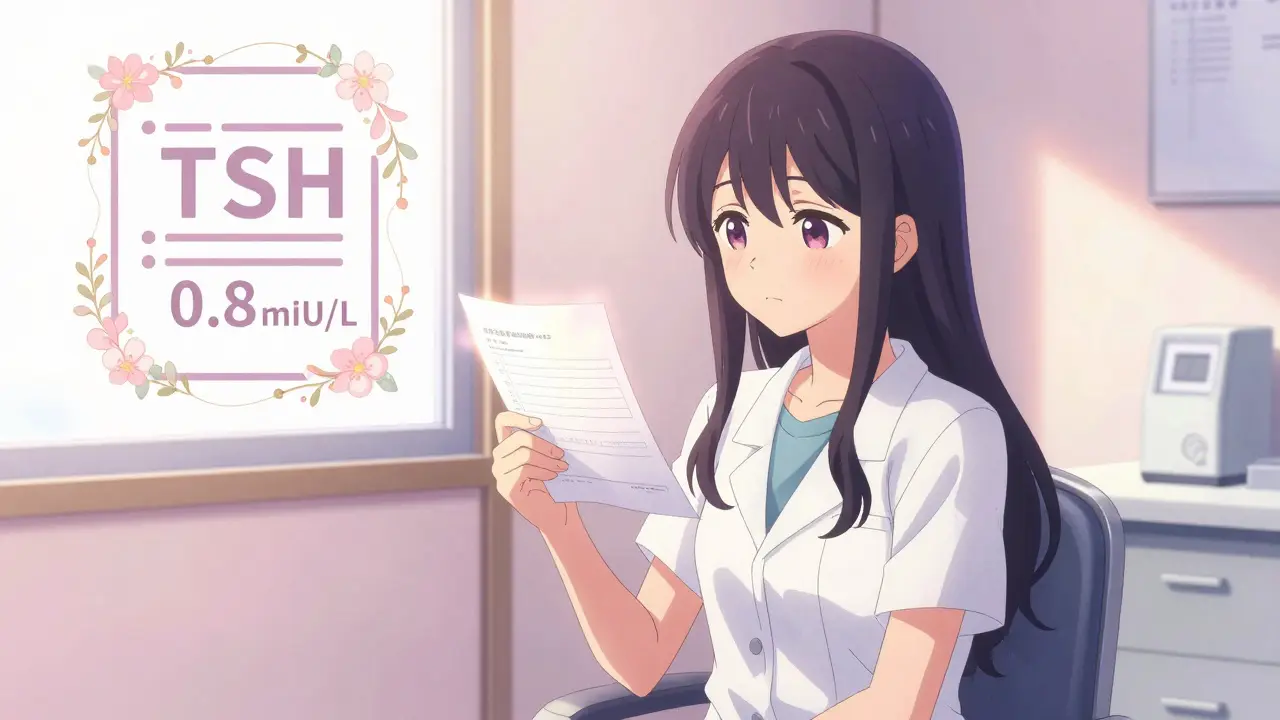
Hashimoto’s thyroiditis is the most common reason people end up with an underactive thyroid. It’s not just a simple hormone imbalance - it’s your own immune system turning against your thyroid gland. Over time, this attack slowly destroys the gland’s ability to make thyroid hormones, leading to hypothyroidism. If you’ve been told you have Hashimoto’s, you’re not alone. About 4% of adults in the U.S. have it, and women are up to 10 times more likely to be diagnosed than men. The good news? It’s manageable. The key is understanding how to monitor it - and that starts with one number: TSH.
What Happens When Your Immune System Attacks Your Thyroid
Hashimoto’s thyroiditis is an autoimmune disease. That means your body’s defense system - meant to protect you from viruses and bacteria - starts mistaking your thyroid tissue for a threat. It sends antibodies to attack it. The two main antibodies involved are thyroid peroxidase antibodies (TPOAb) and thyroglobulin antibodies. When these are high, it confirms the autoimmune cause.
At first, you might not feel anything. The thyroid can keep working even as it’s being damaged. But over months or years, it loses function. When that happens, your body doesn’t make enough T4 and T3 - the hormones that control your metabolism, energy, temperature, and mood. That’s when symptoms show up: fatigue, weight gain, cold sensitivity, dry skin, hair thinning, brain fog, and depression.
Diagnosis usually starts with a blood test. The first thing doctors check is TSH - thyroid-stimulating hormone. If TSH is high, it means your brain is screaming at your thyroid to work harder because it’s not producing enough. Next, they check free T4. If T4 is low or low-normal, that confirms hypothyroidism. Then, they test for TPOAb. If those antibodies are elevated (usually above 35 IU/mL), the diagnosis is Hashimoto’s.
Why TSH Is the Only Test You Really Need for Monitoring
Once you’re on treatment, you might wonder: Should I keep checking my T4? My T3? My antibodies? The answer is simple: no - not for routine monitoring.
According to the American Thyroid Association and the Cleveland Clinic, TSH is the most reliable indicator of whether your thyroid hormone replacement is working. Why? Because your pituitary gland - the control center in your brain - is extremely sensitive to tiny changes in thyroid hormone levels. Even a small drop in T4 causes TSH to rise sharply. That makes it a perfect early warning system.
Measuring TPOAb levels over time doesn’t help guide treatment. Antibody levels can stay high even when your thyroid function is perfectly normal. They don’t tell you if your dose is right. The ATA says clearly: “Repeating and monitoring your thyroid antibody levels is not needed.”
Same goes for T3. Most people feel better on levothyroxine (T4) alone. Adding T3 (like Cytomel) doesn’t consistently improve symptoms, and the Cochrane Review found no strong evidence to support it. For 95% of patients, TSH-guided levothyroxine is enough.
How Levothyroxine Works - and Why Dosing Takes Time
Levothyroxine is a synthetic version of T4. Your body converts it into T3, the active hormone. It’s not a quick fix. It takes weeks for your body to adjust.
Doctors typically start with 1.4 to 1.8 mcg per kilogram of body weight. For most adults, that’s between 25 and 75 mcg per day. If you’re older, have heart problems, or are severely hypothyroid, they may start even lower - maybe 12.5 or 25 mcg.
Here’s the catch: you won’t feel better right away. Levothyroxine has a long half-life - about 7 days. It takes 4 to 6 weeks for your body to fully absorb the new dose and for your pituitary to respond. That’s why you can’t adjust your dose every week. If you do, you’re just chasing your own bloodwork.
That’s also why follow-up tests are scheduled 6 to 8 weeks after starting or changing your dose. This gives your body time to stabilize. The AAFP, Mayo Clinic, and AACE all agree on this timeline. Skipping ahead doesn’t help - it just leads to unnecessary dose swings.

What Your TSH Target Should Be
Not all TSH ranges are created equal. Labs often list “normal” as 0.4 to 4.0 mIU/L. But that’s a population average - not your personal target.
For most adults under 65, the goal is to keep TSH between 0.5 and 2.5 mIU/L. Many people feel their best in this range. The NHANES III data shows that healthy adults aged 30 to 39 have a median TSH of just 1.2 mIU/L.
For older adults (65+), a slightly higher TSH - up to 4.0 to 6.0 mIU/L - is often acceptable. Your body changes with age, and overly aggressive treatment can increase heart rhythm problems or bone loss.
Pregnancy changes everything. If you’re pregnant or planning to be, your target TSH drops sharply. The ATA recommends keeping TSH below 2.5 mIU/L in the first trimester, and below 3.0 mIU/L in the second and third. Untreated or poorly controlled Hashimoto’s during pregnancy raises the risk of miscarriage, preterm birth, and developmental issues in the baby. That’s why testing every 4 weeks is critical during pregnancy.
What Can Throw Off Your TSH Results
Your TSH can look wrong even if your dose is perfect. Here are common culprits:
- Medications: Iron, calcium supplements, antacids (like omeprazole), and estrogen (in birth control or HRT) can block levothyroxine absorption. Take your thyroid pill on an empty stomach, at least 30-60 minutes before food or other meds.
- Weight changes: Gaining or losing more than 10% of your body weight means your dose likely needs adjusting.
- Switching brands: The FDA tightened levothyroxine manufacturing standards in 2018 because different brands used to vary in potency. Even switching from generic to Synthroid can cause TSH fluctuations. Stick to one brand unless your doctor says otherwise.
- Timing of the test: TSH naturally rises overnight and drops in the afternoon. But you don’t need to test at 7 a.m. - the variation is too small to matter. Just be consistent about the time of day if you’re tracking trends.

When Symptoms Don’t Match Your TSH
You’ve heard it before: “Your TSH is normal, so you’re fine.” But what if you still feel exhausted, bloated, or depressed?
It happens. Some people need a TSH target in the lower half of normal - say, 0.4 to 2.0 mIU/L - to feel well. A 2023 JAMA study found that patients with a specific gene variation (DIO2) responded better to lower TSH targets. If your symptoms persist despite normal TSH, talk to your doctor about trying a slight dose increase. Don’t assume it’s “all in your head.”
On the flip side, if your TSH is below 0.4, you might be over-replaced. Signs include anxiety, rapid heartbeat, trouble sleeping, unexplained weight loss, or shaky hands. That’s just as dangerous as being under-replaced. Too much thyroid hormone strains your heart and weakens your bones.
How Often Should You Get Tested?
Here’s the practical timeline:
- Start levothyroxine → Test TSH in 6-8 weeks
- Adjust dose → Wait another 6-8 weeks → Test again
- Once stable → Test once a year
Some clinics test every 6 months at first, then switch to yearly. The RACGP says that’s fine too. The goal isn’t to test often - it’s to test smart. If you’re stable, your doctor doesn’t need to see you every 3 months.
But if you’re pregnant, starting a new medication, gaining or losing weight, or still feeling off - test sooner. Don’t wait for your annual visit if something feels wrong.
What’s Changing in Hashimoto’s Care
Research is moving beyond “one-size-fits-all” TSH targets. Genetic testing might one day help personalize your ideal TSH range. Home TSH tests (like ThyroChek) are now FDA-approved, but most doctors still prefer lab tests - especially if your TSH is near the low end, where home devices can be less accurate.
Combination T4/T3 therapy is still not recommended for routine use. The science just doesn’t back it. But for the small group who still feel terrible on T4 alone, some endocrinologists will experiment cautiously - always with TSH as the guide.
The bottom line? Hashimoto’s isn’t curable, but it’s predictable. With consistent TSH monitoring and the right dose of levothyroxine, most people live full, normal lives. You don’t need to track antibodies. You don’t need to buy special diets. You don’t need to take 10 supplements. Just take your pill, get your TSH checked at the right times, and listen to your body.
Can Hashimoto’s thyroiditis be cured?
No, Hashimoto’s thyroiditis cannot be cured. It’s a lifelong autoimmune condition. But it can be fully managed with daily levothyroxine medication. Once your TSH is in the right range, symptoms disappear and you can live normally. The damage to your thyroid is permanent, but the hormone replacement replaces what your body can no longer make.
Why do I need to take levothyroxine on an empty stomach?
Levothyroxine is easily blocked by food, calcium, iron, and even coffee. Taking it on an empty stomach - at least 30 to 60 minutes before eating - ensures your body absorbs the full dose. If you take it with breakfast or supplements, your TSH may stay high even if you’re taking the right amount.
Is it safe to take levothyroxine for life?
Yes. Levothyroxine is a synthetic version of your body’s own thyroid hormone. It’s safe for long-term use when taken at the correct dose. The risks come from too much or too little - not from the medication itself. Regular TSH testing keeps your dose precise and avoids side effects like heart palpitations or bone loss.
Can stress or diet make Hashimoto’s worse?
Stress and diet don’t cause Hashimoto’s, but they can make symptoms feel worse. Chronic stress affects your immune system and can trigger flares. Some people report feeling better on gluten-free or anti-inflammatory diets, but there’s no strong evidence these diets reverse the disease. The only proven treatment is thyroid hormone replacement. Diet changes may help you feel better overall, but they won’t replace your medication.
Why does my TSH keep going up even though I take my pill?
Several things can cause this: you’re not taking the pill correctly (with food or other meds), your dose is too low, you’ve gained weight, or you’ve started a new medication that interferes with absorption. Sometimes, your body just needs a slightly higher dose over time. Don’t double your dose on your own - get your TSH checked and talk to your doctor about adjusting it properly.
Michael Bond
December 25, 2025 AT 19:37Been on levothyroxine for 8 years. TSH is my bible. No need to overcomplicate it.
Alex Ragen
December 27, 2025 AT 03:09One must question the epistemological foundations of TSH-centric dogma-how can a single biomarker, derived from a hypothalamic-pituitary axis, possibly encapsulate the phenomenological experience of metabolic dysregulation? The reductionist paradigm, while statistically elegant, ignores the ontological complexity of autoimmune pathology.
Lori Anne Franklin
December 27, 2025 AT 11:45i just wanna say thank you for writing this!! i’ve been feelin’ like a zombie for years and finally got diagnosed last year. tsh is the only thing i track now and honestly? i feel like a new person. no more gluten free junk or 12 supplements lol
Bryan Woods
December 29, 2025 AT 07:32This is one of the most clinically accurate summaries of Hashimoto’s management I’ve encountered in a non-peer-reviewed forum. The emphasis on TSH as the sole monitoring parameter aligns with current guidelines from the American Thyroid Association and the Endocrine Society. The distinction between antibody persistence and functional status is particularly well-articulated.
wendy parrales fong
December 30, 2025 AT 06:05you are not alone. i used to think i was just lazy or depressed. turns out my thyroid was crying for help. taking my pill every morning on an empty stomach changed everything. i still forget sometimes but now i keep it by my toothbrush. little wins, you know?
Jeanette Jeffrey
December 31, 2025 AT 15:55everyone’s so obsessed with TSH like it’s magic. what about your reverse T3? your cortisol? your gut? you’re just band-aiding the problem. if you really wanna heal, you need to fix the immune system-not just pump in synthetic T4 like a broken vending machine. you’re not ‘cured’-you’re chemically dependent.
Shreyash Gupta
December 31, 2025 AT 23:26bro i tried levothyroxine but it made me anxious af 😔 maybe i need t3? i saw this guy on youtube say t3 is the real deal… what if tsh is just a lie? 🤔
Ellie Stretshberry
January 2, 2026 AT 09:51thank you for this i’ve been scared to ask my doctor if my dose is right because i dont wanna seem like i know more than them but this makes me feel less alone. i take mine before coffee and it makes such a difference. also i cry sometimes from fatigue and now i know its not my fault
Zina Constantin
January 2, 2026 AT 23:00As a woman of color navigating the U.S. healthcare system, I’ve had doctors dismiss my symptoms as ‘stress’ or ‘anxiety’-until I walked in with printouts from the ATA guidelines. TSH monitoring saved my life. Don’t let anyone make you feel like your fatigue isn’t real. You deserve to feel better.
Dan Alatepe
January 3, 2026 AT 04:36so i got diagnosed and my doc said ‘just take the pill’… but then i started reading about selenium and iodine and turmeric and now i’m taking 14 supplements and drinking bone broth at 5am and i still feel like death 😭 why is this so hard??
Jay Ara
January 3, 2026 AT 22:12my tsh was 8.7 last year now its 1.9 and i can finally think straight. no magic diet just the pill and patience. you got this
josue robert figueroa salazar
January 5, 2026 AT 17:35they told me my TSH was normal but I still felt like garbage so I went off my meds for a month. Turns out I was just depressed. Now I’m on antidepressants and feel fine. TSH is a scam.