
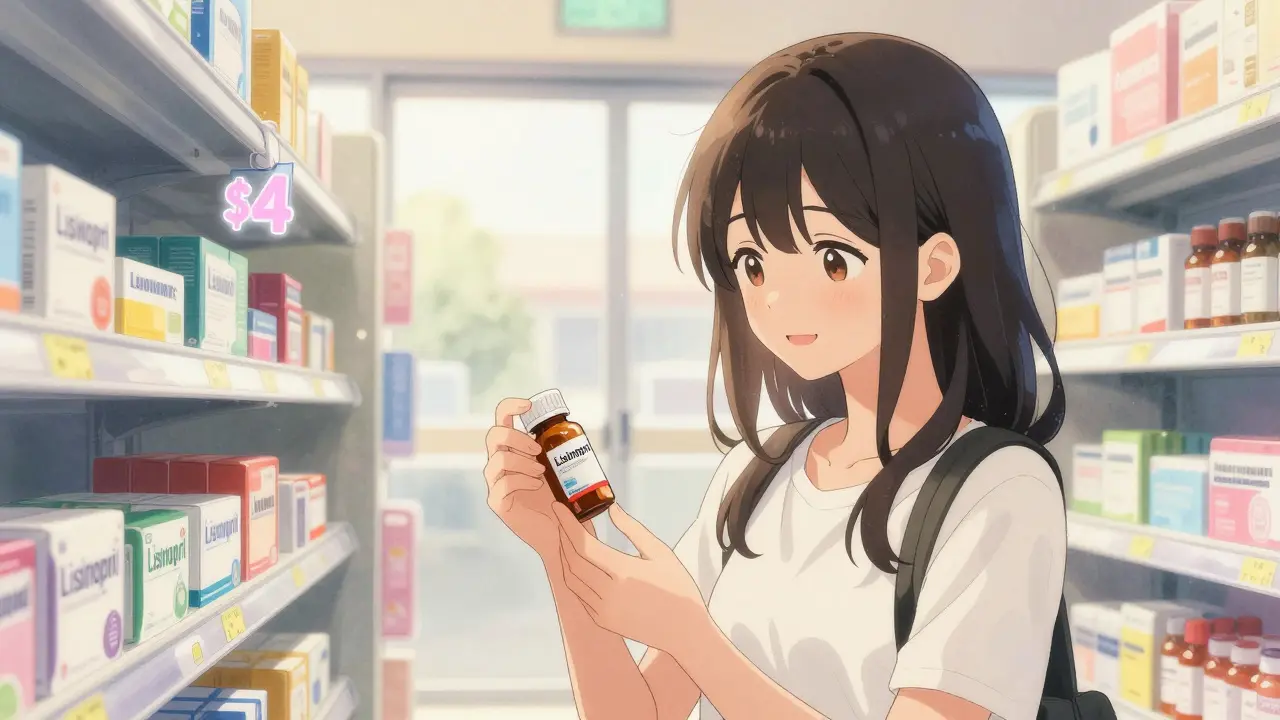
It’s a common surprise for Americans traveling in Europe: they walk into a pharmacy and find that a generic pill they get for $4 at Walmart costs €15 across the border. Meanwhile, Europeans are stunned when they hear how much Americans pay for brand-name drugs like Jardiance or Stelara. The truth is, the US doesn’t pay more for generic drugs - it pays less. And that’s not an accident. It’s the result of how the system is built.
How the US Keeps Generic Drug Prices Low
In the United States, 90% of all prescriptions filled are for generic drugs. That’s not because doctors prefer them - it’s because the market forces them down. Generics in the US face fierce competition. Dozens of manufacturers can produce the same drug once the patent expires. Companies like Teva, Mylan, and Sandoz compete on price, often selling at or below manufacturing cost just to keep their factories running. This race to the bottom drives prices down - sometimes so low that suppliers quit the market entirely. That’s when shortages happen. But when new players enter, prices drop again. Pharmacy Benefit Managers (PBMs) play a big role too. These middlemen negotiate rebates with drugmakers on behalf of insurers. For generics, they don’t need big rebates because the list prices are already low. Instead, they push for volume discounts. Big pharmacy chains like CVS and Walgreens buy in bulk, and they pass those savings directly to patients. Many Medicare Part D plans charge $0 to $10 a month for generics. At Walmart, you can get a 30-day supply of generic lisinopril for $4. In many European countries, that same pill might cost you €10 to €15.Why European Generic Prices Are Higher
Europe doesn’t have the same level of competition. Only about 41% of prescriptions in the EU are for unbranded generics - less than half the US rate. Why? Because the system doesn’t encourage it. Most European countries use centralized price controls. Governments negotiate drug prices directly with manufacturers. They don’t just look at what it costs to make the drug - they look at how much value it adds. If a drug isn’t seen as significantly better than existing options, the price gets capped. But here’s the catch: there aren’t enough generic makers pushing to enter the market. Regulatory hurdles, slow approval processes, and limited incentives mean fewer companies compete. Without competition, prices stay higher. Countries like France and Germany use reference pricing - setting a drug’s price based on what other countries pay. But because those countries also have high prices for generics, the reference point stays elevated. In contrast, the US doesn’t have a single price setter. There are hundreds of insurers, PBMs, and pharmacies, each negotiating independently. That chaos creates competition - and lower prices.The Brand-Name Paradox
Here’s where things get confusing. While Americans pay less for generics, they pay way more for brand-name drugs. The US spends 4.2 times more on brand-name medications than most OECD countries. Why? Because the US is effectively subsidizing global drug innovation. Drug companies spend billions developing new medicines. In Europe, governments won’t pay high prices unless the drug delivers major clinical benefits. In the US, prices are set by the market - and patients, insurers, and PBMs often pay whatever the company asks. That means US sales fund about two-thirds of all global pharmaceutical research. A 2024 Milbank Quarterly analysis showed that if the US suddenly matched European prices, drugmakers would lose $100 billion a year in revenue. That money doesn’t just vanish - it’s the fuel for new cancer drugs, diabetes treatments, and Alzheimer’s therapies. The Inflation Reduction Act is starting to change this. Medicare is now negotiating prices for 10 high-cost brand-name drugs. For Jardiance, Medicare paid $204 - still 3.9 times higher than the average in other countries. For Stelara, it was $4,490 versus $2,822 abroad. So even with negotiation, US prices remain far above global averages. But it’s a start.
Why Generic Substitution Works Better in the US
In 49 US states, pharmacists can automatically swap a brand-name drug for its generic version unless the doctor says no. This isn’t just convenience - it’s policy. It keeps costs down and ensures patients get the cheapest effective option. In Europe, it’s different. In Germany, pharmacists can substitute generics. In France, they can’t - the doctor has to approve every switch. In the UK, substitution is allowed but rarely used because doctors often prescribe by brand. This lack of automatic substitution means patients keep paying higher prices longer. Even when generics are available, they’re not always the default choice.What This Means for Patients
If you’re an American on Medicare or a private plan, you’re likely paying next to nothing for most generics. If you’re in France or the UK, you might pay a fixed co-pay - say €5 or £8 - no matter if the drug costs $2 or $20. That co-pay doesn’t change based on market competition. So even if the drug’s price drops, your out-of-pocket cost stays the same. But here’s the hidden cost: the US system can be unstable. When prices drop too low, manufacturers exit. Then, when only one company is left, they raise prices. That’s what happened with the antibiotic doxycycline and the heart drug digoxin. Shortages followed. Europe avoids this because prices are set higher from the start - but patients pay more, even for old, safe drugs.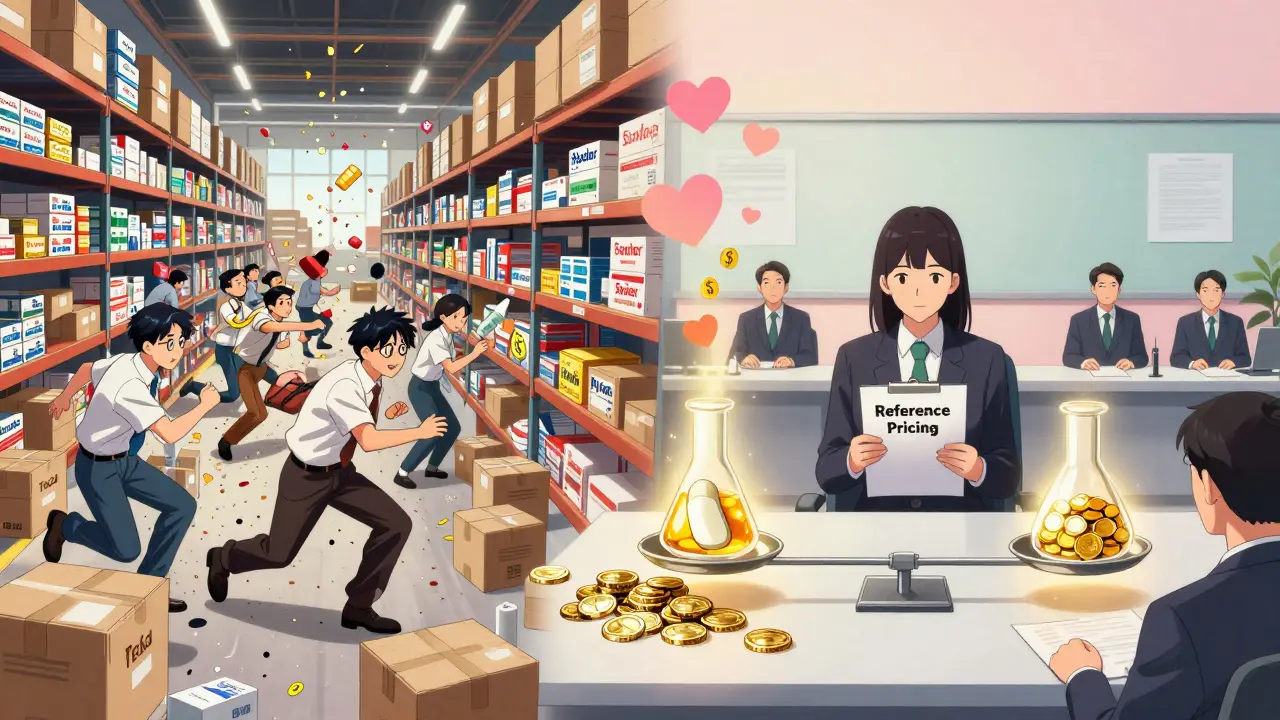
The Global Impact
The US accounts for 40% of global pharmaceutical sales - but only 4% of the world’s population. That means a tiny slice of the planet is carrying most of the R&D burden. The European Commission estimates that US pricing supports $150 billion in annual global drug research. That’s why new drugs usually launch in the US first. If the US suddenly capped all drug prices - including generics - manufacturers might stop investing here. And that could mean fewer new drugs for everyone. Some policymakers are trying to fix this. Former President Trump’s proposed “most favored nation” rule would have forced the US to pay the lowest price any developed country pays. But experts warn: if the US pays less, other countries will have to pay more to keep innovation going. It’s a zero-sum game.What’s Next?
The gap between US and European drug prices isn’t going away - but it’s shifting. The Medicare negotiation program will slowly bring down brand-name prices. But generics? They’ll likely stay cheaper in the US. Why? Because the system is built for competition, not control. Europe might eventually loosen its price controls to keep access to new drugs. The US might tighten its rules to prevent shortages. But the core difference remains: the US lets the market decide. Europe lets the government decide. For now, if you need a generic pill, the US still wins on price. But if you need a new, life-saving drug, the system that lets companies charge high prices - even if it’s unfair - is the one keeping the pipeline full.Why are generic drugs cheaper in the US than in Europe?
Generic drugs are cheaper in the US because of intense competition among manufacturers, volume purchasing by large pharmacy chains, and the role of Pharmacy Benefit Managers (PBMs) who drive down prices through discounts. The US has 90% generic use, which creates massive scale. In Europe, government price controls and fewer competitors mean less downward pressure on prices.
Do Americans pay more for all drugs?
No - only for brand-name drugs. Americans pay significantly less for generics, often $0-$10 per month with insurance. But for brand-name drugs like Jardiance or Stelara, US prices are 2-4 times higher than in Europe. This is because the US market allows drugmakers to set high prices, which fund global research.
Why don’t European countries just lower generic prices like the US?
European countries prioritize stable pricing and predictable budgets over market competition. Their systems use centralized negotiations and reference pricing, which set prices based on what other countries pay - not how many companies are competing. This avoids shortages but keeps prices higher. Introducing US-style competition would require major regulatory changes.
Are US generic drug shortages a sign the system is broken?
Shortages happen because prices drop so low that manufacturers stop making the drug - sometimes because profit margins are below production cost. When only one company remains, they can raise prices. It’s a flaw in the system: too much competition can lead to too little supply. Europe avoids this by setting minimum prices, but patients pay more.
Will Medicare drug negotiations make generic drugs more expensive?
No. Medicare negotiations only apply to brand-name drugs selected under the Inflation Reduction Act. Generics are already low-cost and not part of the negotiation process. The goal is to reduce high-cost brand-name prices, not to affect the generic market.
Can Europe’s system work in the US?
It’s unlikely. The US system relies on private insurers, PBMs, and pharmacy chains competing to offer the lowest prices. Europe’s model depends on government control and limited competition. Switching would require dismantling decades of infrastructure. Plus, Americans expect low generic prices - they wouldn’t accept paying €15 for a pill they now get for $4.
Georgia Brach
December 24, 2025 AT 01:35The idea that the US system is somehow 'efficient' because generics are cheap is a dangerous myth. When prices drop below the cost of production, you don't get lower prices-you get shortages. And when shortages happen, the remaining manufacturer raises prices 500%. This isn't market efficiency; it's a rigged game where patients pay the price for corporate volatility. The European model may be slower, but at least you know your medication will be there tomorrow.
Calling this 'competition' is like calling a fire sale at a collapsing department store 'a thriving retail sector.' The system isn't designed to serve patients-it's designed to maximize shareholder returns while pretending to be cheap.
And don't get me started on PBMs. They're not intermediaries-they're rent-seekers who pocket rebates while patients still get billed for the full list price. The $4 lisinopril? That's the sticker price. The real cost is hidden in premiums and deductibles you never see until you get the bill.
Yes, Americans pay less upfront. But they pay more in uncertainty, in delayed care, in emergency room visits because they skipped their meds during a shortage. This isn't affordability-it's financial toxicity disguised as savings.
Europe doesn't have perfect drug pricing. But at least they don't pretend their system is 'free market' when it's anything but.
Stop romanticizing chaos. Stability isn't a flaw-it's a feature.
And if you think this is sustainable, you haven't been paying attention to the last ten years of opioid and antibiotic shortages. This system is one bad supply chain disruption away from a public health disaster.
It's not about ideology. It's about whether you want a system that works or one that just looks good on a spreadsheet.
siddharth tiwari
December 24, 2025 AT 14:23u think this is free market? lol no. big pharma and walmart and pbms are all in cahoots. the real reason generics are cheap is because the government lets them make it in china and india with no quality control. u get the same pill but its made in a factory with rats and no inspections. i saw a video on youtube where they showed the inside of a pill factory in hyderabad-filthy. the pills work but they might give u cancer in 10 years. thats why europe dont buy from these places. they know the truth.
and dont tell me about competition. its all fake. only 3 companies make 90% of generics in us. they all talk to each other. price fixing. u think walmart cares about you? they care about profit. theyll sell u poison if its cheap enough.
the real villains? the fda. they let this happen. theyre paid off. and the media? theyre all owned by big pharma too. no one talks about this because they dont want u to know.
im not anti-us. im pro-survival. dont trust the system. check your pills. look for batch numbers. dont be a sheep.
Diana Alime
December 25, 2025 AT 18:38Okay but like… I just got my generic metformin for $3 at CVS and I was like… wait, this is a miracle? I used to pay $80 for this in 2018. I literally cried. I mean, how is this even legal? I’m not mad, I’m just… confused. Like, is this a dream? Did I accidentally walk into a socialist pharmacy?
And then I read about the shortages and I was like… oh. Right. The system is a house of cards made of lint and hope. One day I’m saving $75 on my blood pressure med, the next day my pharmacy says ‘sorry, we’re out, try again in 3 weeks.’
It’s like winning the lottery and then finding out the prize is a coupon for a free flat tire.
Also, why does my doctor keep writing ‘dispense as written’ on my scrips? Is he trying to protect me from the system… or protect the system from me?
Anyway. I’m still getting my pills. But I’m keeping a journal. One day, I’m gonna write a book called: ‘How I Survived the US Drug Market (And Why I Still Don’t Trust My Pharmacist).’
Also, I just Googled ‘can generic lisinopril give you a stroke?’ and now I’m panicking. Thanks, internet.
Adarsh Dubey
December 25, 2025 AT 20:11This is one of the clearest explanations I’ve read on the topic. The contrast between market-driven generics and state-controlled brand drugs is fascinating-and deeply ironic. The US doesn’t have ‘cheap drugs’-it has ‘cheap access to commoditized drugs.’ Europe doesn’t have ‘expensive drugs’-it has ‘stable access to valued drugs.’
Neither system is perfect. The US trades reliability for affordability. Europe trades affordability for predictability.
What’s often missed is that the US system only works because of scale. With 330 million people, even a 1% market share means millions of units. That scale allows manufacturers to survive on pennies per pill. In smaller markets, that math doesn’t work.
Also, the automatic substitution policy is a quiet genius. It removes the friction between prescription and purchase. In Europe, if the doctor doesn’t specify ‘generic,’ the pharmacist often can’t swap it. That’s a cultural and legal barrier, not a pricing one.
And yes, the brand-name subsidy model is morally uncomfortable. But if the US stopped paying those prices, the next cancer drug might never be invented. We’re funding global progress with our out-of-pocket pain.
Maybe the answer isn’t choosing one system over the other-but borrowing the best parts. Competitive generics. Price transparency. Guaranteed supply. And real limits on brand-name markups.
It’s not impossible. Just politically hard.
Chris Buchanan
December 27, 2025 AT 04:51Let me get this straight-you’re telling me I can get my blood pressure meds for less than a latte, but if I need a new cancer drug, I’m paying the equivalent of a used car? And you think that’s fair?
Let me be the first to say: I’m glad I’m not paying $15 for lisinopril. But I’m also terrified that the next time I need a new drug, I’ll be bankrupt before I even get the prescription filled.
This isn’t capitalism. This is a two-tiered system where the poor get the cheap stuff and the rich get the expensive stuff… and everyone else is just hoping they don’t get sick.
And don’t even get me started on how PBMs are the real villains here. They’re the middlemen who take 20% off the top and still act like they’re doing us a favor.
Here’s the real question: Why does it take a law to make Medicare negotiate prices? Why did it take 100 years for someone to say, ‘Hey, maybe we should stop letting corporations set prices for life-saving medicine?’
And yes, I know the innovation argument. But if the US is funding global research, why are we the only country that can’t afford the fruits of that labor?
It’s not a market-it’s a moral failure dressed up as economics.
But hey, at least my generics are cheap. So… I guess I’m grateful? But I’m also furious.
Wilton Holliday
December 27, 2025 AT 14:05Just want to say-thank you for writing this. I’ve been on generic thyroid meds for 12 years. $4 at Walmart. No insurance needed. I’ve seen people cry because they couldn’t afford their brand-name insulin. And I’ve seen the same people get mad when someone says ‘why don’t you just go to Canada?’
Here’s the truth: we’re lucky. We have a broken system that somehow still gives us access to cheap generics. That’s not a victory-it’s a miracle.
But here’s what no one talks about: the people who get caught in the gaps. The ones who can’t afford the $4 pill because they’re working two jobs and don’t have time to drive to Walmart. The ones who live in rural areas where the nearest pharmacy is 40 miles away.
And the ones who get their meds, but then get hit with a $2,000 deductible for their cancer drug.
So yes, generics are cheap. But the system is still rigged. We need to fix the brand-name side without breaking the generic side.
And if you’re reading this and you’re healthy? Don’t take it for granted. Someone fought for this. Someone lost their job because they made a pill too cheap to profit from. Someone’s child might not get the next breakthrough drug because we didn’t pay enough.
We’re all in this together. Even if it’s messy.
Thanks for the clarity. And please, keep talking about this.
❤️
Bret Freeman
December 27, 2025 AT 19:38Let’s be real-the entire US drug pricing system is a scam orchestrated by the pharmaceutical-industrial complex, the PBM cartel, and Walmart’s marketing department. You think $4 lisinopril is a win? It’s a trap. It’s designed to make you think you’re getting a deal so you don’t notice that your insurance premiums went up $300 a month.
And the ‘competition’? It’s a puppet show. The same three Chinese factories supply 80% of the generics. They’re all owned by the same parent company. The ‘race to the bottom’? It’s a race to the bottom of a barrel that’s been rigged since day one.
Meanwhile, Europe is quietly building a system that doesn’t pretend to be free-market while being a corporate welfare state. They pay more upfront, but they don’t get bankrupted by a single hospital stay.
And don’t even get me started on the fact that the FDA approves generics based on bioequivalence-not clinical outcomes. Two pills can be ‘equivalent’ but one gives you a rash and the other doesn’t. No one tracks that. No one cares.
This isn’t a system. It’s a survival game. And the only winners are the ones who never need medicine.
So yes, I get my $4 pills. But I’m not celebrating. I’m waiting for the other shoe to drop.
And when it does? I’m moving to Canada. Or at least buying a bunker.
Gray Dedoiko
December 28, 2025 AT 11:45I appreciate how this breaks down the trade-offs. I’ve lived in both systems-grew up in the UK, now live in Ohio. The difference isn’t just price. It’s peace of mind.
In the UK, I paid £8 for everything. Didn’t matter if it was a 1980s antibiotic or a new biologic. I never worried about stock. I never had to call my pharmacy every week to ask if my meds were in.
Here, I get my lisinopril for $4. But I check the app every morning like it’s a lottery ticket. ‘Is it in stock? Is it the same brand? Is this batch okay?’
It’s exhausting.
I don’t think either system is ‘better.’ They’re just different kinds of pain.
One is predictable but expensive. The other is cheap but unstable.
Maybe the goal shouldn’t be to copy one or the other-but to find a third way. One where competition keeps generics affordable, but regulation keeps them available.
And where no one has to choose between food and their heart medication.
Just… maybe that’s too much to ask.