

What Exactly Is Epilepsy?
Epilepsy isn’t just one thing. It’s a condition where the brain has a tendency to produce sudden, abnormal bursts of electrical activity that cause seizures. The Epilepsy is a neurological disorder defined by an enduring predisposition to generate epileptic seizures, requiring at least two unprovoked seizures more than 24 hours apart, or one seizure with a high risk of recurrence. This isn’t about having a single seizure after a head injury or fever-it’s about the brain’s ongoing instability.
According to the World Health Organization, around 50 million people live with epilepsy worldwide. In the U.S. alone, about 3.4 million people are affected. That’s more than the combined populations of several major cities. Yet, many still misunderstand what epilepsy really means. It’s not contagious. It’s not a mental illness. And it’s not always obvious.
Seizure Types: The New Classification System
The way doctors classify seizures changed significantly in early 2025. The International League Against Epilepsy (ILAE) updated its system to make it simpler, clearer, and more useful in real-world clinics. Gone are the confusing terms like "partial" and "complex partial." Now, everything is based on where the seizure starts and what it does.
There are four main seizure categories:
- Focal seizures-start in one area of the brain. These make up about 60% of all epilepsy cases.
- Generalized seizures-involve both sides of the brain from the start. These account for roughly 30% of cases.
- Unknown onset-when it’s unclear where the seizure began, often because there was no witness or no EEG.
- Unclassified-rare cases where not enough information exists to place the seizure.
Focal seizures are split into two types based on consciousness:
- Aware (formerly "simple partial")-you stay fully awake and aware during the seizure. You might feel a strange smell, see flashing lights, or have a tingling hand. These make up about 25% of focal seizures.
- Impaired awareness (formerly "complex partial")-you lose awareness. You might stare blankly, fumble with your clothes, or repeat words. This is the most common focal seizure type, making up 75%.
Generalized seizures include:
- Absence-brief staring spells, often in children. Lasts 5-10 seconds. Sometimes mistaken for daydreaming.
- Myoclonic-sudden jerks in arms or legs. Often happens right after waking up.
- Tonic-muscles stiffen. You might fall backward.
- Clonic-repeated jerking movements.
- Tonic-clonic-the classic "grand mal" seizure. You stiffen, then shake, lose consciousness, and may bite your tongue or lose bladder control.
- Atonic-muscles suddenly go limp. You drop like a puppet with cut strings. Often called "drop attacks."
The 2025 update replaced "motor" and "non-motor" with "observable" and "non-observable" manifestations. This matters because some seizures don’t involve movement at all. You might feel intense fear, have a strange taste, or suddenly feel detached from reality-none of which are visible to others. These were often missed before.
What Triggers Seizures?
Not everyone with epilepsy has triggers. But for many, certain things can increase the chance of a seizure. Common triggers include:
- Sleep deprivation-this is the #1 trigger reported by patients. Even one night of poor sleep can lower your seizure threshold.
- Stress-emotional or physical stress spikes cortisol, which can destabilize brain activity.
- Alcohol and drug use-alcohol withdrawal is a major risk. Even moderate drinking can interfere with medication levels.
- Flashing lights-only affects about 3% of people with epilepsy. Still, it’s a real trigger for some.
- Missed medication-skipping even one dose can lead to breakthrough seizures. This is the most preventable cause.
- Hormonal changes-many women notice more seizures around their period. This is called catamenial epilepsy.
- Illness or fever-especially in children. Infections can push the brain over the edge.
One surprising trigger? Low blood sugar. People with diabetes who take insulin are at higher risk. A 2023 study found that 18% of seizure episodes in diabetic patients with epilepsy were linked to hypoglycemia.

Antiepileptic Medications: How They Work and What’s Used Today
Medication is the first-line treatment for most people with epilepsy. About 70% of people can achieve seizure control with the right drug. But finding it isn’t always easy.
There are over 30 FDA-approved antiepileptic drugs (AEDs). They work in different ways:
- Some slow down electrical signals in the brain (like sodium channel blockers-carbamazepine, lamotrigine).
- Others boost GABA, the brain’s natural calming chemical (like benzodiazepines-clonazepam, lorazepam).
- Some block calcium channels (like ethosuximide-used mostly for absence seizures).
- Newer drugs target specific receptors or pathways (like perampanel, cenobamate).
Here’s what’s commonly prescribed today:
| Drug Name | Primary Seizure Type | Common Side Effects |
|---|---|---|
| Lamotrigine | Focal, generalized tonic-clonic | Rash (rare but serious), dizziness, headache |
| Levetiracetam | Focal, myoclonic, tonic-clonic | Behavior changes, drowsiness, irritability |
| Valproate | Generalized, absence, myoclonic | Weight gain, tremor, liver issues, birth defects |
| Carbamazepine | Focal, tonic-clonic | Dizziness, nausea, low sodium, skin reactions |
| Topiramate | Focal, tonic-clonic | Cognitive slowing, kidney stones, weight loss |
| Cenobamate | Focal (especially drug-resistant) | Drowsiness, dizziness, vision changes |
Valproate is highly effective but rarely used in women of childbearing age due to risks of birth defects. Lamotrigine and levetiracetam are often first choices because they’re well-tolerated and have fewer drug interactions.
Newer drugs like cenobamate (approved in 2019) show promise for people who haven’t responded to other medications. In clinical trials, it reduced seizures by over 50% in 44% of patients with drug-resistant focal epilepsy.
Why Getting the Diagnosis Right Matters
Getting the seizure type wrong leads to the wrong treatment. A 2023 study found that 27% of people were put on the wrong medication because their seizure type was misclassified.
For example:
- If someone has focal seizures with staring and lip-smacking but is misdiagnosed as having absence seizures, they might get ethosuximide-which won’t help.
- If a person has atonic seizures and is misdiagnosed as having absence seizures, they won’t get the right protective gear or medication to prevent falls.
- Children with childhood absence epilepsy often respond perfectly to ethosuximide. But if it’s mistaken for ADHD, they get stimulants-and that can make seizures worse.
That’s why eyewitness accounts matter. If you’ve never seen someone’s seizure, it’s hard to classify it. That’s why doctors push for video recordings or detailed descriptions from family members.
What Happens When Medication Doesn’t Work?
One in three people with epilepsy has drug-resistant seizures. That means two or more medications failed to control them.
For these patients, other options exist:
- Epilepsy surgery-removing the part of the brain causing seizures. Works best when seizures start in one clear area, like the temporal lobe.
- Neurostimulation-devices like vagus nerve stimulators (VNS) or responsive neurostimulation (RNS) send pulses to the brain to stop seizures before they start.
- Dietary therapy-the ketogenic diet (high fat, low carb) has helped children and adults who don’t respond to meds. It’s not easy to follow, but studies show it reduces seizures by over 50% in about half of users.
- Gene therapy and targeted drugs-still experimental, but early trials are showing promise for rare genetic epilepsy syndromes like Dravet syndrome.
Many people don’t know these options exist. A 2024 survey by the Epilepsy Foundation found that only 38% of patients with drug-resistant epilepsy had ever been referred for surgical evaluation.
Living With Epilepsy: Beyond the Seizure
Epilepsy affects more than just seizures. It can change how you work, drive, socialize, and even feel about yourself. Many people with epilepsy face stigma, anxiety, or depression. One in three also has a mood disorder.
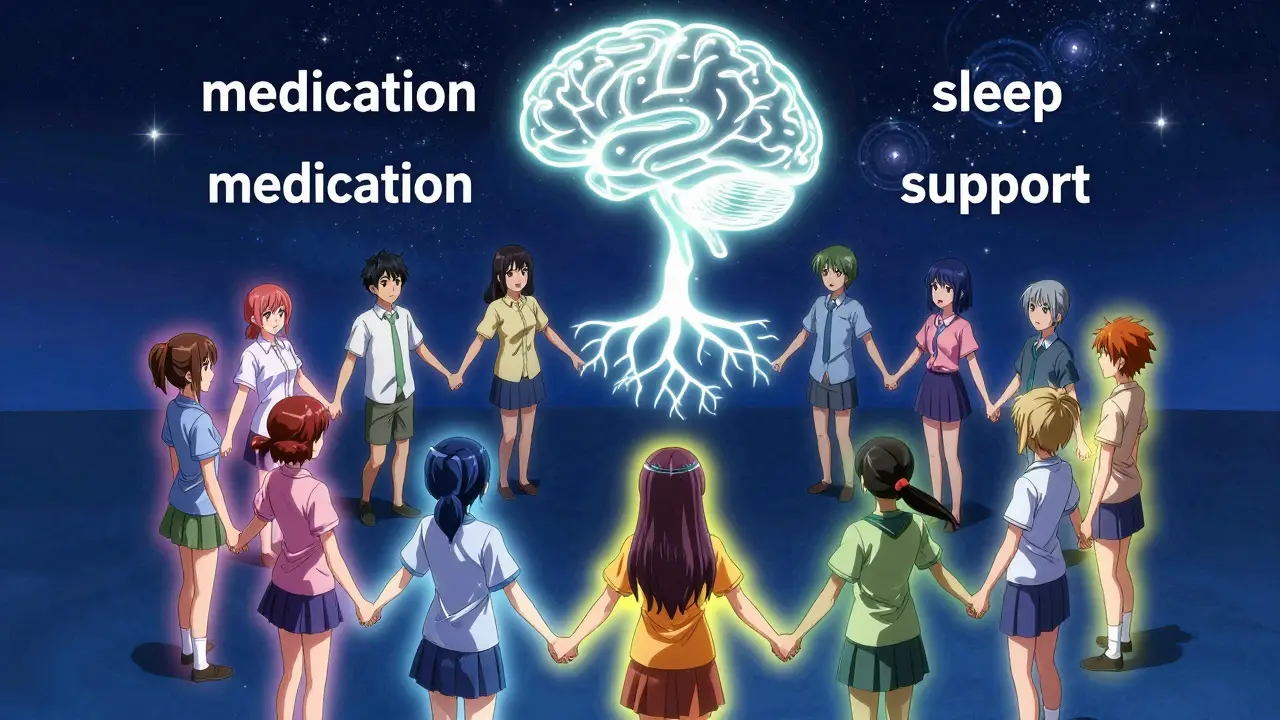
Support matters. Connecting with others who understand-through groups like the Epilepsy Foundation or online communities like r/epilepsy-can make a huge difference. Many patients say the biggest help wasn’t medication-it was someone who listened.
And while the classification system keeps changing, the goal hasn’t: help people live better, safer, more predictable lives. Whether you’re newly diagnosed or have had epilepsy for decades, understanding your type, your triggers, and your treatment options gives you power.
Frequently Asked Questions
Can epilepsy be cured?
There’s no universal cure, but about 70% of people can control seizures with medication. Some children outgrow epilepsy, especially if it started in early childhood and was linked to a specific syndrome. In rare cases, surgery can eliminate seizures entirely. For others, it’s a lifelong condition-but with the right treatment, most can live full, active lives.
Are seizures always noticeable?
No. Many seizures, especially focal ones, have no visible signs. A person might just stare blankly, feel confused, or have a strange sensation for a few seconds. These are often missed by others and even by the person experiencing them. That’s why detailed descriptions from witnesses and EEGs are so important.
Can I drive if I have epilepsy?
It depends on your state’s laws and your seizure control. Most U.S. states require you to be seizure-free for 3 to 6 months before you can legally drive. Some allow driving if seizures only happen during sleep. Always check with your doctor and your state’s DMV. Driving with uncontrolled seizures is dangerous-not just for you, but for others.
Do antiepileptic drugs cause long-term damage?
Most AEDs are safe for long-term use. But some can have side effects over time-like bone thinning with phenytoin, weight gain with valproate, or cognitive slowing with topiramate. Regular blood tests and checkups help monitor for these. The risks of uncontrolled seizures usually outweigh the risks of medication. Never stop taking your drug without talking to your doctor.
Why do seizure classifications keep changing?
Because science keeps advancing. New brain imaging, genetic testing, and EEG analysis reveal more about how seizures start and spread. The old terms didn’t reflect what we now know. The 2025 update simplified things to help doctors make faster, better decisions. It’s not about confusion-it’s about accuracy.
Can stress really cause a seizure?
Yes. Stress doesn’t cause epilepsy, but it can lower your brain’s seizure threshold. High stress increases cortisol and adrenaline, which can trigger electrical instability in a brain already prone to seizures. Managing stress through sleep, therapy, or mindfulness can reduce seizure frequency in many people.
Next Steps: What to Do If You or Someone You Know Has Seizures
If you’ve had a first seizure:
- See a neurologist within a week. Don’t wait.
- Bring a detailed description from someone who saw it. Video helps.
- Get an EEG as soon as possible-ideally within 72 hours.
- Ask about seizure triggers and how to track them.
- Don’t self-diagnose. Many things mimic seizures: fainting, migraines, panic attacks.
If you already have epilepsy:
- Take your medication at the same time every day. Use a pill organizer.
- Keep a seizure diary: date, time, duration, possible trigger, symptoms.
- Ask your doctor if you’re on the best drug for your seizure type.
- Consider joining a support group. You’re not alone.
- Wear a medical alert bracelet. It could save your life.
Understanding epilepsy isn’t about memorizing terms. It’s about knowing what’s happening in your brain, what helps, and what to ask for. The system is better now. The tools are better. And with the right approach, most people with epilepsy can live without fear of the next seizure.
pradnya paramita
February 5, 2026 AT 01:36From a clinical neurophysiology standpoint, the ILAE 2025 reclassification is a paradigm shift. Focal seizures with impaired awareness (formerly complex partial) exhibit distinct network dynamics involving the default mode network and salience network, as evidenced by high-density EEG source localization studies. The shift to observable vs. non-observable manifestations is particularly crucial-non-motor seizures, especially those with autonomic or cognitive auras, are frequently underreported due to lack of visible motor output. This has direct implications for treatment selection, as non-observable focal seizures often respond better to sodium channel blockers than GABAergics. Also, the inclusion of "unknown onset" as a category acknowledges the limitations of current diagnostic tools, which is both scientifically honest and clinically pragmatic.
For practitioners, this means updating diagnostic workflows: prioritize prolonged video-EEG over brief outpatient studies, and train caregivers to document subtle behavioral changes-not just convulsions. The 2023 study on hypoglycemia-induced seizures in diabetic epilepsy patients (JAMA Neurol, 2023) further underscores the need for integrated metabolic screening in all new-onset cases. We’re moving beyond seizure counting to seizure phenotyping.
Wendy Lamb
February 6, 2026 AT 06:18So many people think epilepsy is just shaking. It’s not. Some of us just zone out for a few seconds and feel like we missed part of a conversation. No one notices. Not even us, sometimes.
Antwonette Robinson
February 6, 2026 AT 21:12Oh wow, a 2025 update? I guess the last time they changed it was 2017, and before that 2001, and before that 1981. You know what they say: if you can’t explain something simply, change the terminology until it sounds like you understand it. Classic medical bureaucracy.
Ed Mackey
February 8, 2026 AT 08:19Had a seizure last year. Thought I was just dizzy. Turned out it was focal with impaired awareness. My wife said I was just standing there staring at the fridge for 45 seconds. Didn’t even know I was doing it. Scary. Now I take lamotrigine. Side effects? A little foggy, but better than falling.
Alex LaVey
February 9, 2026 AT 03:22It’s beautiful how far we’ve come. We used to lock people away for this. Now we have EEGs, precision meds, even neurostimulators that can predict seizures before they happen. It’s not perfect-but we’re learning. If you’re newly diagnosed, don’t panic. You’re not broken. Your brain just works differently. There’s a whole community out here rooting for you.
Joseph Cooksey
February 10, 2026 AT 11:49Let’s be real-valproate is the nuclear option. It works like a charm on generalized seizures, but if you’re a woman of childbearing age, your doctor will treat you like you’re a ticking biological time bomb. I’ve seen patients cry because they were denied the most effective drug just because they might one day get pregnant. Meanwhile, men with the same condition get the full arsenal. Double standard? More like a medical patriarchy wrapped in a white coat. And don’t even get me started on how topiramate turns your brain into cottage cheese. I’ve lost words, memories, and my sense of humor. But hey-at least I’m seizure-free. #Sacrifice
Justin Fauth
February 11, 2026 AT 11:5250 million people worldwide? That’s more than the population of Canada. And yet, when I told my boss I have epilepsy, he asked if I could still operate machinery. Like I’m some kind of ticking bomb. This country still treats neurological disorders like they’re contagious. We need a damn national awareness campaign. Not just awareness-respect.
Lorena Druetta
February 13, 2026 AT 10:25Thank you for this comprehensive and deeply informative article. The clarity with which seizure types are delineated is both scientifically rigorous and emotionally validating for those who live with this condition daily. The emphasis on eyewitness accounts and detailed documentation is not merely clinical-it is profoundly human. I encourage all readers to share this resource with their healthcare providers, loved ones, and educators. Knowledge is not only power-it is dignity.
Zachary French
February 14, 2026 AT 00:10So lemme get this straight-now they’re saying seizures aren’t "partial" or "complex" anymore? Like, what’s next? "You’re not having a seizure, you’re having a vibe." And don’t get me started on cenobamate. I’ve seen patients on it. They look like zombies who lost their Wi-Fi password. But hey, at least they’re not convulsing. I’d rather have a seizure than be this blank-faced. Also, the ketogenic diet? My cousin tried it. She lost 30 lbs, started crying during commercials, and now eats only bacon. Not a cure. A lifestyle cult.
Daz Leonheart
February 15, 2026 AT 05:08I’ve been on levetiracetam for 8 years. Side effects? Yeah, sometimes I get irritable. But I’ve driven, worked, traveled, and held my kids after seizures. The meds aren’t perfect, but they gave me my life back. If you’re struggling, don’t give up. Talk to your neuro. Find your people. You’re not alone.
Keith Harris
February 16, 2026 AT 01:52Oh, so now they’re saying stress causes seizures? Like, I didn’t know crying during a breakup could trigger an EEG spike. Next thing you know, they’ll say bad Wi-Fi causes epilepsy. And let’s not forget the 3% who are triggered by flashing lights-so basically, you can’t watch TV, go to a concert, or see a disco ball without a neurologist on standby. Meanwhile, the real issue? People don’t take their meds. But sure, blame the moon phase.
Mandy Vodak-Marotta
February 16, 2026 AT 20:28Okay, so I’ve had epilepsy since I was 12. I’m 34 now. I’ve tried 7 different meds. I’ve had the VNS implanted. I’ve done the keto diet (which made me hate all food). And honestly? The thing that changed everything wasn’t the drug or the device-it was finding a support group. Someone who gets it. Not a doctor. Not a Reddit post. A real person who said, "Yeah, I stared at the wall too." That’s what saved me. So if you’re reading this and you’re scared? Find your people. They’re out there. I promise.
Prajwal Manjunath Shanthappa
February 18, 2026 AT 16:29It is, indeed, a most lamentable state of affairs that the lay public continues to conflate epileptiform phenomena with psychiatric aberrations or moral failing. The ILAE’s 2025 revision, while commendable for its ontological precision, fails to adequately address the epistemological chasm between clinical neurology and public perception. One must question whether the proliferation of AEDs-many of which possess pharmacokinetic profiles that induce iatrogenic cognitive dulling-constitutes therapeutic progress or merely pharmacological appeasement. Moreover, the notion that dietary intervention can modulate cortical excitability via ketone bodies remains, in my estimation, a biochemical curiosity rather than a validated therapeutic modality.
Wendy Lamb
February 18, 2026 AT 17:40Thanks for sharing your story. I’ve been on lamotrigine for five years. Still have the occasional lapse, but I’m working. One day at a time.