

When someone is stuck in a deep, heavy sadness that won’t lift, it’s easy to assume it’s just depression. But not all depression is the same. What looks like unipolar depression-just the lows-could actually be bipolar depression, and mistaking one for the other can change someone’s life. The difference isn’t just in how they feel. It’s in how they’re treated. Get it wrong, and antidepressants might push someone into mania. Get it right, and they can finally find stability.
What’s the Real Difference?
Unipolar depression, also called Major Depressive Disorder (MDD), means only one direction: down. People experience persistent sadness, loss of interest, fatigue, trouble sleeping, and sometimes thoughts of death or suicide. These symptoms last at least two weeks and aren’t tied to any high periods. There’s no history of feeling overly energetic, impulsive, or unusually confident-no manic or hypomanic episodes. Bipolar depression feels identical on the surface. The same exhaustion, the same hopelessness, the same inability to get out of bed. But here’s the catch: the person has had at least one manic or hypomanic episode in their life. That’s the defining line. Mania means racing thoughts, little need for sleep, reckless spending, or grandiose ideas. Hypomania is milder but still noticeable-friends might say, “You’ve been on fire lately,” and the person doesn’t see anything wrong. The problem? Most people don’t recognize mania as part of the illness. They remember the crushing lows, not the brief highs they thought were just “being productive.” A 2018 study found that nearly 37% of people with bipolar disorder were misdiagnosed with unipolar depression. Many wait years before getting the right label.How Do Doctors Tell Them Apart?
It’s not just about asking, “Have you ever felt too happy?” That question gets missed, ignored, or dismissed. Clinicians need to dig deeper. One clue: early morning waking. People with bipolar depression often wake up at 4 a.m., unable to fall back asleep. Their mood is lowest in the morning and gets slightly better as the day goes on. In unipolar depression, the sadness tends to be steady all day. Another sign: psychomotor retardation. That’s the heavy, leaden feeling where even lifting your arm feels impossible. Studies show this happens in 68% of bipolar depression cases versus 42% in unipolar. Psychotic symptoms-like hearing voices or believing you’re being watched-are also more common in bipolar depression. About 22% of people with bipolar depression experience them, compared to just 8% with unipolar. Family history matters too. If a parent or sibling has bipolar disorder, the risk jumps from 1-2% in the general population to 5-10%. That’s a red flag. Doctors use tools like the Mood Disorders Questionnaire (MDQ) or the Hypomania Checklist-32 (HCL-32). The MDQ is simple: 13 yes/no questions about energy, mood swings, and behavior. A score of 7 or higher suggests bipolar disorder. But it’s not perfect-it misses nearly 72% of cases. The HCL-32 catches more, with 69% sensitivity, but still needs clinical judgment to interpret. And here’s the kicker: if someone’s depression doesn’t respond to two different antidepressants, there’s a 3.7 times higher chance they actually have bipolar disorder.Why Treatment Can’t Be the Same
This is where things get dangerous. For unipolar depression, antidepressants are the go-to. SSRIs like sertraline or escitalopram help about 60-65% of people after 8 to 12 weeks. That’s the standard. But for bipolar depression? Antidepressants alone are risky. The STEP-BD study showed that when bipolar patients took antidepressants without a mood stabilizer, 76% had mood destabilization-meaning they swung into mania, rapid cycling, or worse. One Reddit user shared: “I was on Prozac for seven years. I went from two episodes a year to twelve.” That’s not an outlier. It’s common. The right treatment for bipolar depression starts with mood stabilizers or atypical antipsychotics. Lithium has been used for decades and works for about 48% of people with bipolar depression. Quetiapine (Seroquel) shows a 58% response rate in clinical trials. Lurasidone (Latuda) is newer but just as effective. Antidepressants aren’t banned in bipolar disorder-but only as a last resort, and always paired with a mood stabilizer. Even then, they’re used cautiously, with close monitoring.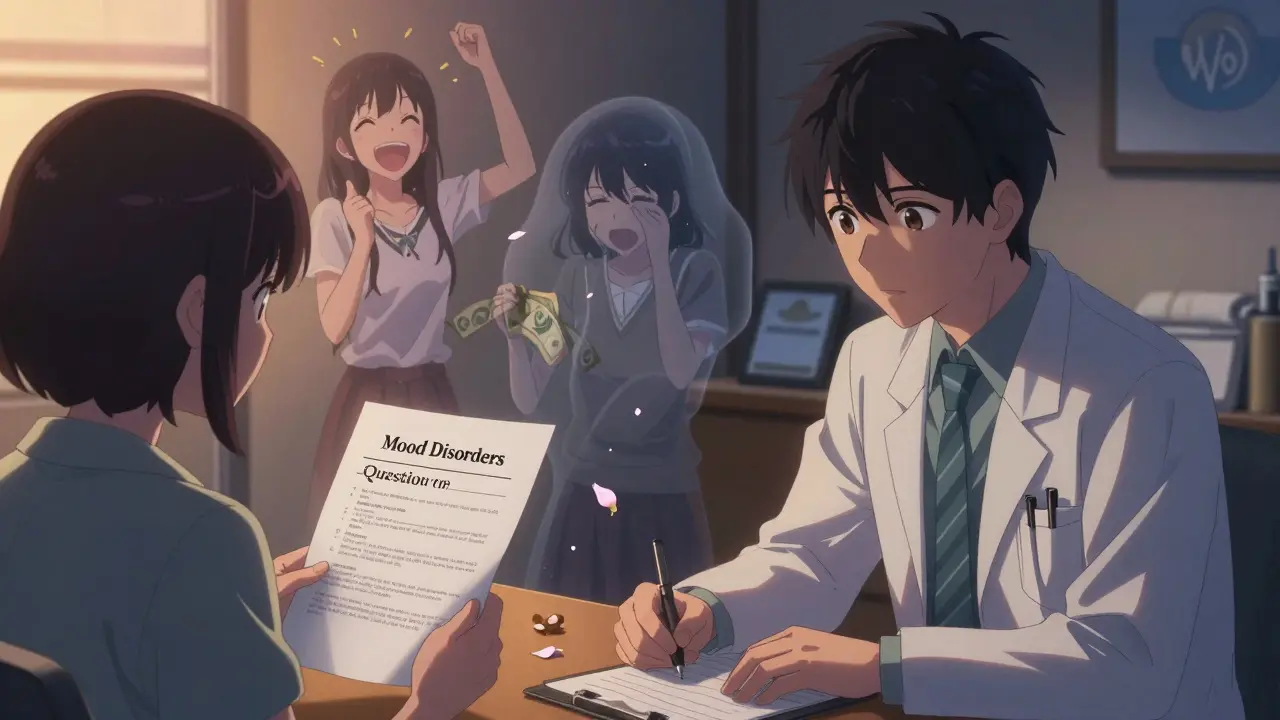
Therapy: Different Goals, Different Methods
Therapy isn’t one-size-fits-all either. For unipolar depression, Cognitive Behavioral Therapy (CBT) is the gold standard. It helps people challenge negative thoughts like “I’m worthless” or “Nothing will ever get better.” It’s practical, time-limited, and backed by decades of research. For bipolar depression, Interpersonal and Social Rhythm Therapy (IPSRT) is more effective. Why? Because stability is the goal. IPSRT teaches people to keep consistent sleep, meal, and activity schedules. Why does that matter? Rhythms regulate mood. Skipping sleep? That’s a trigger. Going out every night? That’s a trigger. The study showed 68% of people using IPSRT stayed in remission after a year, compared to 42% with standard care. Both therapies help, but IPSRT doesn’t just change thoughts-it changes routines. And for bipolar disorder, routines are medicine.What Happens When You Get It Wrong?
The consequences aren’t theoretical. A 2017 study found that people misdiagnosed with unipolar depression spent an average of 8.2 years on the wrong treatment. During that time, 63% had at least one hospitalization because antidepressants triggered mania. The National Comorbidity Survey found that 40% of people with bipolar disorder were first diagnosed with unipolar depression. Nearly 90% of them were put on antidepressants alone. That’s not negligence-it’s systemic. Many doctors aren’t trained to ask the right questions. And the cost? Financially, misdiagnosis adds $13,247 per person per year in extra hospital visits, medication switches, and lost workdays.Long-Term Management: Lifelong vs. Temporary
Unipolar depression, especially after a first episode, can often be treated and then stopped. If someone stays well for 6 to 12 months, doctors may slowly taper the medication. Relapse risk is around 37% if they stop, but many people never have another episode. Bipolar disorder? That’s different. It’s usually lifelong. Stopping mood stabilizers leads to a 73% chance of relapse within five years. Even if someone feels fine, the brain’s wiring has changed. Medication isn’t a cure-it’s a shield. Newer drugs like cariprazine (Vraylar) and esketamine (Spravato) are helping. Cariprazine works for bipolar depression and has fewer side effects than older antipsychotics. Esketamine, a nasal spray, is approved for treatment-resistant unipolar depression and works fast-within hours. But neither replaces the need for accurate diagnosis.
The Big Picture: It’s a Spectrum, But We Still Need Labels
Some experts argue depression exists on a spectrum. Genetic studies show bipolar disorder and unipolar depression share a lot of the same DNA. One 2019 study found a correlation of 0.72-meaning they’re more alike than different at the biological level. But here’s the problem: if you treat them the same, people get hurt. Even if the roots are similar, the symptoms behave differently. And treatment has to match behavior, not biology. The DSM-5-TR (2022) added a “with mixed features” specifier for depression, acknowledging that some people with unipolar depression show signs of mania. But it still requires clear separation for treatment safety.What Should You Do?
If you’ve been diagnosed with depression and:- You’ve had periods of high energy, impulsivity, or reduced need for sleep
- Your mood swings are more extreme than “just being moody”
- Antidepressants made you feel worse, not better
- You have a family member with bipolar disorder
- You’ve had more than one depressive episode without a clear trigger
It’s Not About Labels. It’s About Safety.
Getting the diagnosis right isn’t about being “more accurate.” It’s about preventing harm. A wrong label can lead to years of suffering, hospitalizations, job loss, and broken relationships. A right one can mean stability, recovery, and a life worth living. The line between bipolar and unipolar depression is thin-but the consequences of crossing it are wide. Don’t assume. Ask. Verify. Treat based on evidence, not assumption.Can bipolar depression be mistaken for unipolar depression?
Yes, very commonly. Studies show that 30-40% of people later diagnosed with bipolar disorder were initially told they had unipolar depression. This happens because manic or hypomanic episodes are often overlooked, minimized, or not reported. Many people don’t see their high periods as a problem-they see them as productive or normal.
Are antidepressants safe for bipolar depression?
Not alone. Antidepressants can trigger mania, rapid cycling, or worsen mood swings in bipolar disorder. The STEP-BD study found that 76% of bipolar patients on antidepressants without mood stabilizers experienced mood destabilization. They’re only used cautiously, and always with a mood stabilizer like lithium or quetiapine.
What are the best medications for bipolar depression?
First-line treatments include quetiapine (Seroquel), lurasidone (Latuda), and lithium. Quetiapine has a 58% response rate in clinical trials. Lurasidone is effective with fewer side effects like weight gain. Lithium has been used for decades and reduces suicide risk. Antidepressants are not recommended as the primary treatment.
How do I know if I’ve had a hypomanic episode?
Hypomania feels like being “on top of the world”-more energetic, confident, talkative, or impulsive. You might sleep less but feel rested, spend money recklessly, or take on too many projects. Unlike mania, it doesn’t cause hospitalization or psychosis. But it’s noticeable to others. If friends say, “You’ve been different lately,” and you felt unusually good or driven, it could be hypomania.
Can unipolar depression turn into bipolar depression?
Not exactly. But some people initially diagnosed with unipolar depression later develop manic or hypomanic episodes, leading to a reclassification as bipolar disorder. Research suggests 30-40% of people with recurrent depression eventually experience mania. This doesn’t mean unipolar depression “turns into” bipolar-it means the original diagnosis missed underlying bipolar features.
Is therapy helpful for bipolar depression?
Yes, but the type matters. Cognitive Behavioral Therapy (CBT) helps with negative thinking, but Interpersonal and Social Rhythm Therapy (IPSRT) is more effective for bipolar disorder. IPSRT focuses on daily routines-sleep, meals, activity-to prevent mood episodes. People using IPSRT have higher remission rates and fewer hospitalizations than those on standard care.
Edith Brederode
January 20, 2026 AT 08:21Courtney Carra
January 21, 2026 AT 07:43clifford hoang
January 21, 2026 AT 16:37Emily Leigh
January 22, 2026 AT 05:19Jacob Cathro
January 22, 2026 AT 18:35Thomas Varner
January 23, 2026 AT 01:45Shane McGriff
January 24, 2026 AT 18:01Crystal August
January 25, 2026 AT 02:08Nadia Watson
January 26, 2026 AT 02:36pragya mishra
January 27, 2026 AT 21:34Art Gar
January 28, 2026 AT 14:36Andy Thompson
January 29, 2026 AT 04:36sagar sanadi
January 30, 2026 AT 22:28Arlene Mathison
January 31, 2026 AT 07:44Manoj Kumar Billigunta
February 1, 2026 AT 21:53