
Ever opened a pill bottle and thought, ‘This doesn’t look like the one I used to take’? You’re not alone. Many people worry that switching from a brand-name drug to a generic means they’re getting something weaker, cheaper, or less effective. But here’s the truth: active ingredients in generic drugs are identical to those in brand-name versions. They work the same way. They just cost a fraction of the price.
What Exactly Is an Active Ingredient?
The active ingredient is the part of a pill that actually does the work. It’s the chemical that lowers your blood pressure, kills bacteria, or balances your thyroid. For example, in the brand-name drug Norvasc, the active ingredient is amlodipine. In the generic version, it’s still amlodipine. Same molecule. Same function. Same effect. The rest of the pill - the color, the shape, the filler, the coating - those are inactive ingredients. They help the pill hold together, make it easier to swallow, or just look different so the brand can trademark it. But they don’t change how the medicine works in your body.How Do We Know Generics Work the Same?
The U.S. Food and Drug Administration (FDA) doesn’t just take a manufacturer’s word for it. Before a generic drug can be sold, it must pass a strict test called bioequivalence. That means the generic has to deliver the same amount of active ingredient into your bloodstream, at the same speed, as the brand-name drug. The FDA requires that the generic’s performance falls within 80% to 125% of the brand-name drug’s results. That’s not a wide range - it’s tight enough to guarantee the same clinical outcome. If a generic fails this test, it’s rejected. No exceptions. This isn’t just theory. A 2019 study in JAMA Internal Medicine looked at over 3.5 million patients taking generic versions of drugs for diabetes, high blood pressure, epilepsy, and depression. The results? No difference in effectiveness. Blood sugar levels, blood pressure readings, seizure control, and mood improvements were identical to those taking the brand-name versions.How Much Do Generics Save You?
Let’s talk numbers. A 30-day supply of Glucophage (brand-name metformin) can cost up to $350. The generic? Around $4. Norvasc (amlodipine) runs $400. Generic amlodipine? $2. According to the Generic Pharmaceutical Association, generics saved the U.S. healthcare system $313 billion in 2022 alone. On average, patients pay 85% less for generics. That’s not a small savings - it’s life-changing for people on fixed incomes or managing chronic conditions. Kaiser Permanente found that patients were 28% more likely to keep taking their meds when they used generics. Why? Because they could afford them. And better adherence means fewer hospital visits, fewer complications, and better long-term health.Are There Any Exceptions?
Most of the time, no. But there are a few tricky cases. Some drugs have what’s called a narrow therapeutic index - meaning the difference between a helpful dose and a harmful one is very small. These include blood thinners like warfarin, thyroid meds like levothyroxine, and certain seizure drugs like phenytoin. Even here, the FDA says generics are safe and effective. But because the margin for error is so tight, some doctors prefer to stick with one version - brand or generic - to avoid even tiny variations in absorption. That’s not because generics are less effective. It’s just extra caution. If you’re on one of these drugs and your pharmacist switches your prescription to a different generic, let your doctor know. They might recommend sticking with the same manufacturer for consistency. But that’s a personal preference, not a safety issue.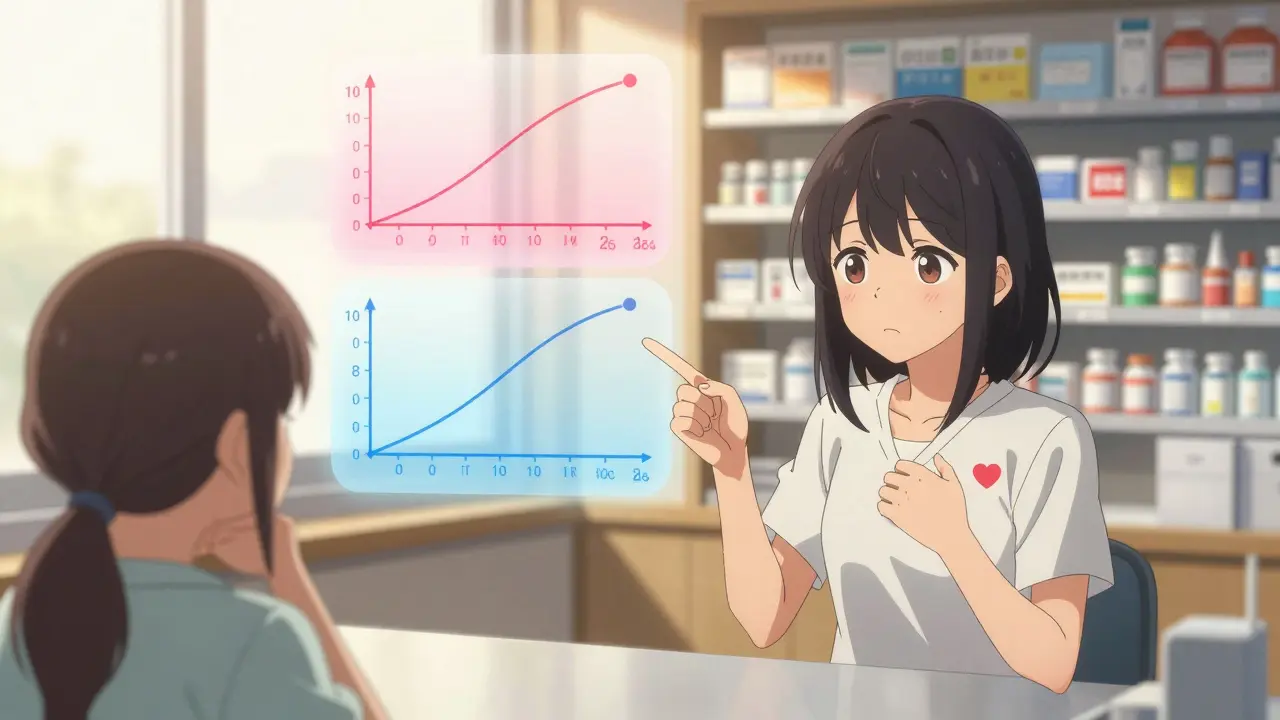
Why Do Generics Look Different?
You might notice your generic pill is a different color, shape, or size. That’s not a mistake. It’s the law. Brand-name companies own the look of their pills. To prevent confusion and protect trademarks, generic makers can’t copy the appearance. So they change the color, shape, or imprint. A blue oval might become a white circle. A pill with ‘Pfizer’ on it might now say ‘G 10’. This causes confusion. Some patients think, ‘This isn’t the same drug.’ But it is. Pharmacists are trained to explain this. A 2-minute chat with your pharmacist can clear up 95% of these worries.What About Side Effects?
Some people report new side effects after switching to a generic. Stomach upset, dizziness, or a strange taste. But these are rare. The most common cause? The inactive ingredients. Maybe the generic uses a different filler or dye. For most people, this doesn’t matter. But if you’re allergic to a specific dye - like FD&C Red No. 40 - you might react to one version but not another. GoodRx’s 2023 survey of 5,000 patients found only 12% noticed any difference after switching. Of those, 6.3% reported mild GI issues. No serious reactions were linked to the active ingredient. If you feel different after a switch, don’t assume the drug isn’t working. Talk to your pharmacist. They can check if the inactive ingredients changed. Sometimes, switching to a different generic brand fixes it.Who Makes These Generics?
You might think generics are made in shady labs. They’re not. The same FDA rules apply to brand-name and generic factories. All must follow Current Good Manufacturing Practices (cGMP). The FDA inspects over 3,500 facilities each year - in the U.S., India, China, and elsewhere. If a plant fails, it’s shut down. Major players like Teva, Mylan, and Sandoz make most generics. But there are over 150 companies in the U.S. market. Competition keeps prices low. Even the FDA’s own data shows less than 0.1% of generic drugs have reported quality issues. That’s lower than the error rate in many consumer products you buy every day.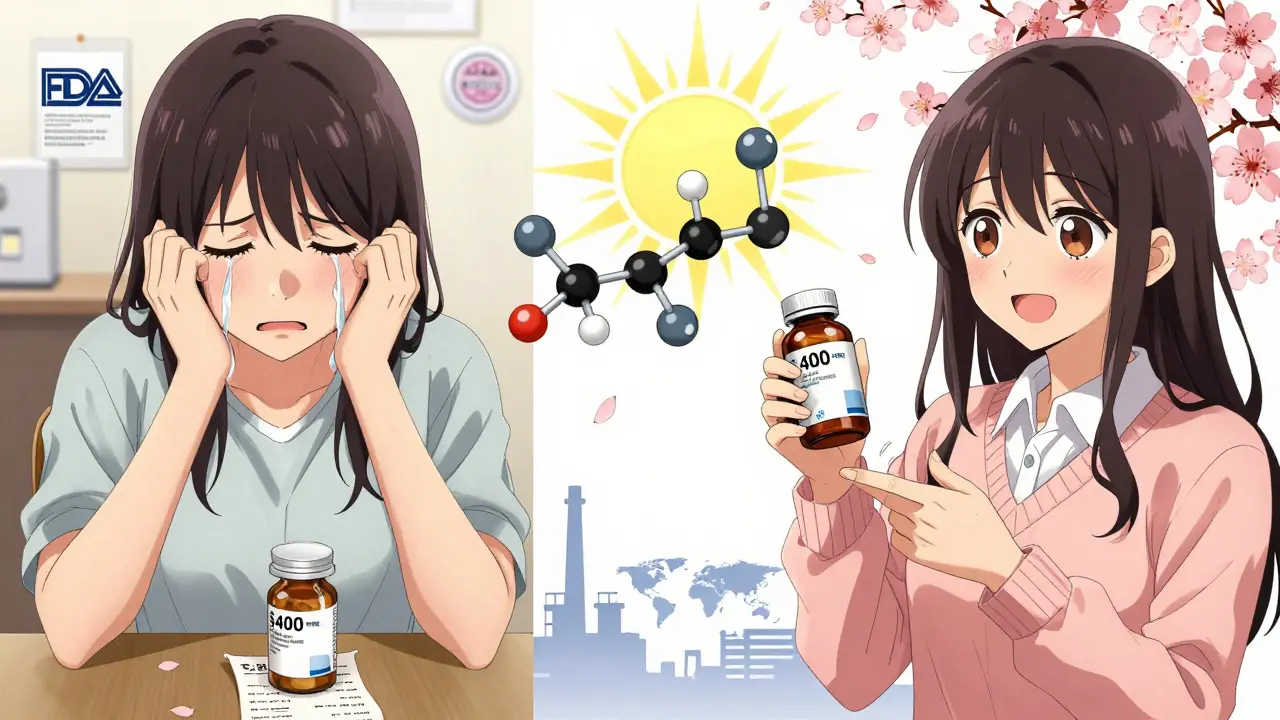
Kiran Plaha
January 5, 2026 AT 20:16Interesting post. In India, we use generics all the time because brand names are too expensive. My uncle takes generic amlodipine for his blood pressure and he’s been fine for 5 years. No issues at all. The pharmacy even gives him the same batch every time so he knows what to expect.
Kelly Beck
January 6, 2026 AT 01:16This is so important to share!! 💪 I used to be terrified of generics because of how they looked-until my pharmacist sat me down and showed me the FDA bioequivalence charts. Now I save $200 a month on my diabetes meds and I feel BETTER because I’m actually taking them every day. 🙌 If you’re scared, ask your pharmacist. They’re the real heroes here. 💊❤️
Tiffany Adjei - Opong
January 6, 2026 AT 04:41Let’s be real-this whole ‘generics are the same’ thing is corporate propaganda. The FDA’s 80-125% range is a joke. That’s a 45% swing! What if my body reacts to the lower end? What if the filler is made from genetically modified corn? And don’t get me started on how 70% of generics are made in China where they use banned chemicals. I’ve seen people get sick after switching. It’s not paranoia-it’s data.
Isaac Jules
January 6, 2026 AT 23:15Oh please. You’re telling me a pill made in a factory in Hyderabad that costs $2 is chemically identical to one made by Pfizer in New Jersey? 🤡 The active ingredient might be the same, but the bioavailability? The coating? The dissolution rate? All of that is manipulated to cut costs. You think your body can’t tell the difference? Wake up. People are getting worse on generics and no one wants to admit it because it’s cheaper.
Amy Le
January 8, 2026 AT 06:51Generics are a national security risk. Why? Because if we rely on foreign manufacturing for life-saving drugs, we’re just one geopolitical crisis away from a mass medication shortage. And let’s not forget the FDA inspections-how often do they really go to those plants? Once every 5 years? And they get 48 hours’ notice. This isn’t medicine. It’s a global supply chain gamble. 🇺🇸💊
Stuart Shield
January 9, 2026 AT 22:49I used to be a skeptic too-until my mum had a stroke and we switched her blood thinner to a generic. The pharmacist spent 20 minutes explaining everything, even printed out the bioequivalence data. She’s been on it for 3 years. No clots. No bleeds. Just peace of mind and $180 saved every month. Sometimes the simplest truths are the ones we’re too afraid to believe.
Melanie Clark
January 11, 2026 AT 03:00Why do people trust pills they can’t even recognize? I once took a white pill that looked like a Tic Tac and had ‘G 10’ on it-how do I know it’s not sugar? The brand name had a logo, a color, a shape-it felt real. Generics feel like a scam. I’ve read about people who had seizures after switching. It’s not just inactive ingredients-it’s the whole system. We’re being used as guinea pigs for cost-cutting. And the FDA? They’re in bed with Big Pharma.
Saylor Frye
January 12, 2026 AT 16:59Look, I get it. Generics save money. But if you’re on warfarin or levothyroxine, just stick with the brand. No one’s stopping you. The ‘same active ingredient’ line is fine for marketing, but real medicine isn’t just chemistry-it’s biology. And biology doesn’t care about your budget.
Pavan Vora
January 13, 2026 AT 16:24In India, we have so many generic brands-Teva, Cipla, Dr. Reddy’s-it’s overwhelming. My doctor says: pick one and stick with it. If you switch between generics, even if they’re ‘the same,’ your body might notice the difference in fillers. So I take the same one every time. And I don’t care what color it is. I care that I’m alive and my sugar is under control. 🙏
Kelly Beck
January 14, 2026 AT 21:38Thank you, Kiran! 💖 That’s exactly what I said to my mom when she panicked about her thyroid med switching. She was convinced the new white pill was ‘weaker.’ I told her: ‘If you’ve been stable for 6 months on this one, don’t switch again.’ Consistency > brand name. And guess what? Her TSH is perfect. 😊